
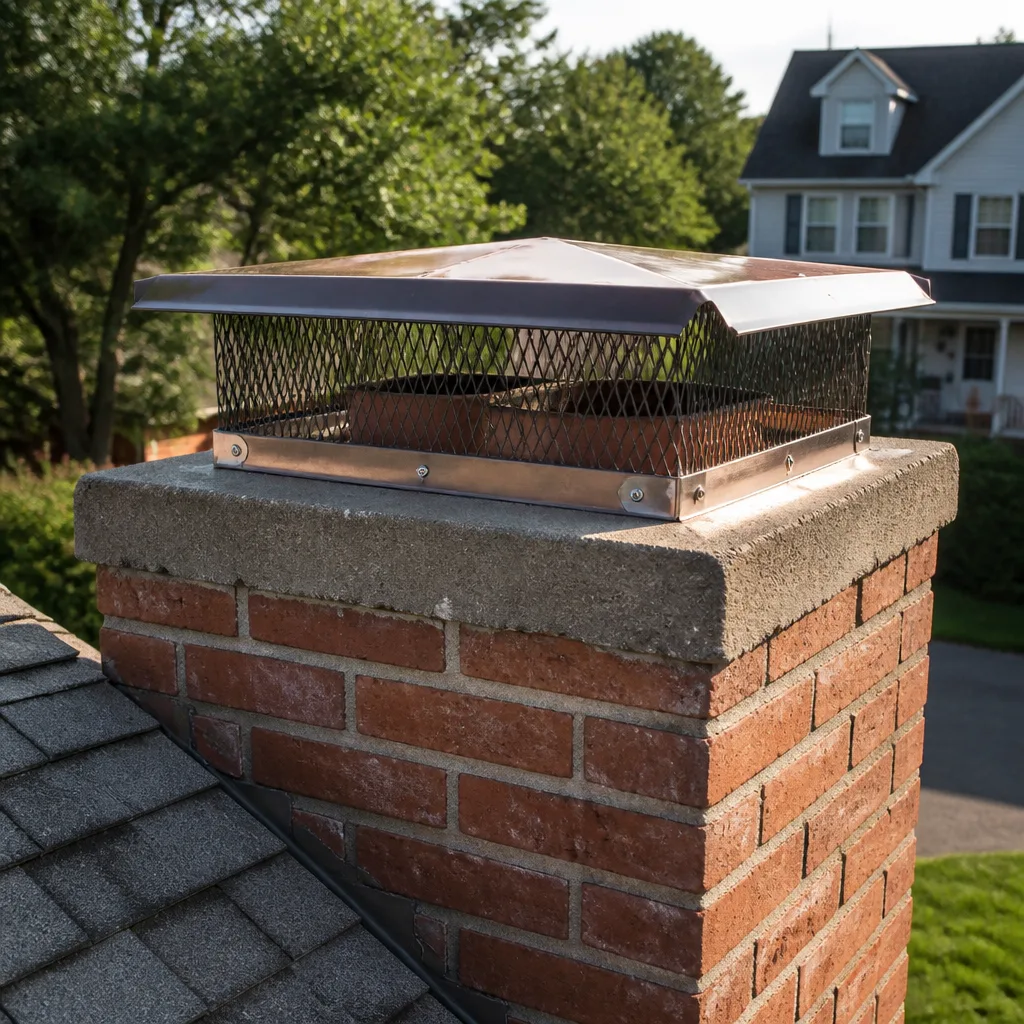
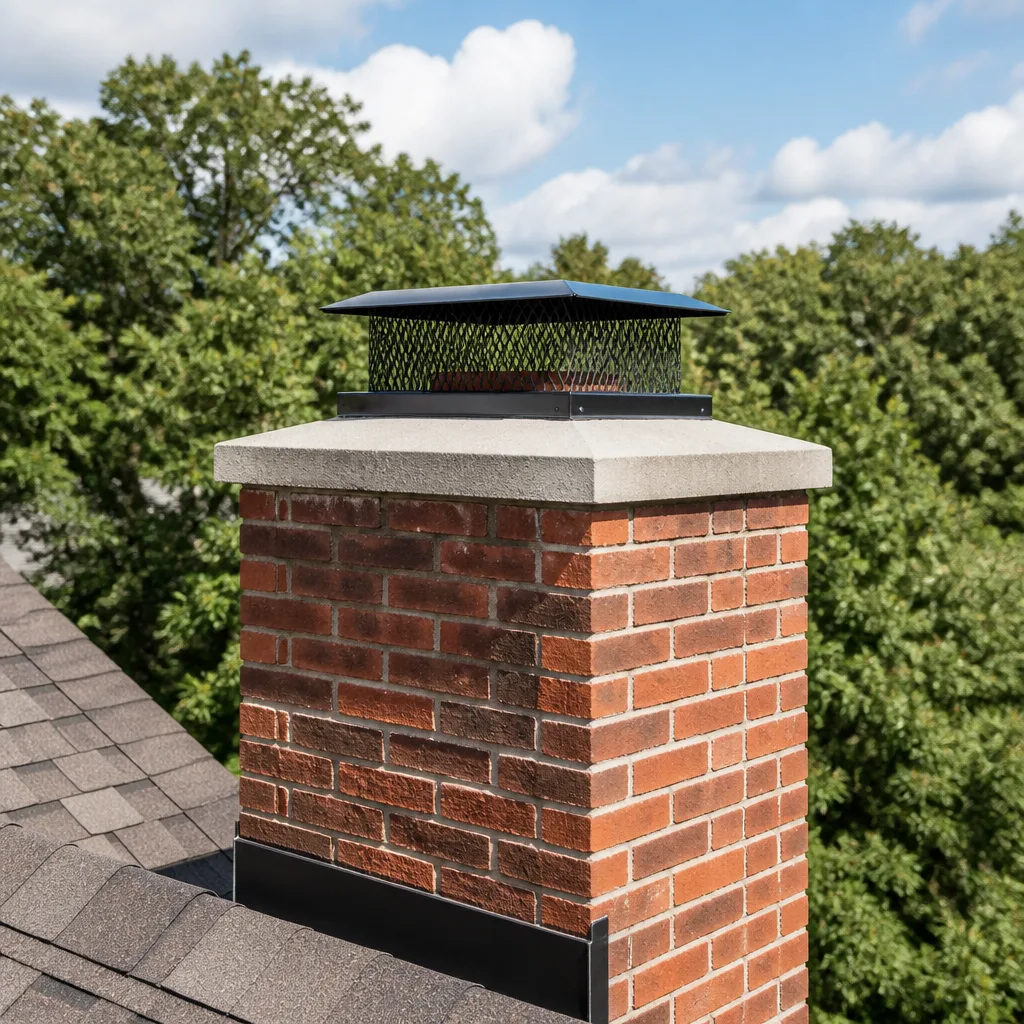
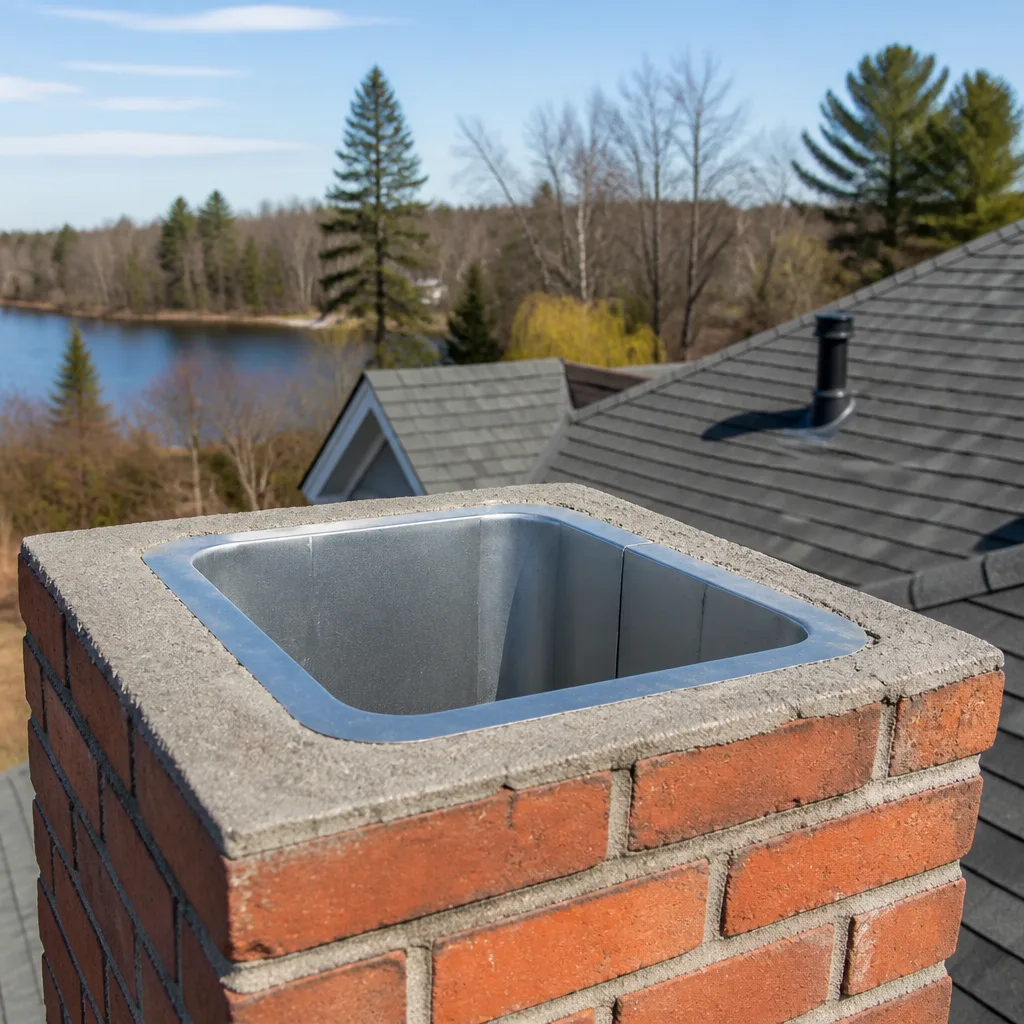
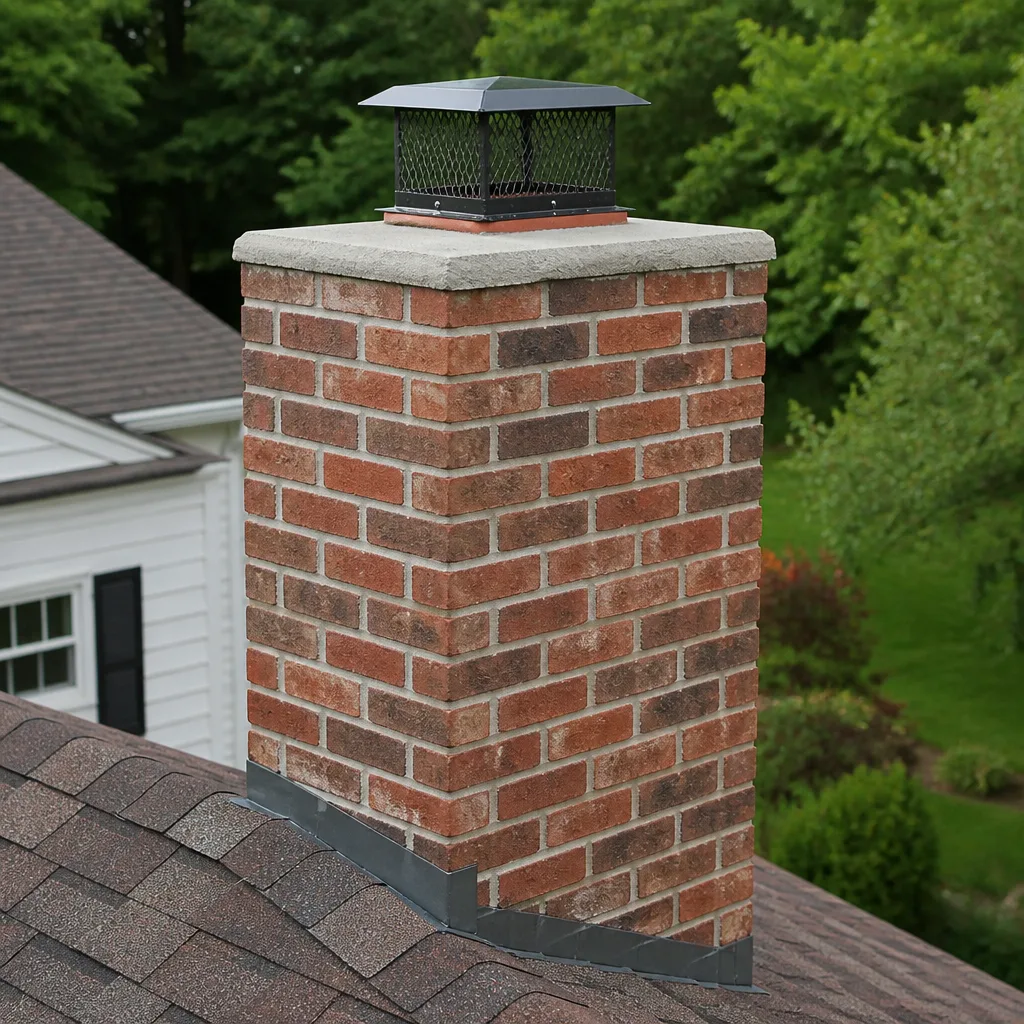
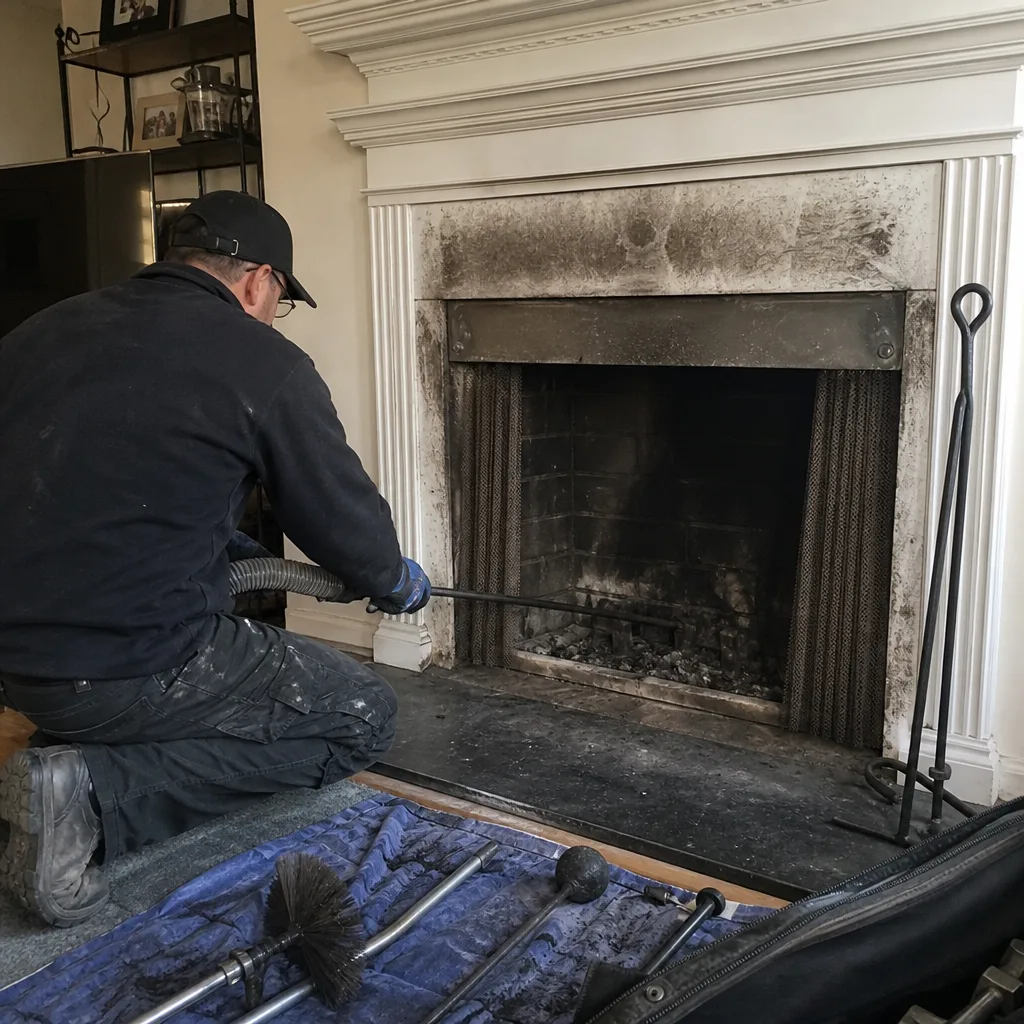
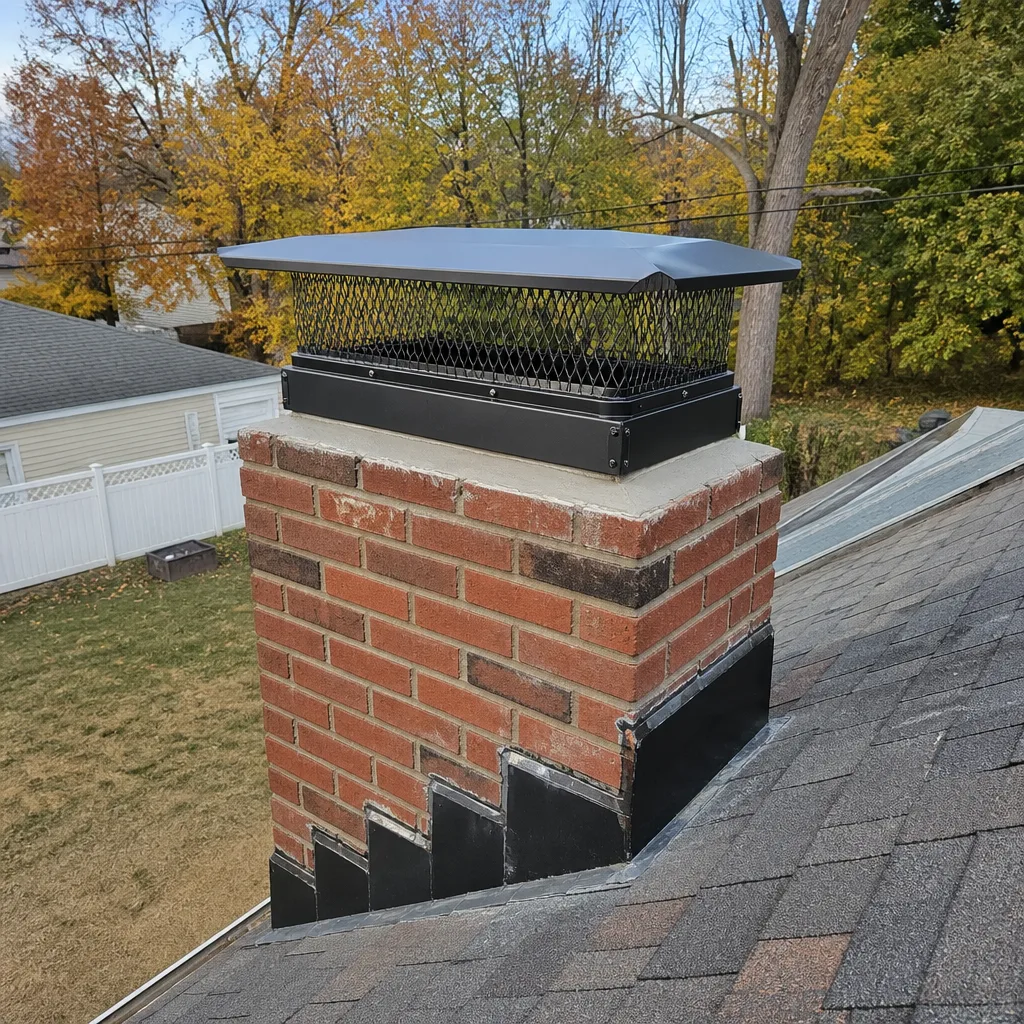
Level 1 sweep and inspection to the NFPA 211 annual standard - flue, crown, cap, and flashing checked and photographed
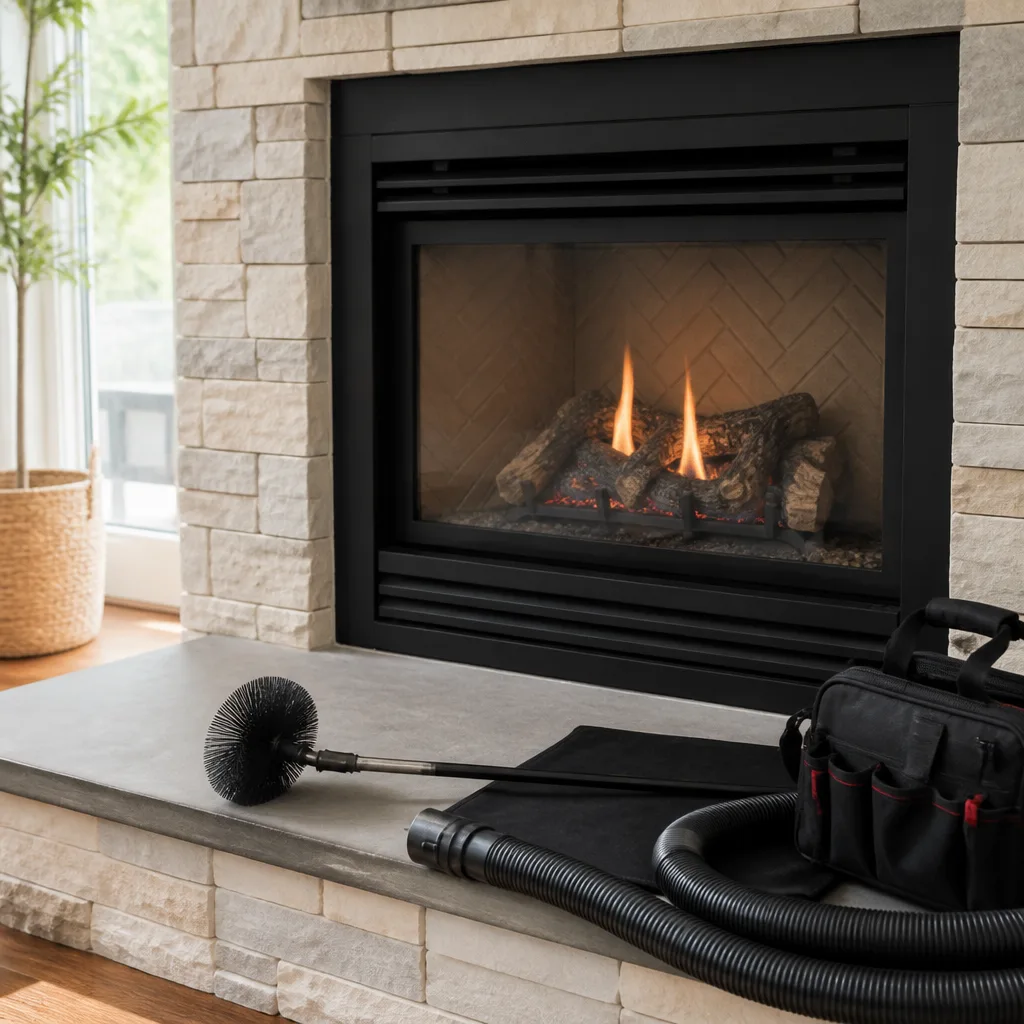
Chimney sweep logs do not sweep chimneys. They loosen some creosote - which then falls where a brush and vacuum still have to collect it.
 Before
 After
After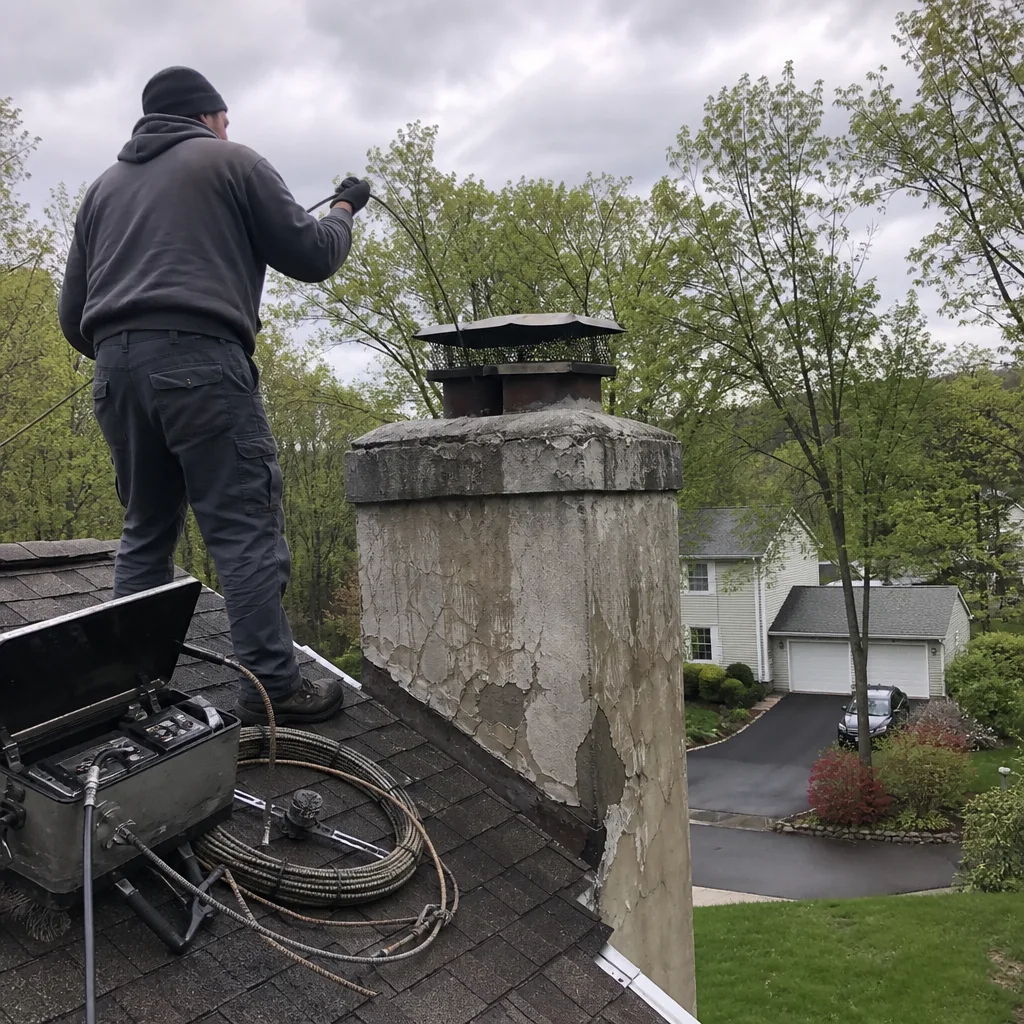 Before
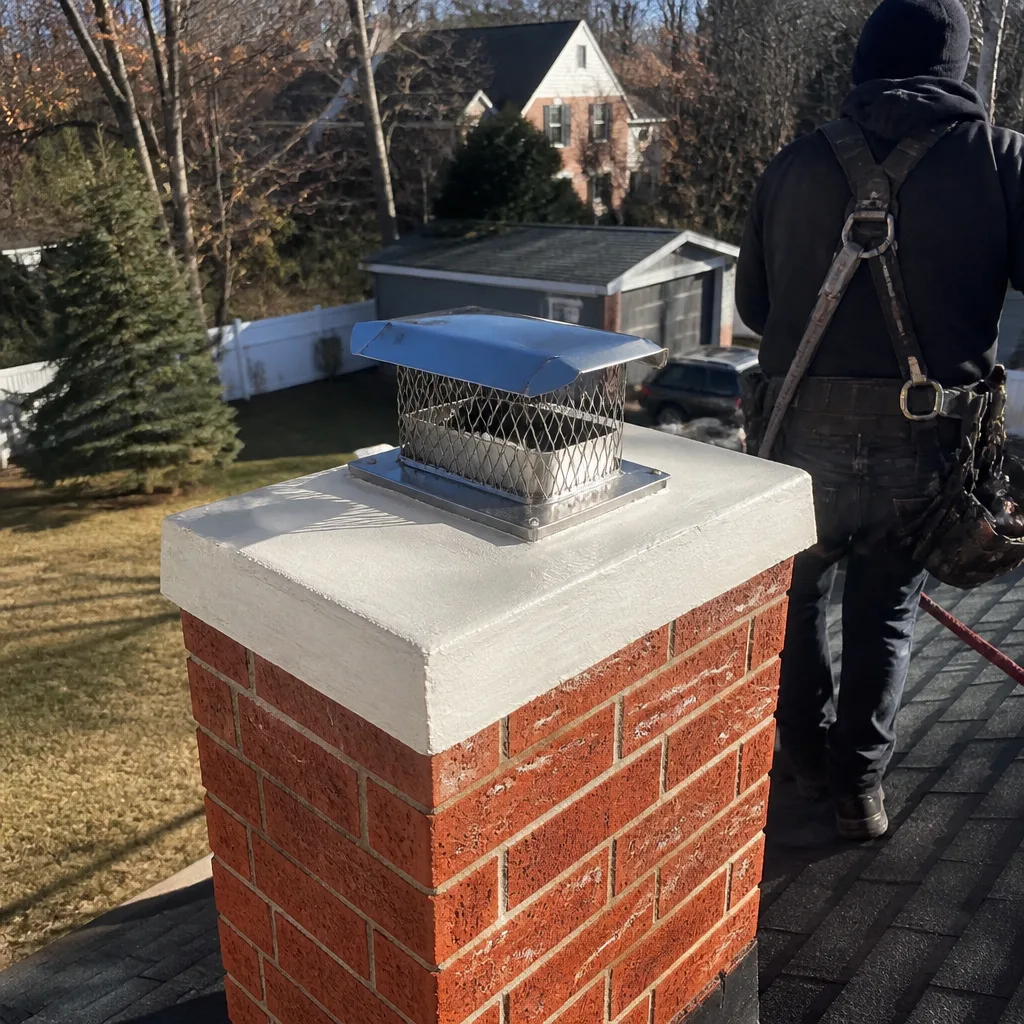 After
After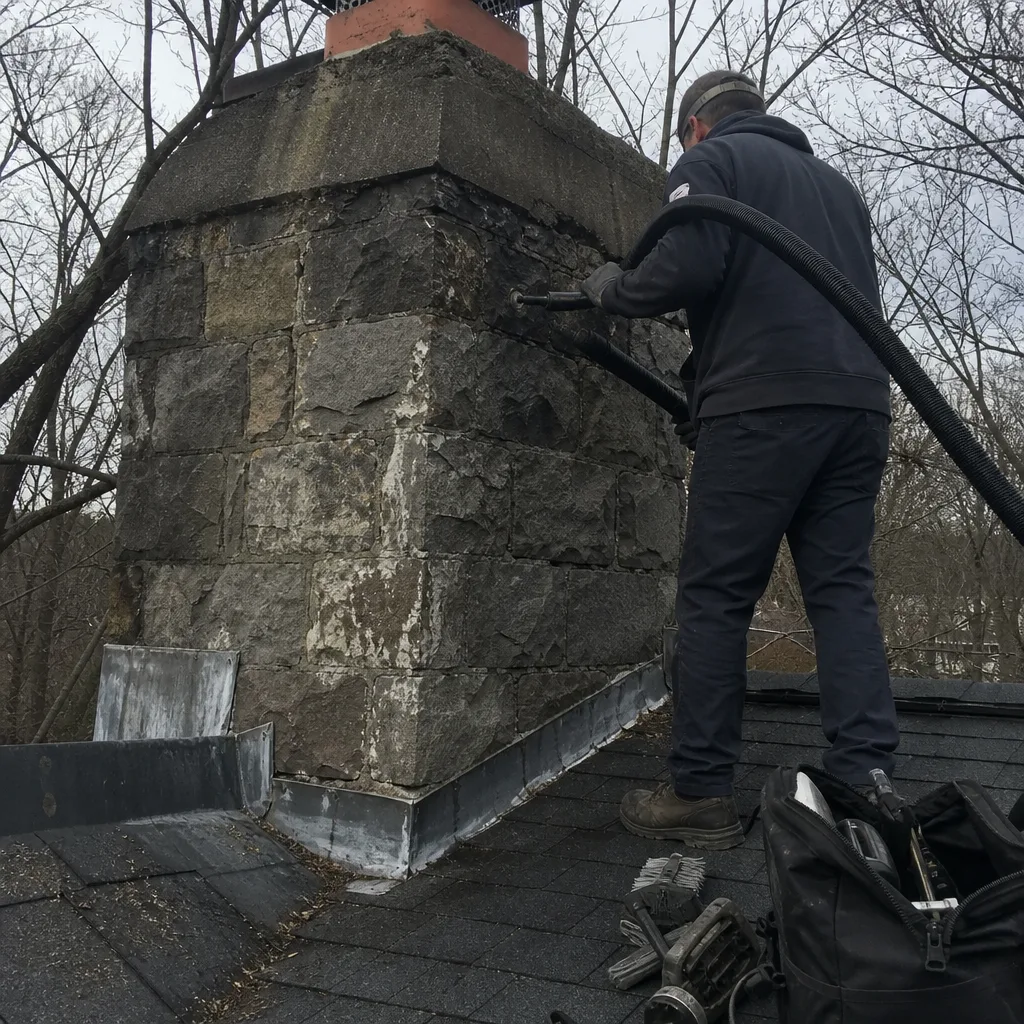 Before
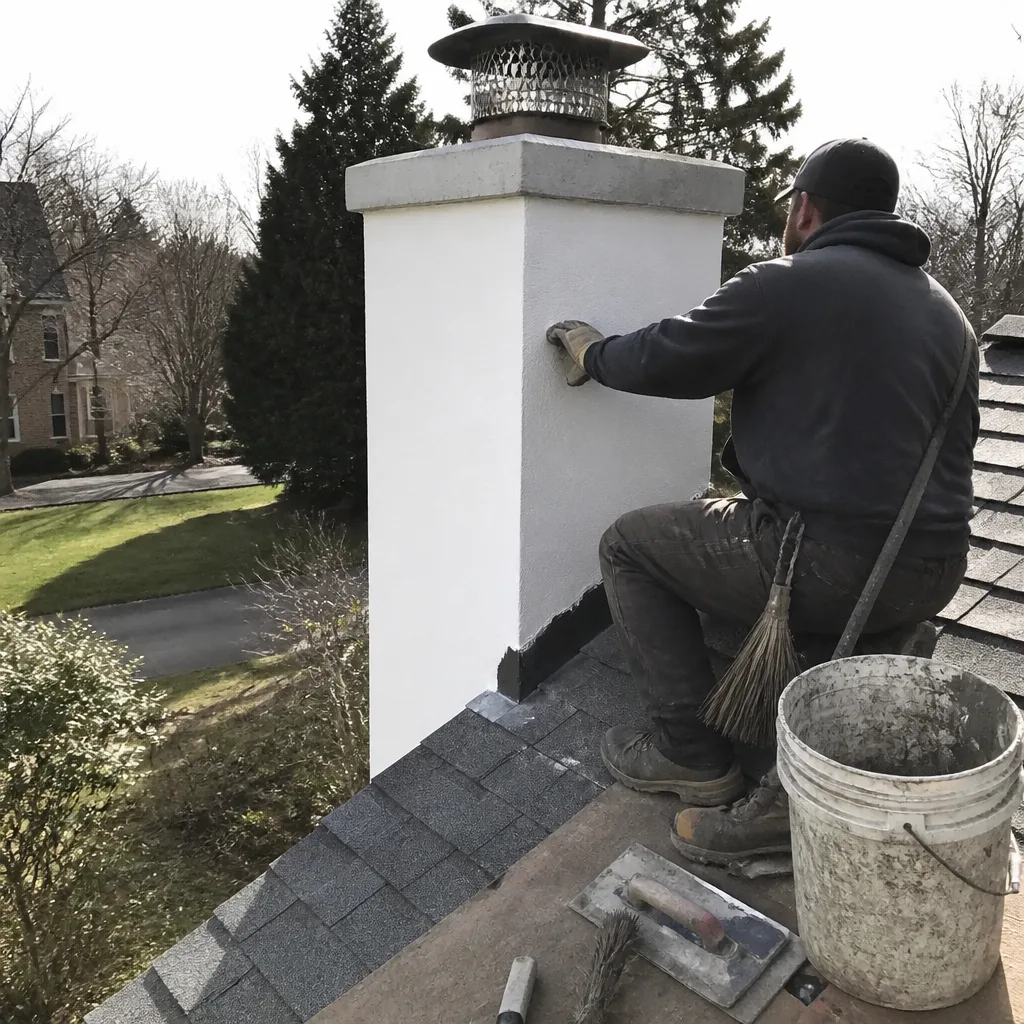 After
AfterHeatShield Flue Liner Replacement: The New City Owner’s Guide
HeatShield flue liner replacement in New City typically runs $1,800-$3,400 installed depending on liner diameter, chimney height, and whether the existing terra cotta needs extraction. We stock HeatShield-compatible stainless and cerfractory flue liner systems on our trucks, and most New City replacements are completed in a single visit. If you’re seeing flaking tile, water stains around the thimble, or a persistent smoke smell when the fireplace isn’t running, the liner has likely reached its end.
Most New City homeowners discover the problem during a routine Level-2 inspection, often right before burning season. Others notice draft issues after heavy rain, which is common in Rockland County’s freeze-thaw climate. The clay flue tiles crack, the mortar between them deteriorates, and suddenly the chimney isn’t venting safely. HeatShield’s cerfractory resurfacing system can sometimes restore a sound clay liner, but once the tile is spalled or the liner is actively leaking combustion gases, full replacement is the only sound path.
Which HeatShield Models This Applies To
HeatShield manufactures two distinct systems, and knowing which you have determines whether repair or replacement is even possible. The Cerfractory Flue Sealant system is a resurfacing product applied to intact clay flue tiles - it does not replace the liner itself. The HeatShield Sleeve is a standalone stainless steel liner system installed when the clay is too far gone. We install both, but this page addresses the sleeve replacement, which is what most New City homeowners need after 30-plus years of service.
To identify your system, check the cleanout door or thimble area for a metal tag with the HeatShield logo and installation date. If you see a smooth, light gray coating inside the flue, that’s Cerfractory sealant. If you see a corrugated or smooth stainless tube, that’s the sleeve. Sleeve diameters run 3 to 10 inches in standard increments, with 6-inch and 8-inch being the most common for New City’s 1970s and 1980s colonial and split-level stock. The sleeve must match the appliance’s BTU output and the chimney’s interior dimensions - an oversized liner drafts poorly; an undersized one overheats.
We use HeatShield OEM sleeves or equivalent-grade stainless from Olympia Chimney and Copperfield, matched to your chimney’s exact spec. Aftermarket equivalents save money only when they carry the same UL 1777 listing and 316Ti stainless alloy. We don’t install builder-grade substitutes. The wrong alloy in Rockland County’s acidic flue gas environment - especially with modern EPA-certified stoves running cooler - corrodes through in under a decade. We’ve pulled failed generic liners in New City homes that were sold as “just as good.”
Signs Your HeatShield Flue Liner Replacement Is Failing
- Flaking terra cotta or gray debris in the firebox. This is spalling - the clay liner face pops off in thin sheets due to thermal cycling and moisture penetration. In New City’s climate, freeze-thaw accelerates this every winter. Once the inner surface is compromised, the liner can’t contain heat or combustion gases.
- Water stains or efflorescence on the chimney breast inside the house. A cracked liner lets exhaust gases condense against the brick mass, and that moisture migrates inward. We see this frequently in New City capes and ranches with exterior chimneys exposed to northwest weather.
- Smoke odor when the fireplace is cold. This means exhaust is leaking into the chimney cavity and finding its way through mortar joints into the house. It’s often worse in summer when stack effect reverses - warm air rises from the basement and pulls chimney odors down.
- Draft problems that worsen on humid or windy days. A breached liner disrupts the pressure balance. New City’s position along the Hudson River valley means prevailing westerlies can expose draft issues that a sound liner would compensate for.
- Your inspection report states “liner integrity compromised” with photos of gaps or missing mortar. This is the definitive finding. A Level-2 camera inspection reveals what the eye cannot - horizontal cracks, shifted tiles, or gaps at the liner joints that open under heat load.
Replacement Cost & What’s Included
| Scope | Price Range (New City) |
|---|---|
| Standard 6″ stainless liner, single-story chimney, straight run | $1,800 - $2,400 |
| 8″ liner or two-story height with offsets | $2,600 - $3,400 |
| Terra cotta extraction required (additional labor) | Add $400 - $800 |
| Insulation blanket (required for some clearances) | Add $300 - $500 |
What drives the range: chimney height from roofline to appliance, number of offsets or bends, whether the existing clay must be broken out, and whether the chimney top needs a new crown or cap to protect the liner termination. We price this upfront after camera inspection - the number on the estimate is the number on the invoice.
Every replacement includes: Level-2 camera inspection with photos you receive, removal and disposal of the failed liner, installation of the new HeatShield-compatible sleeve with proper connectors and termination, smoke and draft test, and our 90-Day Done Right Promise in writing. If it’s not right, we don’t leave until it is.
DIY or Call Us?
There’s a short list of what a homeowner can safely check: verify the damper opens fully, confirm the chimney cap isn’t blocked by debris, and look for obvious cracks at the firebox opening. That’s it.
Flue liner replacement is not a DIY project. The work involves working at height on a pitched roof, handling sharp stainless steel in a confined flue, and ensuring proper draft calculations that match the appliance to the liner diameter. More critically, an improperly installed liner creates a genuine hazard - carbon monoxide leakage into living space or a chimney fire in a compromised system. We’ve been called to New City homes where a handyman “saved” the homeowner money with a liner that terminated six inches short of the chimney top. That gap filled with creosote in two seasons.
We’re background-checked, uniformed, and we complete most liner replacements in a single visit. Call (845) 599-0930 for a free estimate with camera inspection.
FAQs
A properly installed 316Ti stainless liner typically lasts 15 to 25 years in Rockland County’s climate, though we’ve seen premature failure when appliances are oversized for the flue or when homeowners burn unseasoned wood. The cerfractory resurfacing system, where applicable, carries a 20-year warranty but only when applied to sound substrate. Call (845) 599-0930 and we’ll assess what you’ve actually got.
Sometimes. If the clay tiles are intact but the mortar joints are eroded, HeatShield’s Joint Repair system or Cerfractory resurfacing may restore the liner at roughly half the replacement cost. If tiles are cracked, spalled, or shifted, repair is a temporary patch at best. We document this with camera evidence you can see, and we’ll tell you plainly when work can safely wait versus when it cannot.
Most straight-run liners in a single-story New City home take four to six hours from setup to final test. Two-story chimneys with offsets or terra cotta extraction may extend to a full day. We arrive with the liner on the truck, so there’s no return trip for parts.
We stock HeatShield-compatible stainless liners, sleeves, and termination components in the most common diameters for New City’s housing stock. Hearthstone Chimney Co. is an independent service provider - not affiliated with HeatShield - and we also source equivalent-grade liners from Olympia Chimney and Copperfield when the application calls for it. If your chimney has an unusual spec, we order to fit and schedule installation once verified.
Written by Russell Haines, Owner, Hearthstone Chimney Co. at Hearthstone Chimney Co., serving New City and nearby areas.