
Last updated September 10, 2026
Level 1 sweep and inspection to the NFPA 211 annual standard - flue, crown, cap, and flashing checked and photographed
Chimney sweep logs do not sweep chimneys. They loosen some creosote - which then falls where a brush and vacuum still have to collect it.
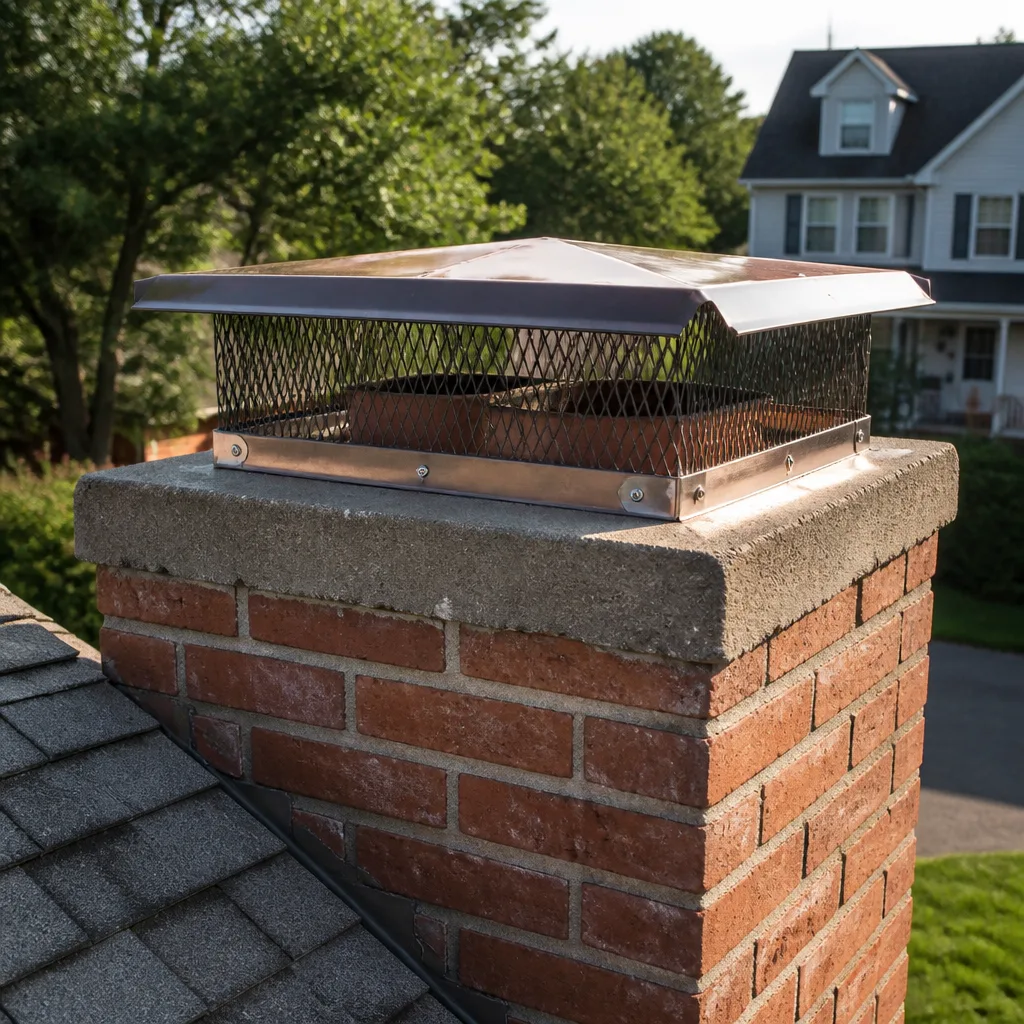
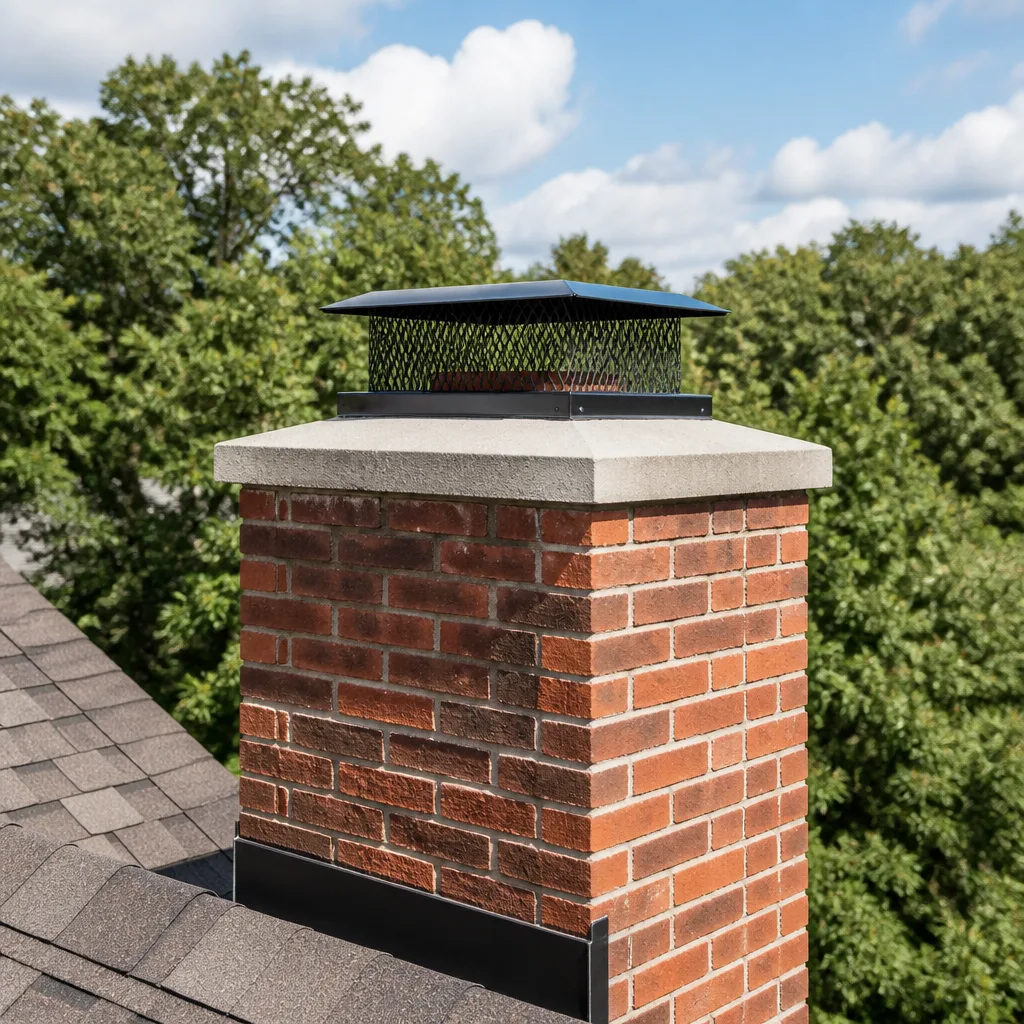
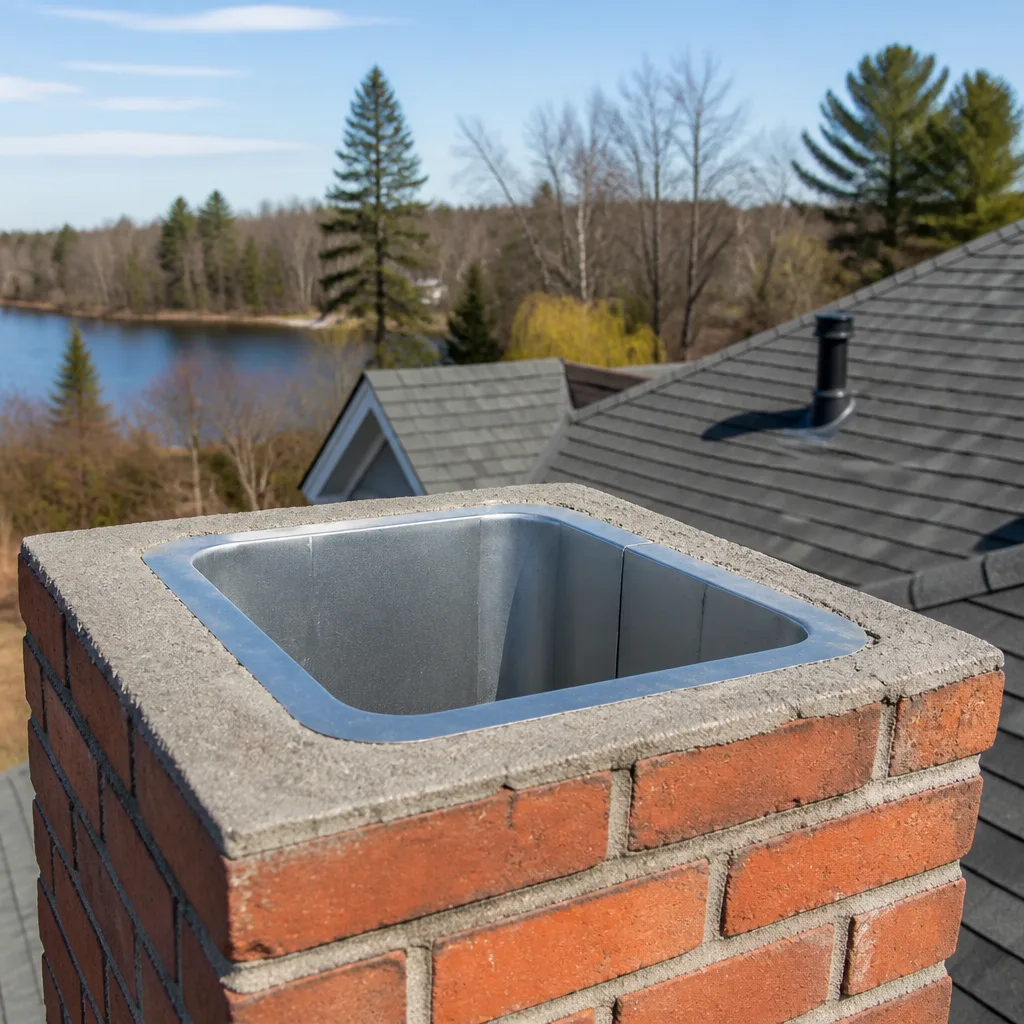
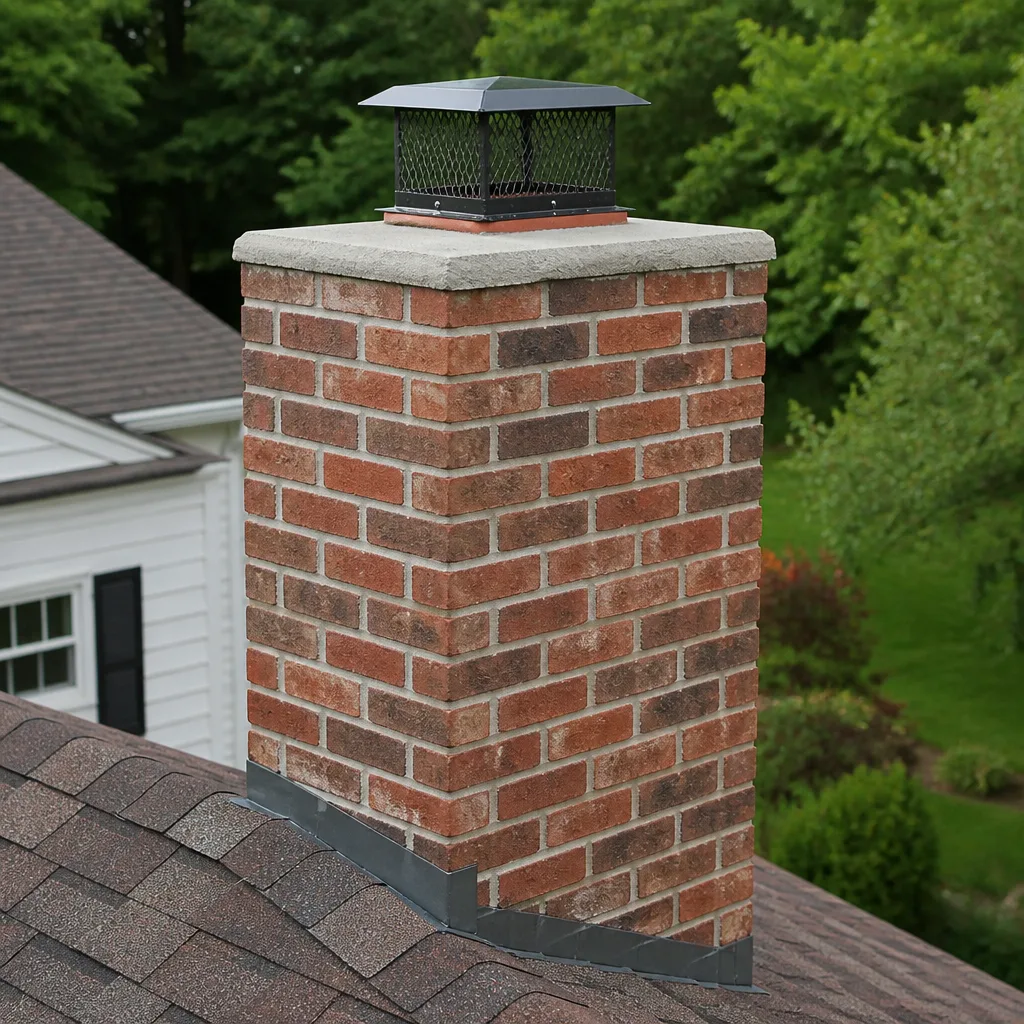
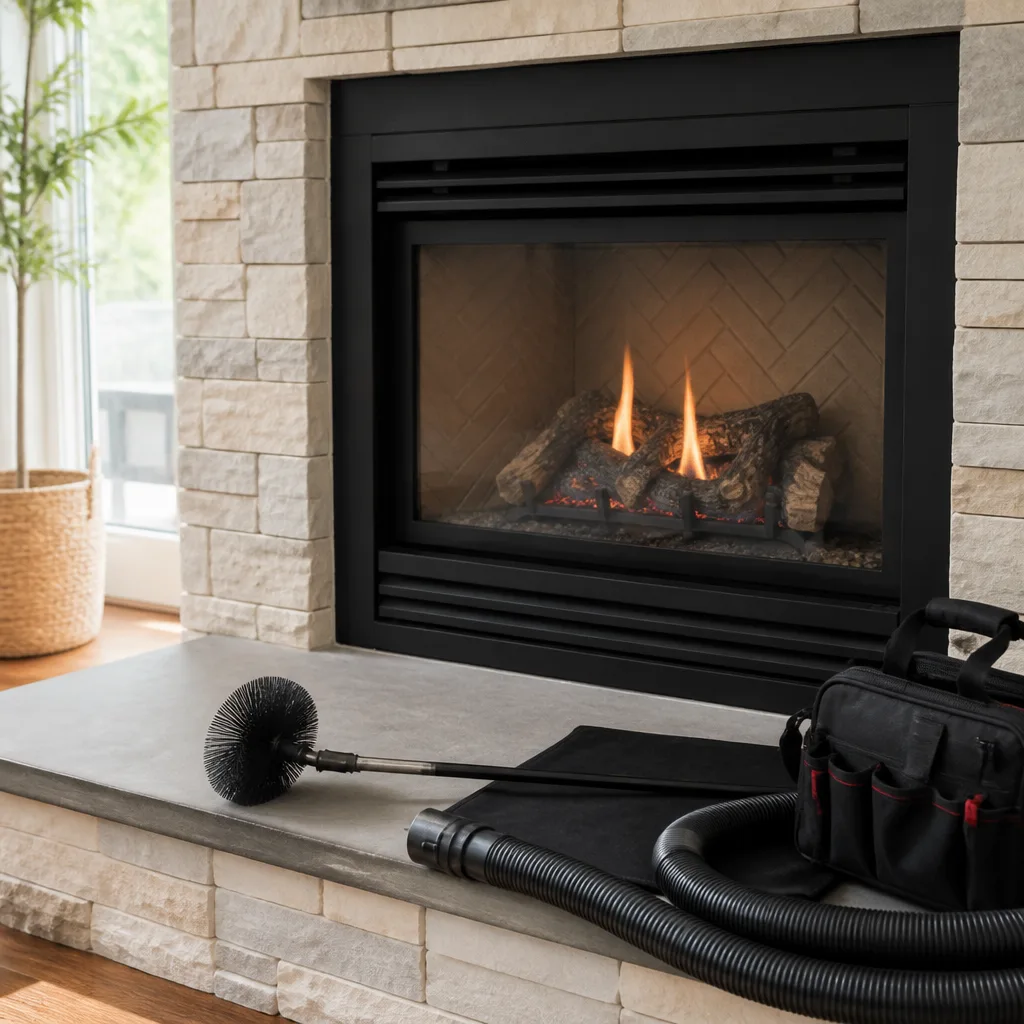
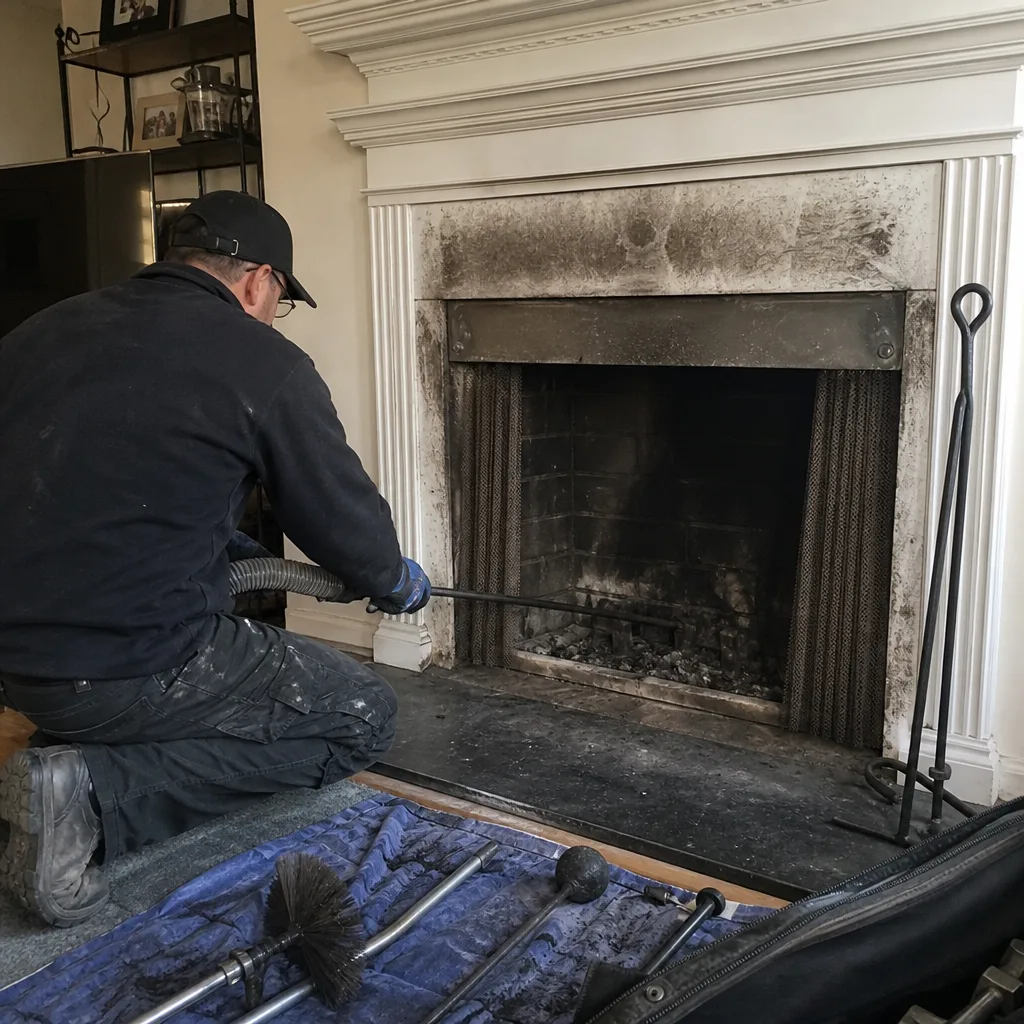 Before
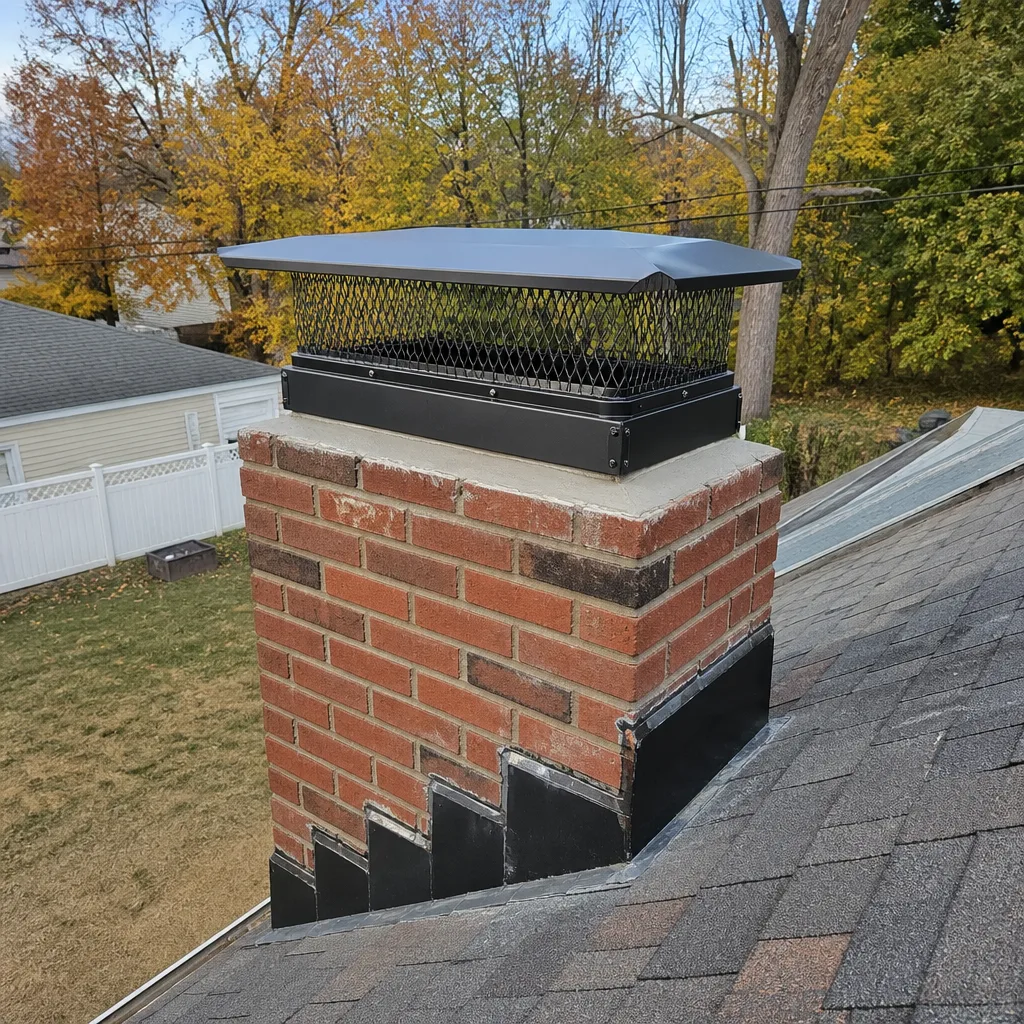 After
After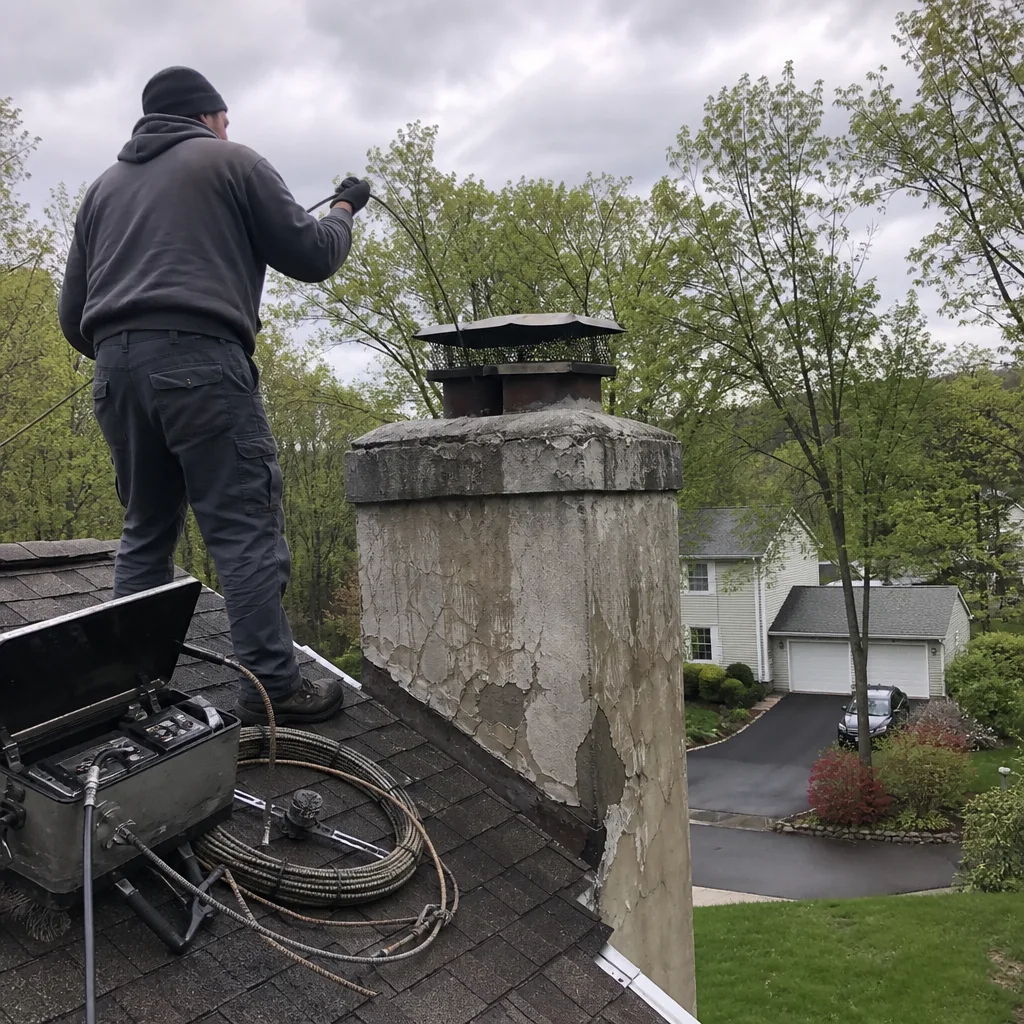 Before
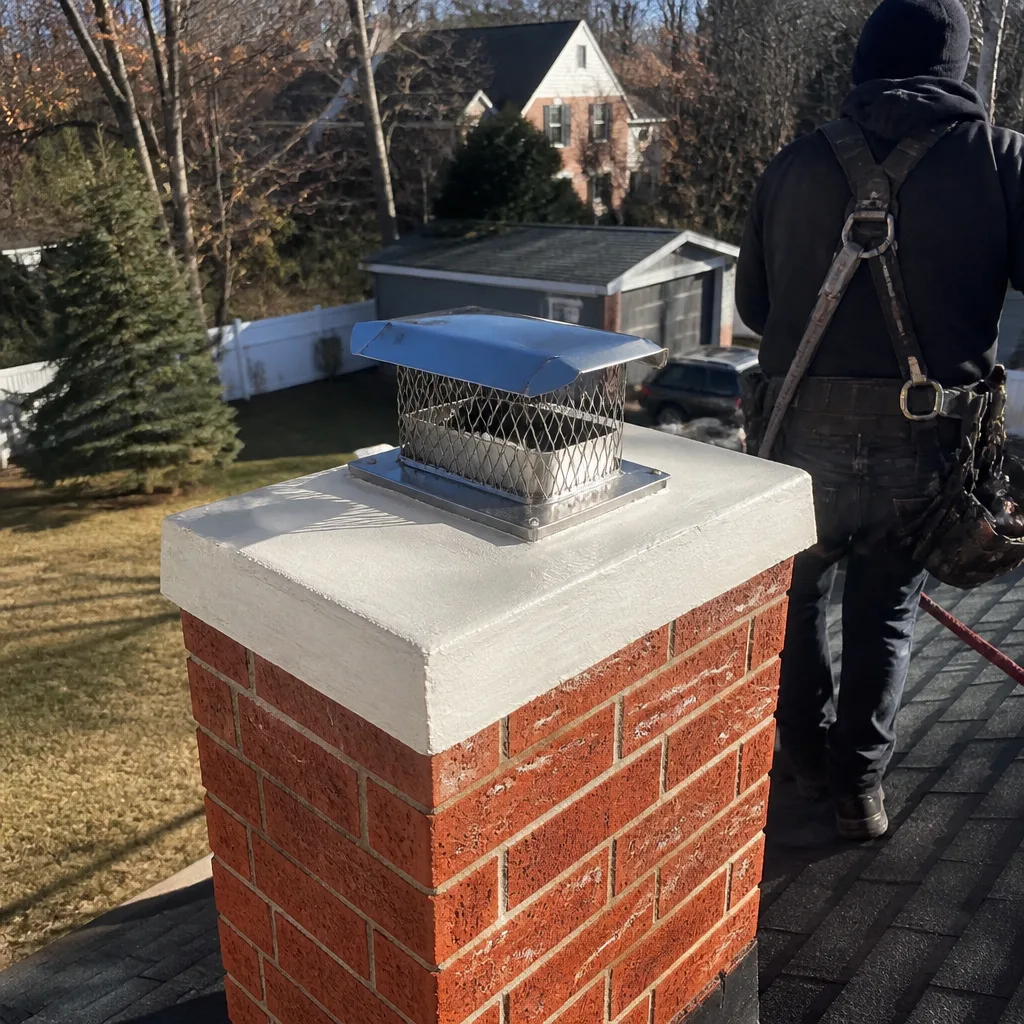 After
After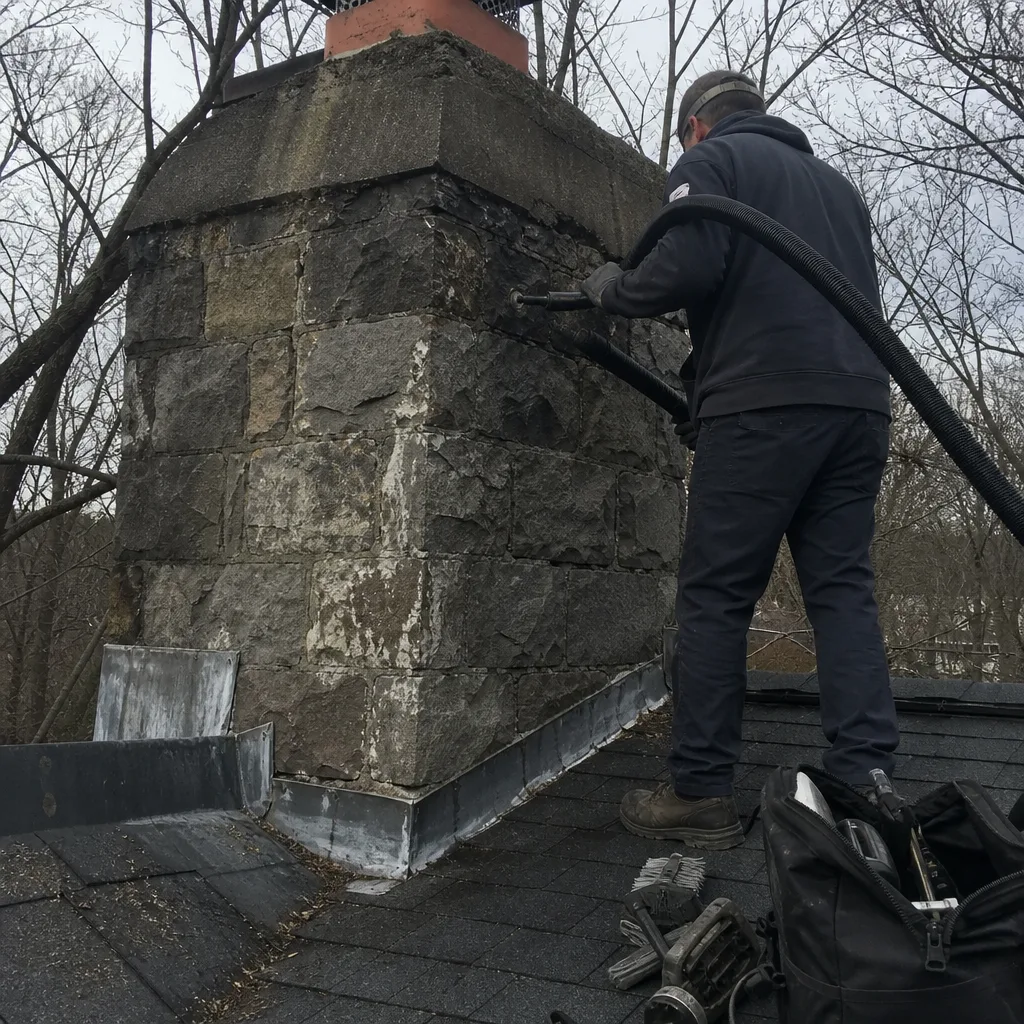 Before
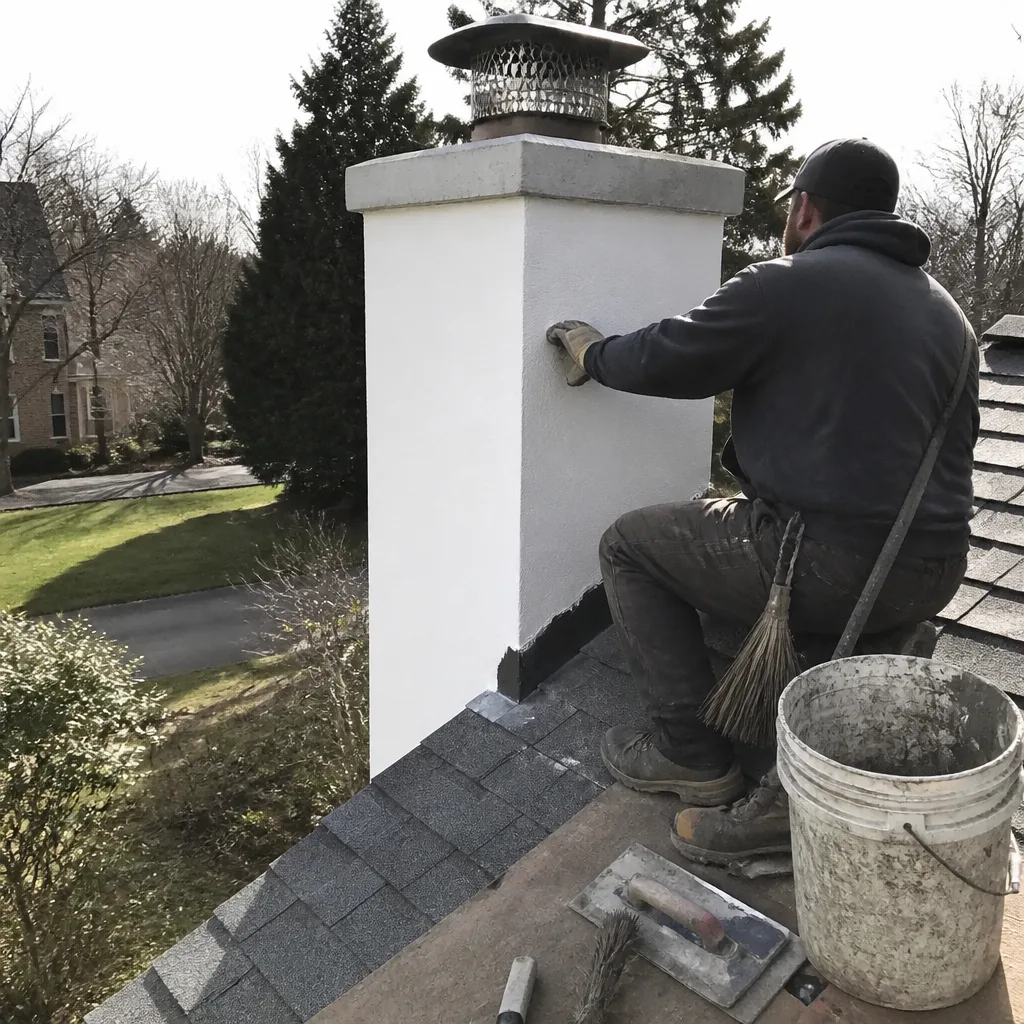 After
AfterHow to Hire a Chimney Cleaning Contractor in New City: A Step-by-Step Guide
CSIA certification is the industry’s baseline credential, but it certifies knowledge of a standard exam, not the quality of the specific person who shows up at your door on a February morning in Rockland County. In our 42 years serving New City, we’ve repaired work from contractors who passed that exam and still left homeowners with cracked flue liners, incomplete cleanings, and inspection reports that amounted to a handwritten note saying “looks okay.” This guide will teach you how to evaluate accountability, not just credentials, so you hire someone who stands behind their work, and you can find more guides & resources on our blog.
Quick Answer
To hire a chimney cleaning contractor in New City, verify current CSIA certification, request a current-dated certificate of insurance with general liability and worker’s comp coverage, and ask three accountability questions before booking: who specifically performs the work, what does your written guarantee cover and for how long, and can I see a sample inspection report with photos. The lowest quote in this market is typically a diagnostic visit disguised as a cleaning, so confirm the exact scope of work in writing before agreeing to any price.
Table of Contents
- Why the Lowest Quote in New City Usually Fails
- The Three-Question Accountability Test
- Insurance Requirements for Rockland County Contractors
- What Certifications Actually Mean (And What They Don’t)
- How to Read Online Reviews Like a Contractor Reads a Flue
- The Documentation Standard: Photos You Can See, Verdicts You Can Understand
- Red Flags Specific to the New City Market
- What to Expect During the Appointment
Why the Lowest Quote in New City Usually Fails
The chimney sweep market in Rockland County has a predictable pattern every autumn. Flyers appear in Clarkstown mailboxes advertising “$89 chimney cleaning specials.” The phone gets answered. The truck shows up. And three hours later, the homeowner has a partially brushed flue, a handwritten receipt, and a verbal recommendation for $2,400 in “urgent” liner work with no photographs to support it.
We’ve seen this scenario dozens of times in neighborhoods from Braemar to Germonds. The low quote is not a cleaning. It is a lead-generation tool for repair sales. Here’s how the economics work: a legitimate chimney sweep in New City carries worker’s compensation insurance (required by New York State for any contractor with employees), general liability coverage, CSIA certification maintenance, professional-grade equipment from manufacturers like Olympia Chimney and Gelco, and vehicle costs for Rockland County’s hilly terrain. These fixed costs do not compress to $89 without something being removed.
What gets removed:
- Thoroughness. A proper Level 1 inspection per NFPA 211 standard takes 45 minutes to an hour for a standard fireplace flue. A “special” appointment allows 20 minutes.
- Documentation. Camera inspection equipment costs thousands. If the contractor has no camera, they cannot show you creosote buildup, flue cracks, or liner deterioration. You are asked to trust their eyes.
- Written scope. The $89 quote rarely specifies what is included. Is the smoke chamber brushed? The firebox inspected for cracked bricks? The damper operated and assessed? Without written scope, you have no recourse.
- Follow-through. The technician who quotes $89 is often paid commission on repair upsells, not hourly for quality work.
In New City’s climate, this matters more than in milder regions. Our freeze-thaw cycles from November through March accelerate masonry deterioration. A flue crack missed in October becomes a carbon monoxide pathway by January. The $89 cleaning that missed it becomes a $4,000 rebuild.
Before you agree to any price, request a written scope of work. A legitimate contractor in New City will specify: inspection level (Level 1 or 2), areas to be swept, debris removal method, and what documentation you will receive. If the answer is vague, the work will be too.
The Three-Question Accountability Test
After you confirm CSIA certification, most homeowners stop asking questions. This is where accountability gaps open. We recommend three specific questions that separate contractors who manage their work from contractors who merely dispatch it.
Question 1: Who specifically performs the work?
The person who answers your call, gives your estimate, and performs your cleaning are often three different people in modern home service companies. In chimney work, this is dangerous. The technician’s judgment determines whether a hairline crack is documented or dismissed, whether creosote glazing is noted or ignored.
Ask directly: “Will the person who inspects my chimney be the same person who gives me the report?” If the answer involves a sales inspector who visits first and a separate technician who cleans later, you are dealing with a dispatch model, not a craft model. The sales inspector has incentive to find problems. The technician has incentive to complete routes quickly. Your chimney falls into the gap.
At Hearthstone Chimney Co. home, the technician who arrives is the technician who inspects, sweeps, and explains the findings. Russell Haines established this structure in 1984 because he had seen too many homeowners receive contradictory information from different company representatives.
Question 2: What does your written guarantee cover, and for how long?
Verbal guarantees are not guarantees. They are conversation. A contractor who trusts their work puts the promise in writing with specific terms, specific duration, and specific remedy.
Ask to see the guarantee document before booking. It should specify: what is covered (workmanship, materials, or both), for how long (30 days, 90 days, one year), and what happens if something fails (return visit at no charge, refund, or prorated adjustment). Be wary of “satisfaction guaranteed” language without specifics. This is marketing, not commitment.
Our 90-Day Done Right Promise is governed by the K.E.Y.S. values code: Krafted right, Every time, Your home first, Standing behind it. If it’s not right, we make it right. In writing. No paperwork to file, no argument to have. We’ve honored this promise in New City for over 42 years because we intend to be here for 30 more.
Question 3: What does your inspection report look like, and can I see a sample?
This question reveals more than any credential check. A contractor who produces thorough documentation will have a sample ready. A contractor who does not document will hesitate, deflect, or claim reports are “customized for each job.”
A proper inspection report from a New City contractor should include: dated photographs of the flue interior, firebox, damper, smoke chamber, and exterior crown; written condition assessment for each component; plain-English explanation of any findings (not just technical codes); and clear prioritization of recommended work (urgent safety issue, maintenance item, or monitor for future change).
If you cannot see a sample before hiring, you will not receive documentation after. This is a rule without exception in our experience.
Insurance Requirements for Rockland County Contractors
New York State requires any contractor with employees to carry worker’s compensation insurance. General liability coverage is not mandated by state law but is standard for legitimate operations. In Rockland County specifically, homeowners should verify three coverage types and one critical detail about documentation.
| Insurance Type | What It Protects | Minimum Red Flag |
|---|---|---|
| General Liability | Property damage to your home during work | Certificate dated more than 30 days before your request |
| Worker’s Compensation | Injury to workers on your property | Contractor claims “everyone is 1099” to avoid coverage |
| Commercial Auto | Vehicle incidents at your property | Personal auto policy instead of commercial |
The certificate of insurance should be current-dated, not photocopied. Insurance lapses happen. A certificate from March does not prove coverage in October. Request that your name and address appear as “certificate holder” so you receive notice if coverage cancels.
In New City’s older neighborhoods, particularly near the original village center and along South Mountain Road, many homes have steep roof pitches and complex chimney configurations. Worker’s compensation is not abstract protection here. A technician injured on a 12/12 pitch without coverage becomes your homeowner’s insurance problem, or worse, your personal liability.
We carry current certificates for every job and provide them without request. A contractor who treats insurance verification as an insult has something to hide.
What Certifications Actually Mean (And What They Don’t)
CSIA (Chimney Safety Institute of America) certification remains the industry standard. It requires passing a comprehensive exam on codes, standards, and construction. It must be renewed every three years with continuing education. A CSIA-certified sweep knows NFPA 211, understands clearances to combustibles, and can identify common hazards.
What CSIA certification does not mean:
- It does not mean the certified individual will be the person at your home. Many companies employ one certified sweep who signs off on work performed by uncertified technicians.
- It does not guarantee documentation quality. The exam tests knowledge, not report-writing discipline.
- It does not indicate business stability. A certified sweep can still operate without insurance, without guarantees, and without accountability structures.
Additional credentials to value: NFI (National Fireplace Institute) certification for gas appliance work, and manufacturer-specific training for liner systems like HeatShield or Famco components. These indicate investment in specific skills beyond the baseline.
In New City’s market, where many homes date to the 1950s through 1980s and have original clay flue tiles or early stainless retrofits, technician experience with your specific system matters more than certification alone. Ask: “How many chimneys like mine have you serviced this year?” A number below ten suggests generalist work, not focused expertise.
How to Read Online Reviews Like a Contractor Reads a Flue
A single glowing review means nothing. A single angry review means little more. What matters is pattern, consistency, and specificity across many reviews. Here’s how to read for accountability signals.
Look for documentation mentions. Reviews that mention “showed me photos,” “explained everything,” or “gave me a detailed report” indicate a contractor who documents. Reviews that mention “seemed knowledgeable” or “was nice” indicate a contractor who made an impression without necessarily leaving evidence.
Look for timeline specificity. “Came back the next week to fix a small issue” reveals a guarantee in action. “Haven’t had problems since” reveals time passing without follow-up contact.
Look for complaint response patterns. Does the business owner respond to negative reviews with specifics or with generic apologies? “Please call our office” without addressing the substance suggests deflection. “We returned on [date] and replaced the [component]” suggests accountability.
Look for neighborhood names. Reviews mentioning specific New City areas, Clarkstown locations, or Rockland County landmarks are more likely to be genuine local customers than reviews using generic phrasing.
Ignore star averages. A 4.7 average with 200 reviews means less than three detailed reviews describing the same documentation standard. Algorithms weight averages; homeowners should weight narrative consistency.
The Documentation Standard: Photos You Can See, Verdicts You Can Understand
The inspection report is where accountability becomes tangible. After the technician leaves, it is the only evidence of what was found, what was recommended, and why. A proper report from a New City contractor should meet this standard:
- Photographic evidence of every major component. The flue interior from top to bottom. The firebox walls and floor. The damper in open and closed positions. The smoke chamber. The exterior crown, cap, and flashing. If a component is not photographed, it was not inspected.
- Condition rating, not just description. “Cracked” is description. “Cracked, spalling, requires monitoring within 12 months or repair if deterioration accelerates” is a verdict you can act on.
- Prioritized recommendations. Safety hazards first. Maintenance items second. Cosmetic or future concerns third. Each with clear consequence if deferred.
- Written estimate for any recommended work. Not a verbal range. A specific price for a specific scope, valid for a specific period.
We provide Chimney Cleaning & Sweep in New City with Level-2 camera inspections that end with photos the homeowner can see and a plain-English verdict, documented like an engineer and explained like a craftsman. Russell Haines insists on this standard because he has seen too many homeowners pay for work they did not understand based on recommendations they could not verify.
A contractor who cannot show you a sample report before you hire them is a contractor who does not produce one after. This is perhaps the most reliable single predictor of accountability we have found in 42 years.
Red Flags Specific to the New City Market
Our service area includes communities with distinct housing stock, from the mid-century ranches near New City Road to the center-hall colonials off Route 304. Certain red flags appear repeatedly in this market:
- “We don’t need to go on the roof.” For a complete inspection, the exterior crown, cap, and flashing must be visible. A contractor who skips roof access in New City’s tree-covered neighborhoods misses the most weather-exposed components.
- “Your liner is definitely cracked, but I don’t have camera equipment today.” A cracked liner is a serious safety issue. It is also unverifiable without visual evidence. Any recommendation for liner replacement without photographic proof should be treated as a sales pitch, not a diagnosis.
- “This is a one-time discount if you book today.” Legitimate chimney work does not require pressure tactics. Seasonal demand is predictable. A contractor who creates false urgency is optimizing for their schedule, not your safety.
- No local address or verifiable physical location. Many low-price operators use virtual offices or mail drops. Verify where the company is actually based. A Rockland County address suggests local accountability; a distant location with “service to your area” language suggests transient operation.
- Inability to explain New City-specific conditions. Our freeze-thaw cycles, the prevalence of oak and maple combustion byproducts in local flues, the specific challenges of 1970s-era prefabricated fireplaces in Clarkstown subdivisions. A contractor who speaks only in generalities does not know this market.
What to Expect During the Appointment
A proper chimney cleaning and inspection in New City follows a predictable sequence. Knowing what to expect helps you evaluate whether the work is being done thoroughly.
- Arrival and protection. Technicians should arrive in marked vehicles, in uniform, with drop cloths and HEPA vacuum equipment. They should confirm the scope of work before starting.
- Interior inspection first. The firebox, damper, and smoke chamber are examined before any disturbance. This preserves evidence of existing conditions.
- Sweeping with rotary or hand tools appropriate to your flue type. Stainless steel liners require different tooling than clay tile. Prefabricated metal chimneys require still different approaches.
- Camera inspection of the flue interior. This is standard for Level 2 inspections and should be offered for any cleaning where the technician notes concerns or where the chimney has not been inspected within two years.
- Exterior examination. Crown, cap, flashing, and visible masonry. In New City’s climate, water intrusion from failed crown sealant is among the most common preventable causes of major repair.
- Documentation review with homeowner. Photos shown, findings explained, questions answered. You should understand your chimney’s condition before any estimate is presented.
- Written report and estimate provided. Not promised later. Provided before the technician departs.
Most jobs are completed in a single visit. Our technicians are background-checked, uniformed, and equipped to handle standard cleaning and common repairs without return trips. For Chimney Repair in New City requiring specialized materials, we schedule follow-up with the same technician who performed the inspection.
Common Mistakes to Avoid
- Booking based on price alone. The $89 special in New City is almost always a diagnostic visit disguised as cleaning. Confirm exact scope in writing.
- Accepting verbal estimates for recommended repairs. Without written documentation, you have no basis for comparison or recourse.
- Neglecting to verify insurance. A current-dated certificate with your name as certificate holder takes two minutes to request and protects against catastrophic liability.
- Hiring based on a single review or referral. Even honest neighbors may have received inadequate work they did not recognize. Verify patterns across many reviews.
- Deferring maintenance after a clean inspection. Annual inspection is the standard in New City’s climate, not every two or three years. Conditions change, and creosote accumulates with use patterns.
- Ignoring carbon monoxide detector maintenance. A functioning detector is your backup safety system. Replace batteries annually and replace units every 7-10 years regardless of apparent function.
When to Call a Professional
Certain conditions require immediate professional evaluation: visible cracks in the firebox or flue liner, smoke entering the room during fireplace use, a strong odor of creosote or smoke when the fireplace is not in use, white staining (efflorescence) on exterior masonry indicating moisture intrusion, or any chimney fire event even if apparently minor. These are not maintenance items. They are safety concerns.
For routine maintenance, schedule before burning season begins. In New City, this means September through early November for optimal appointment availability; see our Seasonal Chimney Cleaning Care for New City: Year-Round Homeowner’s Guide for a complete timeline. Waiting until first cold snap means waiting longer and potentially burning before inspection.
Hearthstone Chimney Co. offers free estimates in New City. Our phones are answered by a live person 24 hours a day, 7 days a week, not a voicemail system or callback queue. Call (845) 599-0930 to schedule or to discuss any concern about your chimney’s condition.
Frequently Asked Questions
A thorough chimney cleaning and Level 1 inspection in New City typically ranges from $200 to $350 for a standard fireplace flue, with Level 2 camera inspections adding $100 to $200 depending on accessibility and system complexity; our Chimney Cleaning Cost Breakdown: The New City Homeowner’s Reference for 2026 explains every line item. Prices below $150 should be scrutinized for scope limitations or hidden repair sales pressure. Call (845) 599-0930 for an exact quote - estimates are free.
You need a new liner only if the existing liner is cracked, deteriorated, or improperly sized for your appliance, and only if this condition is documented with photographic evidence you can see. We have inspected chimneys in New City where other contractors recommended liner replacement based on age alone, when the existing clay tile remained sound. A liner recommendation without visual proof is a sales tactic, not a diagnosis.
The National Fire Protection Association recommends annual inspection for all chimneys, and cleaning as needed based on creosote accumulation. In New City’s climate with our heating season running November through March, most wood-burning fireplaces require annual sweeping. Gas appliances may need less frequent cleaning but still require annual inspection for venting integrity and debris obstruction.
Skipped maintenance leads to creosote accumulation, which increases chimney fire risk, and undetected deterioration of liners or masonry, which can allow carbon monoxide intrusion or structural failure. In New City’s freeze-thaw climate, minor masonry cracks left unmaintained typically expand dramatically within two to three winters, turning $400 crown repairs into $3,000 rebuilds. The cost of prevention is always lower than the cost of remediation.
Request a current-dated certificate of insurance showing general liability and worker’s compensation coverage, with your name listed as certificate holder. The certificate should be dated within 30 days of your request, not photocopied from an earlier date. New York State requires worker’s comp for any contractor with employees; a contractor who evades this requirement is breaking law and shifting risk to you. For full details on local requirements, see Chimney Cleaning Permits, Codes & Inspections in NY: What You Need to Know.
Look for dated photographs of all major components, plain-English condition assessments with specific ratings (not just “okay” or “fine”), prioritized recommendations with clear consequences for deferral, and a written estimate for any recommended work. A report that consists of a checklist with checkmarks and no narrative is inadequate documentation. Demand the standard you would expect from any other professional service.
The Bottom Line
Hiring a chimney contractor in New City comes down to one principle: the gap between the person who quotes the work and the person who stands behind it is where homeowners get hurt. Verify who performs the work, demand written guarantees with specific terms, and insist on seeing sample documentation before you commit. The lowest price rarely includes accountability. The steady craftsman who documents everything, explains plainly, and returns if something is not right, costs more upfront and saves far more over the life of your home.
We’ve built Hearthstone Chimney Co. on this principle for over 42 years. No shortcuts. No surprises. Just the thing done correctly.
Written by Russell Haines, Owner at Hearthstone Chimney Co., serving New City since 2014.