
Last updated September 10, 2026
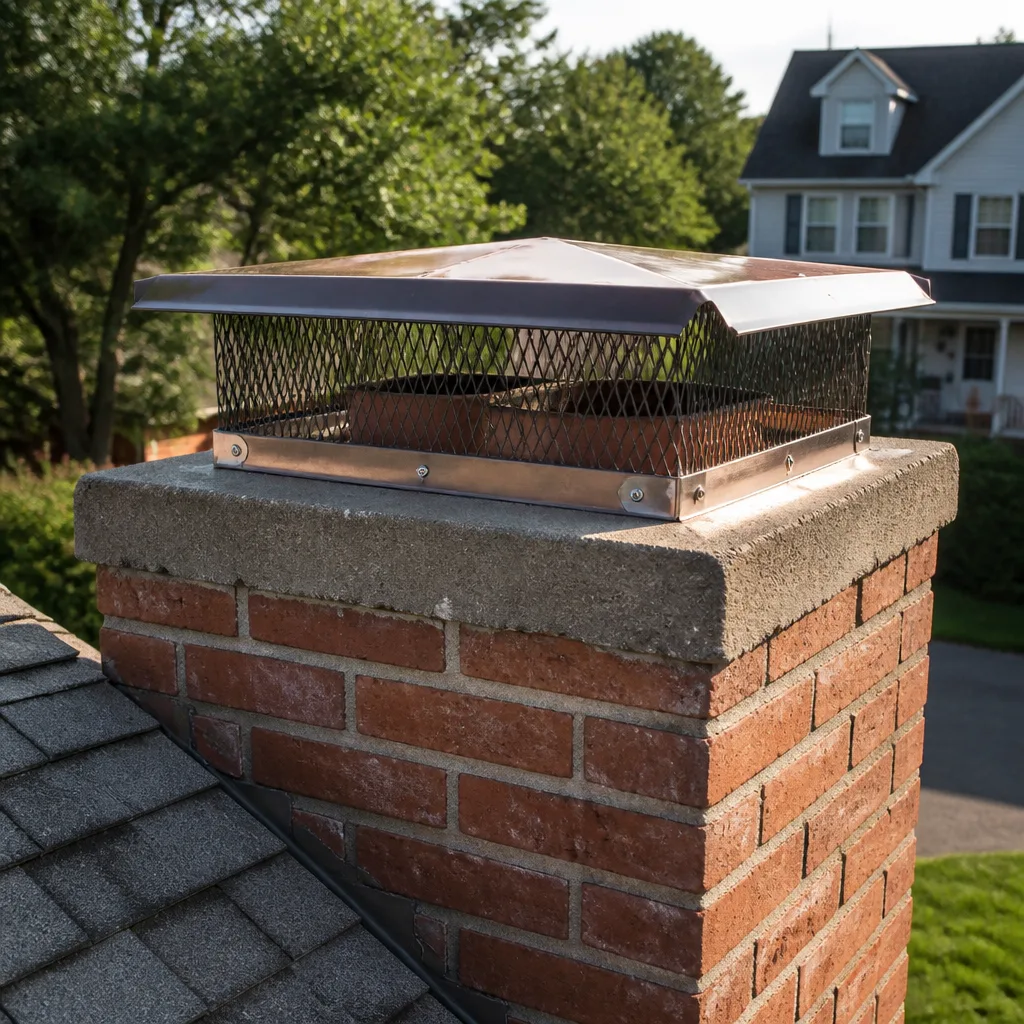
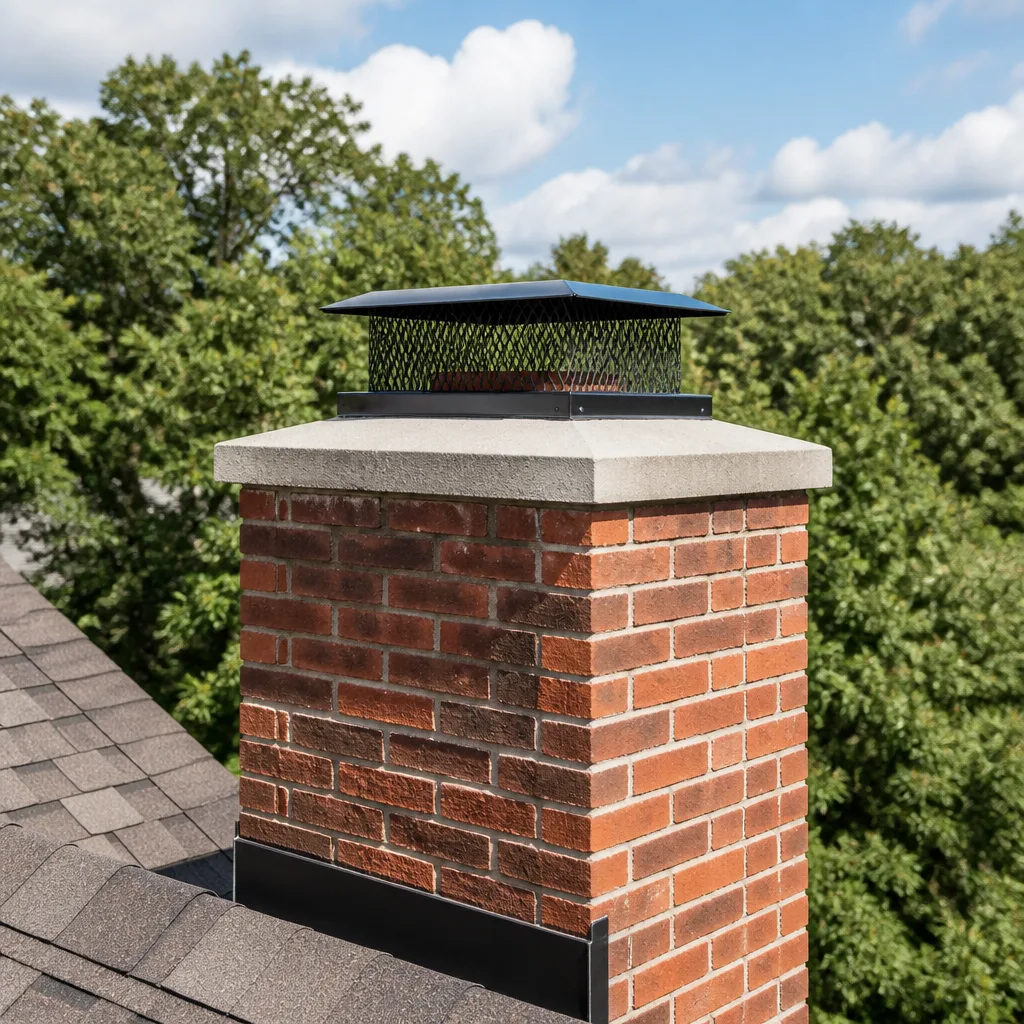
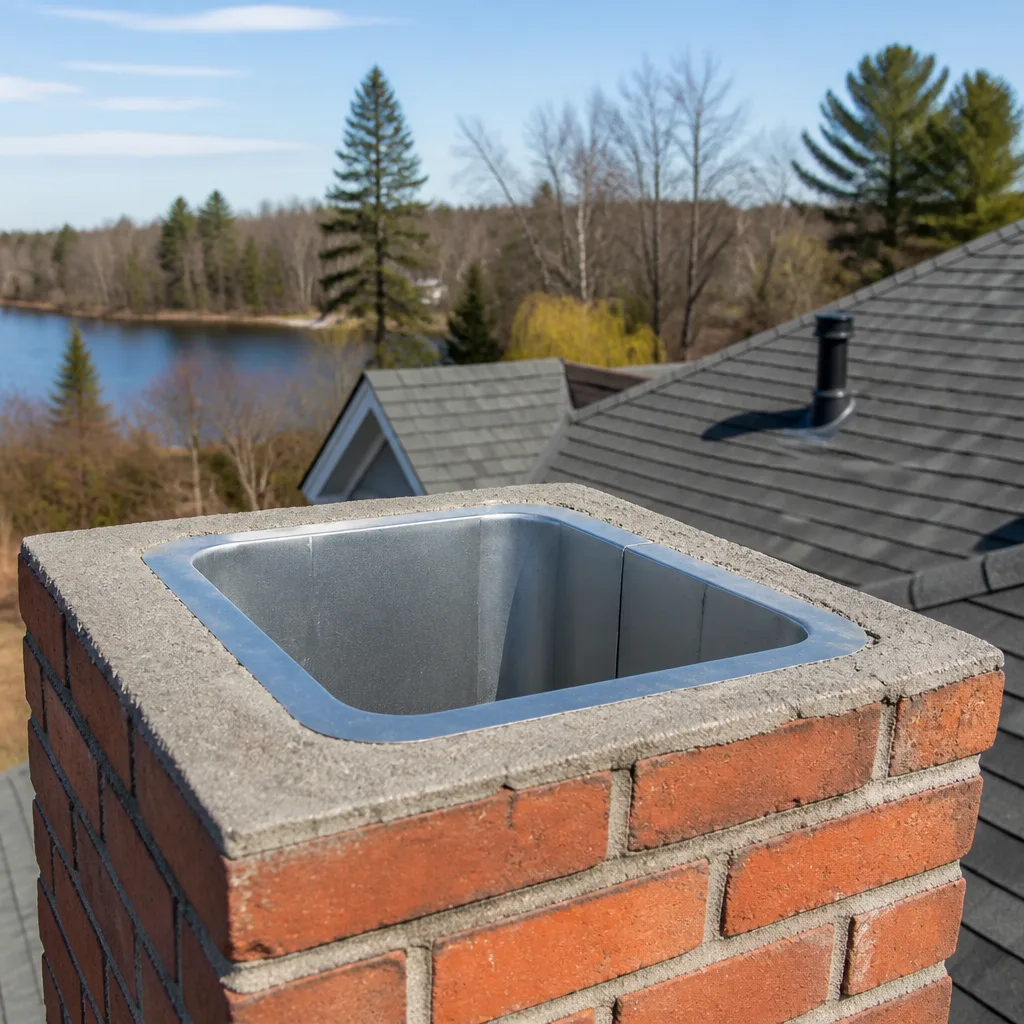
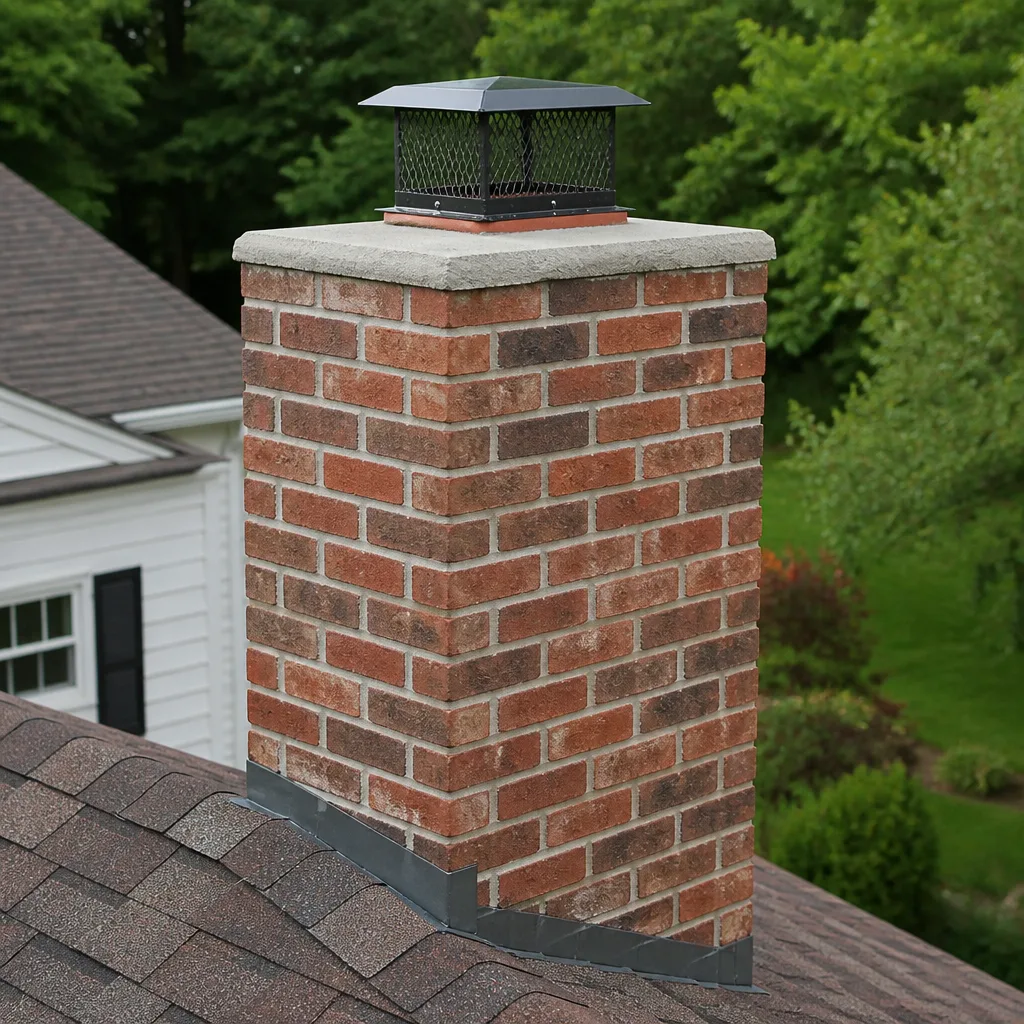
Level 1 sweep and inspection to the NFPA 211 annual standard - flue, crown, cap, and flashing checked and photographed
Chimney sweep logs do not sweep chimneys. They loosen some creosote - which then falls where a brush and vacuum still have to collect it.
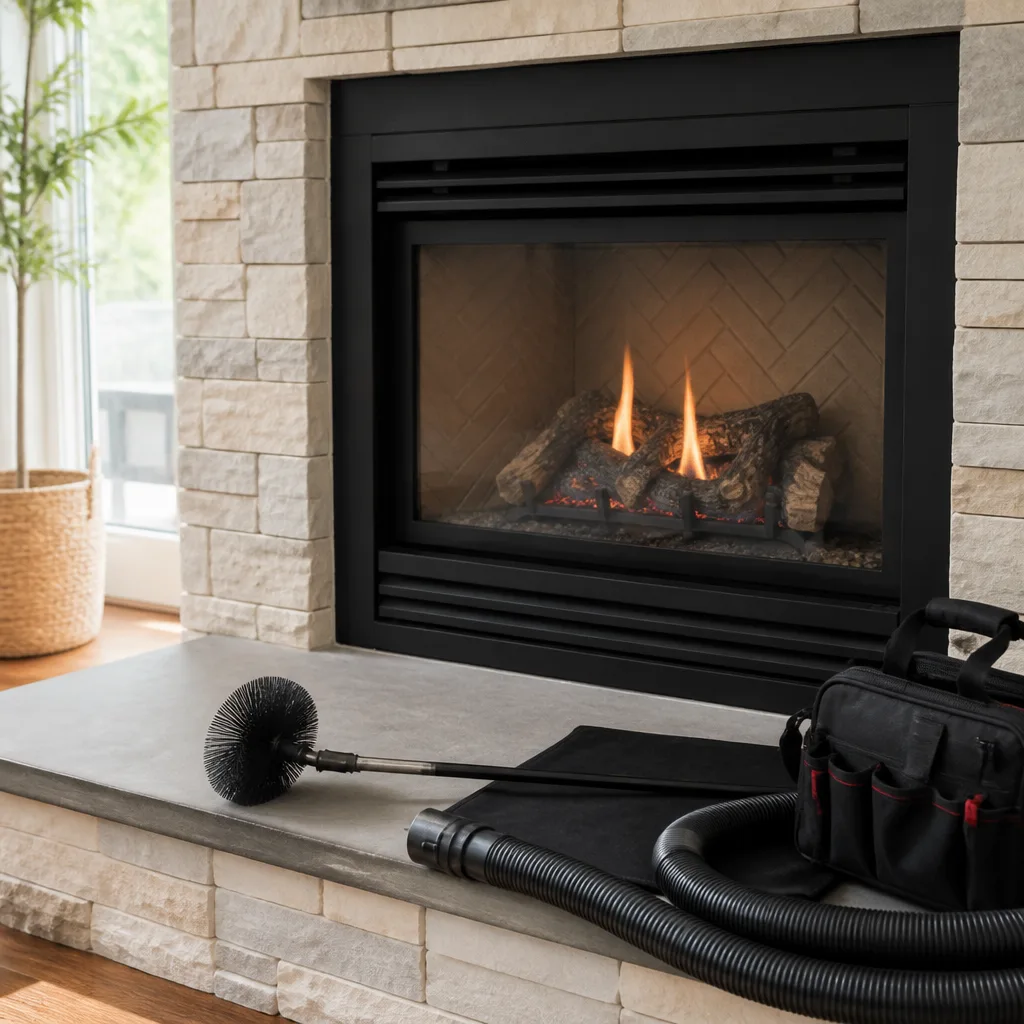
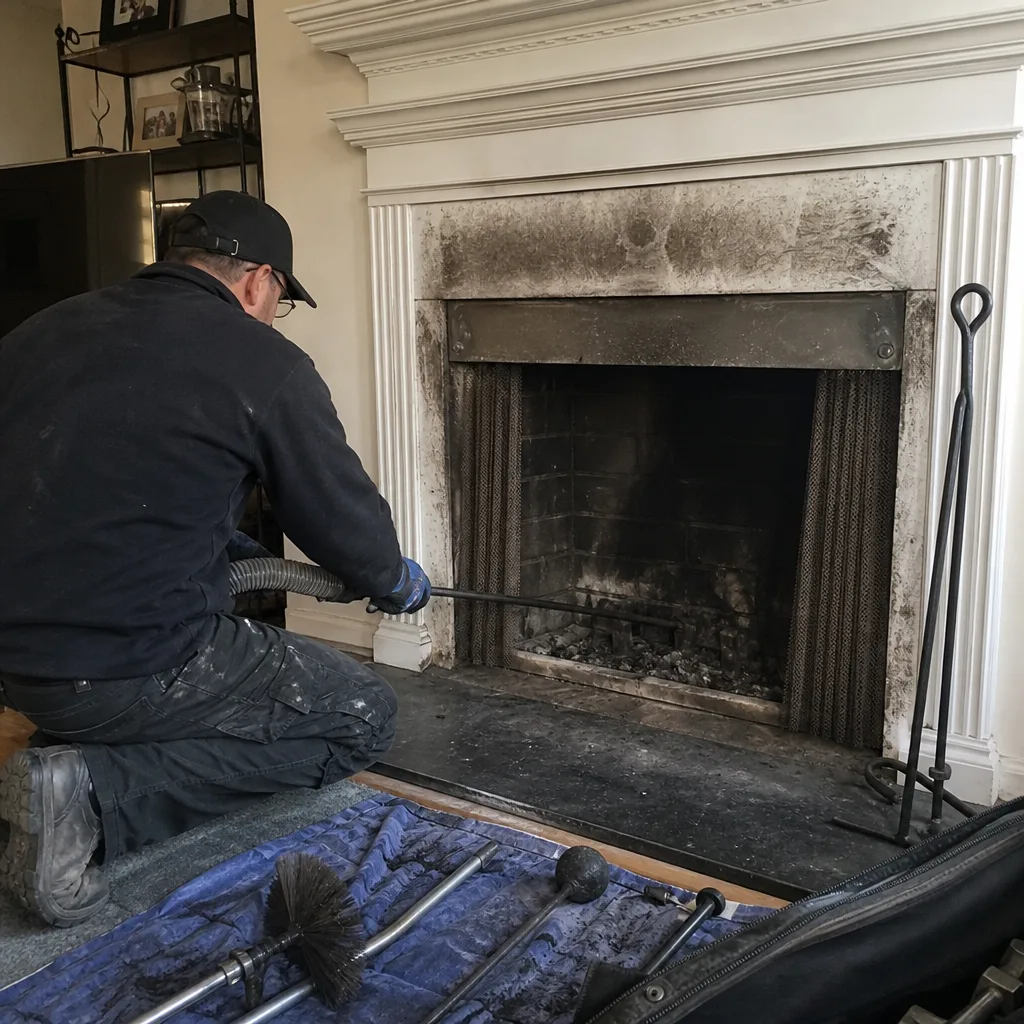 Before
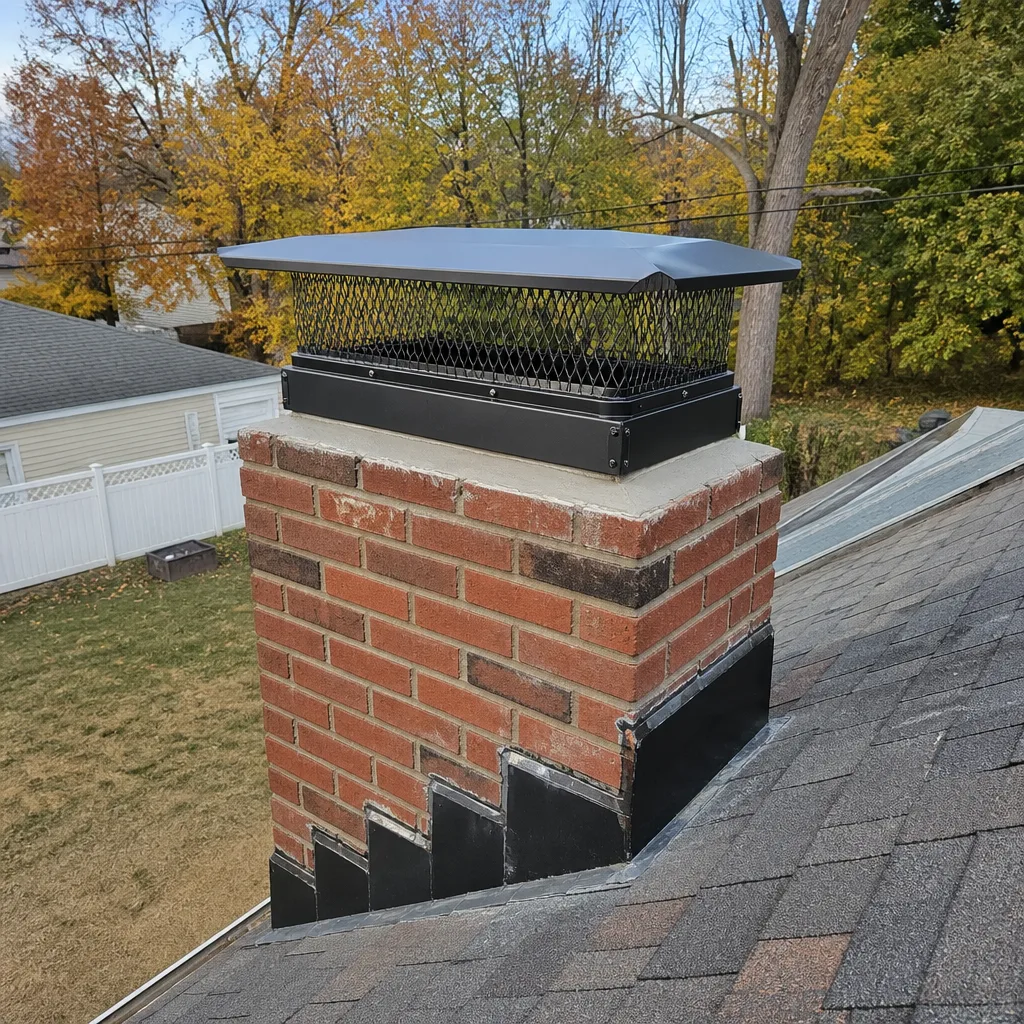 After
After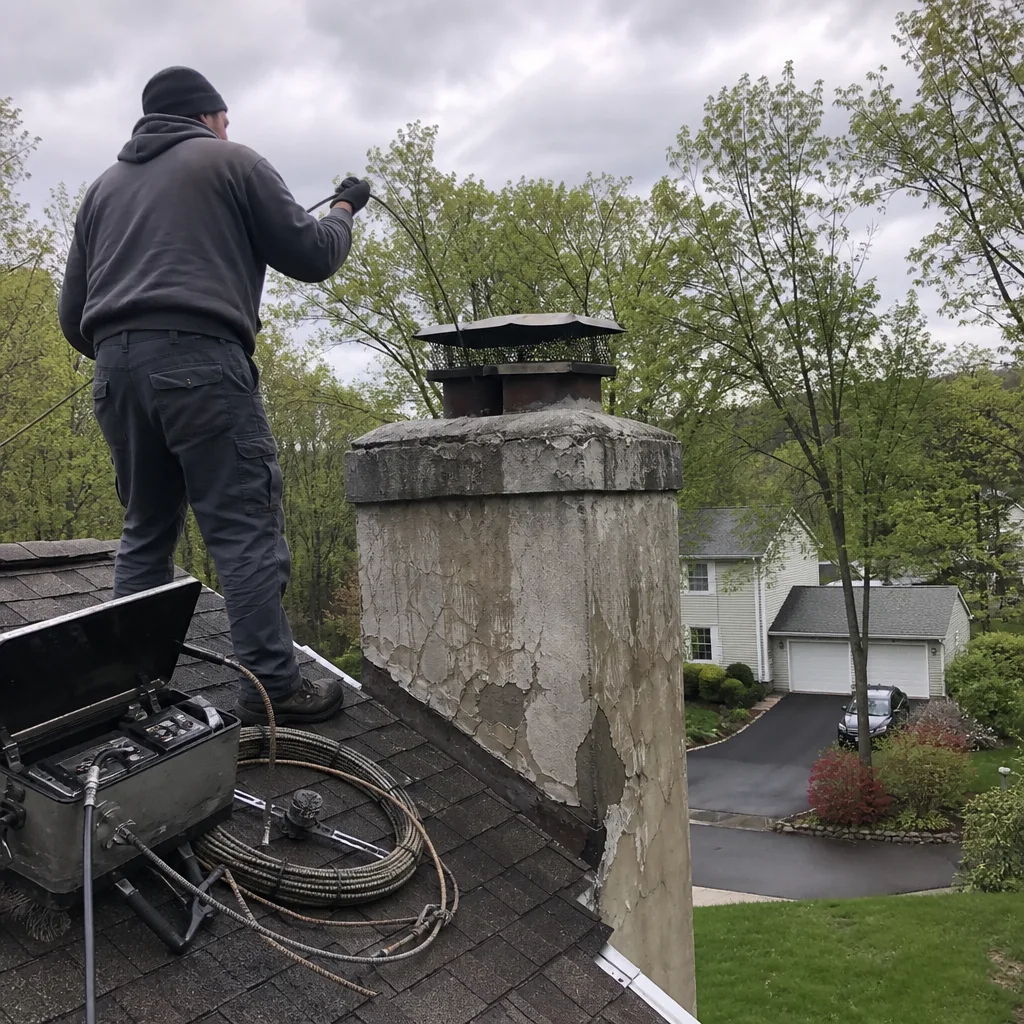 Before
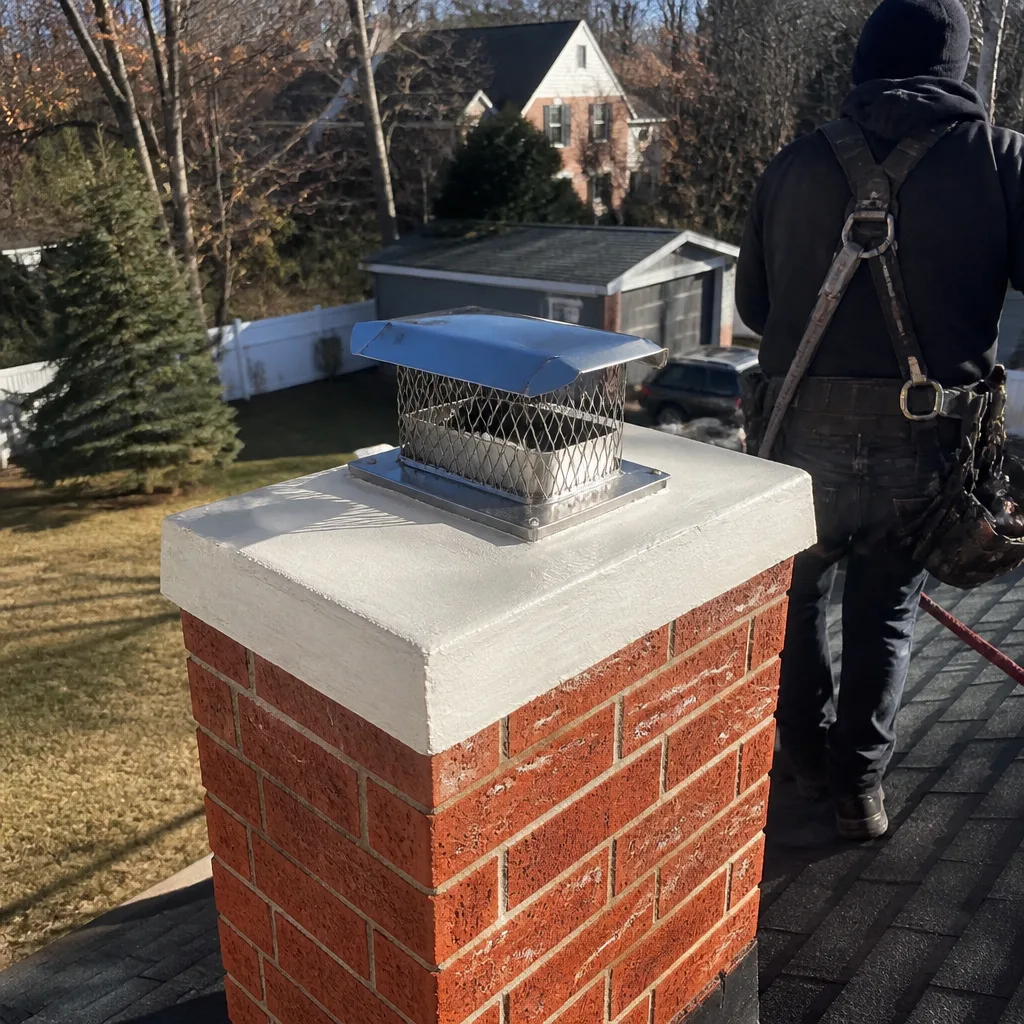 After
After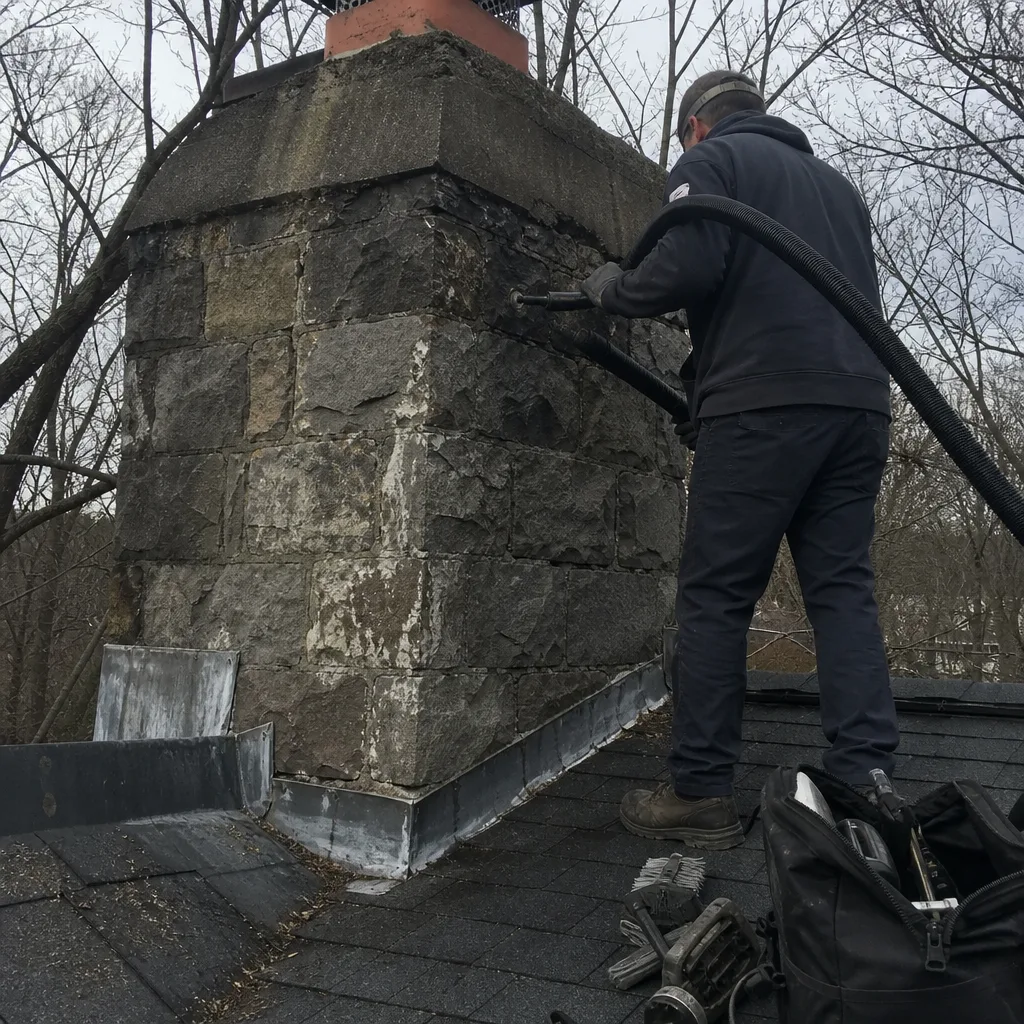 Before
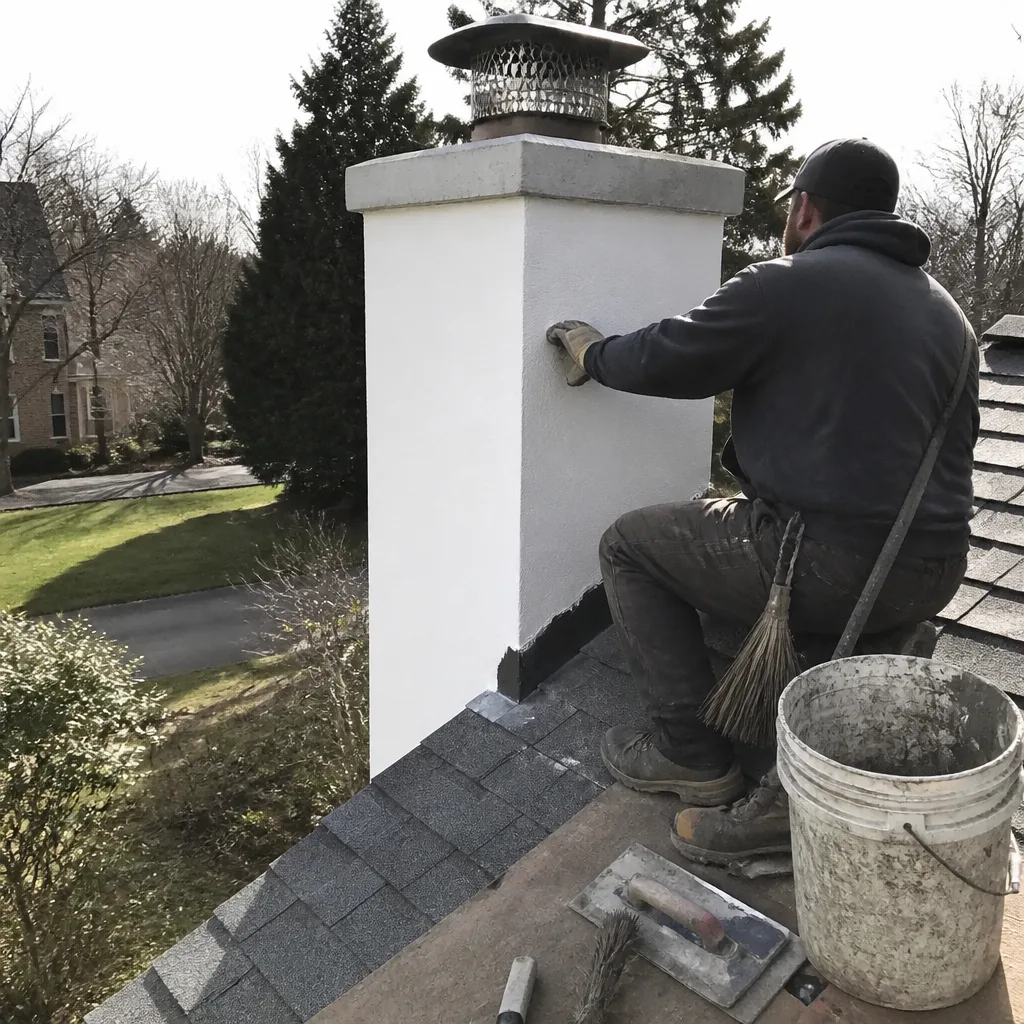 After
AfterSeasonal Chimney Cleaning Care for New City: Year-Round Homeowner’s Guide
The most common time for a chimney crown to crack in Rockland County is March, not January. The freeze-thaw cycling that follows a January thaw works water into hairline gaps, then expands them when temperatures drop again. By October, that crack is a structural problem requiring crown rebuild rather than simple sealing. New City homeowners who treat chimney care as a single fall appointment miss three seasons of conditions that actively degrade mortar, caps, liners, and dampers. This guide - and our Chimney Cleaning & Sweep Maintenance Checklist for New City Homeowners - assigns specific tasks to specific months, built around New City’s actual climate patterns: first frost dates in mid-October, average snowpack of 35-40 inches, spring thaw cycles that stress masonry, and summer humidity that activates dormant creosote odors.
Quick Answer
Year-round chimney care in New City means sweeping in late September before the heating season, inspecting for crown and cap damage after March freeze-thaw cycles, waterproofing masonry during the dry windows of late May or early September, and monitoring for animal nesting and moisture intrusion during humid summer months. A chimney maintained on this calendar - or with our more guides & resources - avoids emergency repairs and extends service life by years.
Table of Contents
- January-February: Deep Winter Stress and Post-Storm Inspection
- March-April: The Hidden Damage Season
- May-June: Waterproofing Window and Animal Exclusion
- July-August: Summer Humidity and Odor Management
- September-October: The Correct Cleaning Window for New City
- November-December: Fire Season Monitoring and Mid-Season Checks
- After Specific Weather Events: Nor’easters, Ice Storms, and Extreme Cold
- Your New City Chimney Calendar: Month-by-Month Task List
January-February: Deep Winter Stress and Post-Storm Inspection
New City’s January nights regularly drop below 15°F, and extended periods below 10°F create a specific stress pattern most homeowners never consider. Masonry contracts in extreme cold. Metal flue liners contract at a different rate. The gap that opens between liner and masonry, even microscopic, becomes a pathway for combustion gases and a collection point for condensation that freezes, thaws, and widens the separation.
We’ve inspected chimneys in New City after week-long cold snaps and found liner separations that did not exist in November. The damage is invisible from the firebox. It requires a Level-2 camera inspection to document.
What to watch for in deep winter:
- White efflorescence on exterior brick - indicates moisture migration and freeze damage inside the masonry
- New gaps between the chimney and siding or roofline - thermal movement loosens flashing
- Draft problems that worsen on the coldest nights - may indicate liner separation or blockages from ice formations
- Unusual odors when the fireplace is not in use - cold air sinking down a compromised flue carries outside smells
After any significant snow event, check the chimney cap and crown from ground level with binoculars. Snow load can dislodge caps, and ice damming at the roofline can redirect meltwater into the chimney structure. In our experience, the chimneys most vulnerable to winter damage in New City are those on north-facing slopes in neighborhoods like Braemar and the higher elevations near Germonds Road, where snow lingers longest and sun exposure is minimal.
Do not attempt to remove ice or snow from the chimney yourself. The combination of height, ice, and masonry edges creates genuine fall hazard. This is work for equipped professionals.
March-April: The Hidden Damage Season
March is the most destructive month for New City chimneys. The average daily temperature swings from lows near 25°F to highs approaching 50°F, and this repeated freeze-thaw cycling does more damage than steady cold ever could.
Water enters masonry through pores, hairline cracks, and deteriorated mortar joints. When it freezes, it expands by approximately 9%. When it thaws, it contracts and leaves a slightly larger space. Each cycle enlarges the pathway. A crown with microscopic crazing in October has visible cracking by April. We’ve documented this progression repeatedly in inspections throughout Clarkstown and the surrounding towns.
The March inspection priority list:
- Crown condition: Look for new cracks, spalling, or pooling areas where water collects. The crown should shed water to all sides. Any depression holds water and accelerates deterioration.
- Cap integrity: Check that the cap is secure, properly sized, and has intact mesh sides. Winter wind and ice can bend or dislodge caps.
- Flashing seal: The metal junction between chimney and roof moves with thermal cycling. Spring is when separated flashing becomes obvious as water stains on interior ceilings.
- Mortar joints: Tuckpointing needs identified in spring can be scheduled before the fall rush, when every sweep in Rockland County is booked weeks out.
Spring repairs have another advantage: mortar and crown patching materials cure best in moderate temperatures with low humidity. A crown rebuilt in April using professional-grade compounds like those from Chimney Repair in New City has months to cure before facing the next freeze cycle. The same repair rushed in November may not achieve full strength before winter stress begins.
Homeowners in wooded lots near Congers Lake or the undeveloped areas off Route 304 should pay particular attention to cap condition in spring. Squirrels and raccoons are actively seeking nesting sites, and a damaged cap is an open invitation.
May-June: Waterproofing Window and Animal Exclusion
Chimney waterproofing is the maintenance task with the most frequently missed seasonal window. The sealant must be applied to thoroughly dry masonry to bond properly and to allow the solvent carrier to evaporate. In New City’s climate, this creates two narrow opportunities: late May through mid-June, and early September before the fall rains return.
By late May, spring rains have typically passed, average humidity drops, and daytime temperatures reach the 70-80°F range ideal for solvent-based penetrating sealers. Waiting until July often means competing with afternoon thunderstorms that interrupt cure time. Waiting until August risks the humidity spike that precedes fall storm patterns.
What proper waterproofing involves:
- Cleaning the exterior masonry to remove efflorescence, biological growth, and loose material
- Repairing mortar joints and crown cracks before sealing - sealant over damaged masonry traps water inside
- Application of vapor-permeable sealant that allows moisture to escape while blocking liquid water entry
- Avoidance of film-forming coatings like paint or non-breathable sealers, which accelerate spalling by trapping moisture
We use professional-grade waterproofing compounds from Copperfield and Olympia Chimney for exterior applications, selected for vapor permeability ratings appropriate to New City’s freeze-thaw exposure. A proper application lasts 7-10 years and costs significantly less than rebuilding spalled masonry.
May is also prime time for animal exclusion work. Chimney swifts, protected under federal law, arrive in our area in late April and nest through July. If swifts are present, the flue cannot be capped until they depart in August. However, raccoons, squirrels, and starlings can and should be excluded before nesting begins. A properly sized cap with intact mesh prevents entry while maintaining draft.
Homeowners near Rockland Lake State Park and the wooded corridors along the Hackensack River tributaries experience higher animal pressure than those in more developed neighborhoods. We’ve removed nests from uncapped flues in New City as late as early June, by which point the odor and parasite problems have become significant.
July-August: Summer Humidity and Odor Management
Summer is when New City homeowners who skipped spring cleaning discover their chimney has an odor problem. Humidity activates dormant creosote deposits, producing a sour, smoky smell that permeates the house through the fireplace opening. The problem is worse in air-conditioned homes, where the pressure differential draws air down the flue.
The solution is not air freshener. It is removing the creosote source and addressing the negative pressure that draws it indoors.
Summer chimney odor sources and responses:
| Odor Character | Likely Source | Response |
|---|---|---|
| Sour, smoky, tar-like | Active creosote deposits | Professional sweep; evaluate burning habits and wood moisture |
| Musty, organic | Animal nesting or moisture intrusion | Camera inspection; cap repair; moisture source identification |
| Sewage or decay | Dead animal in flue | Removal and sanitization; cap installation to prevent recurrence |
| Sharp, chemical | Chimney swift droppings (guano) | Wait for departure (protected species); then clean and cap |
July and August are also when we schedule Level-2 camera inspections for New City homeowners who want to plan fall work. The inspection itself is unaffected by weather, and identifying needed repairs in summer allows scheduling before the September rush. Our technicians document every inspection with photos the homeowner can see and a plain-English verdict - documented like an engineer, explained like a craftsman.
For homes with persistent negative pressure and odor issues, we evaluate the overall air balance. Modern weatherization, exhaust fans, and HVAC systems often depressurize homes enough to reverse chimney draft. The fix may involve a dedicated outside air supply, a top-sealing damper, or adjustment of household ventilation - not always chimney reconstruction.
September-October: The Correct Cleaning Window for New City
Most New City homeowners think October is chimney sweeping season. They’re wrong by about three weeks.
Late September is the correct cleaning window for five specific reasons tied to our local conditions:
- Sweep availability: By October 15, every reputable sweep in Rockland County is booked two to three weeks out. Scheduling in late September secures your preferred date.
- Mortar cure time: If inspection reveals needed repairs - crown cracks, mortar joint deterioration, flashing separation - completing them in early October allows cure time before first frost. New City’s average first frost date is October 15-20.
- Early fire season: The first cold snap that drives homeowners to light fires often arrives in late September, not November. A chimney swept by September 25 is ready.
- Wood moisture content: Firewood purchased or harvested in spring reaches proper seasoning (below 20% moisture) by September if split and stacked properly. Burning properly seasoned wood from the season’s start reduces creosote accumulation.
- Insurance and warranty requirements: Some homeowner policies and wood stove warranties require documented annual inspection before the heating season begins.
The Chimney Cleaning & Sweep in New City process we follow includes more than brush work. Our seasonal tune-up includes the Level-2 camera inspection, damper operation check, firebox and smoke chamber evaluation, and documentation of all findings. If repairs are needed, we provide no-hassle upfront pricing - the number on the estimate is the number on the invoice.
Homeowners in New City’s older neighborhoods - the pre-war homes near the downtown core, the mid-century splits off South Little Tor Road - should be particularly attentive to liner condition during fall inspection. Many of these chimneys were built for coal or oil and later adapted to wood or gas without proper liner sizing. An improperly sized liner creates draft problems, creosote accumulation, and carbon monoxide risk that intensifies with the first sustained use of the heating season.
We do not recommend same-day sweeping and burning. Even a professionally cleaned chimney needs time for any residual dust to settle, and the inspection process may reveal conditions that require correction before safe operation.
November-December: Fire Season Monitoring and Mid-Season Checks
Once the heating season is underway, chimney care shifts from prevention to monitoring. The habits you establish in November determine whether January brings a clean, efficient system or a creosote-heavy fire risk.
Mid-season practices for New City homeowners:
- Burn only seasoned hardwood - oak, maple, ash, or beech - with verified moisture content below 20%. Wet or soft woods (pine, spruce, unseasoned cuttings) produce creosote at 3-4 times the rate of proper fuel.
- Maintain active, visible flames. Smoldering fires deposit creosote; complete combustion does not.
- Empty ash containers into metal cans with tight lids, stored outside on concrete - never on wood decks or in garages. Embers can remain active for days.
- Install and maintain carbon monoxide detectors on every sleeping level. A blocked or damaged flue can redirect CO into living spaces without visible smoke.
- Schedule a mid-season inspection if you burn more than three cords of wood, or if you notice draft deterioration, smoke spillage, or unusual odors.
The holiday period brings specific risks. Wrapping paper, cardboard, and evergreen branches create intense, short-duration fires that can ignite creosote deposits or overheat masonry. We’ve responded to post-Christmas chimney fires in New City caused by burning packing materials. The Fireplace Services in New City we provide include plain-spoken guidance on safe burning practices - not because we enjoy saying no, but because we’ve seen the consequences of saying yes to the wrong fuel.
December is also when we receive calls from homeowners who skipped fall maintenance and are now experiencing draft problems on the coldest nights. We answer every call with a live person, 24 hours a day, 7 days a week - not a voicemail, not a callback queue. But we cannot create appointment slots that don’t exist. The homeowners who called in September have their sweep completed; those who waited until December join the queue.
After Specific Weather Events: Nor’easters, Ice Storms, and Extreme Cold
New City’s location in the Hudson Valley corridor exposes chimneys to weather patterns that produce distinct damage signatures. Understanding what to check after each event type prevents small problems from becoming emergency repairs.
Nor’easters (heavy snow and wind):
These storms test cap security and flashing integrity. Wind gusts exceeding 50 mph can dislodge poorly secured caps or bend mesh sides. Snow load, particularly wet snow exceeding 2 inches per hour, stresses crown overhangs and can crack unsupported edges. After any nor’easter, inspect from ground level for missing or shifted caps, new water stains on ceilings near the chimney, and accumulation against the chimney base that could promote freeze-thaw cycling.
Ice storms (freezing rain and glaze ice):
Ice accumulation on chimneys is particularly destructive because it forms on all exposed surfaces simultaneously. The weight can dislodge caps. The glaze coating prevents normal water shedding. When temperatures rise, water infiltrates every surface imperfection and refreezes in the next cold period. After ice storms, we prioritize inspection of crown condition, cap attachment, and any areas where ice damming may have directed water behind flashing.
Extended periods below 10°F:
As noted in the January-February section, sustained extreme cold creates differential contraction between masonry, metal liners, and mortar. The damage manifests as liner separation, new mortar cracking, and in severe cases, structural shifting. We recommend Level-2 camera inspection after any period of three or more consecutive days with highs below 15°F, particularly for chimneys over 30 years old or with known prior repairs.
Homeowners in the higher elevations of New City, particularly those above 400 feet near the Clarkstown border, experience more severe versions of all these events than those closer to the Hudson River. Their inspection frequency should reflect this exposure.
Your New City Chimney Calendar: Month-by-Month Task List
| Month | Primary Task | Secondary Task |
|---|---|---|
| January | Monitor for draft problems after extreme cold | Check cap and crown after snow events |
| February | Schedule spring inspection if problems identified | Maintain burning discipline with seasoned wood |
| March | Post-winter inspection: crown, cap, flashing, mortar | Book waterproofing if needed |
| April | Complete crown repairs and tuckpointing | Begin animal exclusion if no swifts present |
| May | Waterproofing application window opens | Final animal exclusion before nesting peak |
| June | Complete waterproofing if not done in May | Schedule summer camera inspection for fall planning |
| July | Address odor problems from humidity-activated creosote | Evaluate air pressure and draft issues |
| August | Swift departure - cap installation window | Final pre-fall inspection and repair scheduling |
| September | Chimney sweeping and Level-2 inspection | Complete any repairs before first frost |
| October | Final system check before sustained use | Wood supply verification (moisture testing) |
| November | Establish clean burning habits | CO detector function check |
| December | Mid-season assessment if heavy use | Safe holiday burning practices review |
Common Mistakes to Avoid
- Waiting until October to schedule sweeping. By then, availability is scarce and repairs may not cure before frost. New City’s first cold snaps often arrive in late September.
- Applying waterproofing to damp masonry. Sealant trapped over wet brick fails within one season and accelerates spalling. The dry window in New City is narrower than most homeowners assume.
- Burning unseasoned wood because “it’s all I have.” Wood above 25% moisture produces dangerous creosote accumulation and wastes fuel. A moisture meter costs less than one emergency service call.
- Ignoring animal sounds in summer. Scratching or chirping from the flue in June means nesting is underway. Delaying until fall means dealing with dead animals, parasites, and blocked flues.
- Assuming a gas fireplace needs no chimney attention. Gas appliances produce corrosive condensation and require intact liners. We’ve found deteriorated gas flues in New City homes where owners assumed “gas burns clean.”
- DIY cap installation with hardware-store products. Improperly sized caps create draft problems, trap moisture, or fall off in the first storm. Professional-grade caps from Gelco or Famco are measured, fitted, and secured for specific flue dimensions.
- Skipping inspection after visible weather damage. A shifted cap or missing mortar chunk seen from the ground signals conditions inside the flue that only camera inspection can assess.
When to Call a Professional
Certain conditions require trained evaluation and are not appropriate for homeowner diagnosis. Call a certified sweep when you observe: visible cracks or spalling on the crown or exterior masonry; water stains on ceilings or walls adjacent to the chimney; smoke spillage into the room during normal operation; persistent odors that don’t resolve with cleaning; animal sounds or debris in the flue; or any chimney fire event, even one that self-extinguished.
After any weather event involving high wind, heavy ice, or extended extreme cold, a Level-2 camera inspection provides documentation of hidden damage that visual inspection cannot reveal. Hearthstone Chimney Co. offers free estimates in New City - call (845) 599-0930. Our technicians are background-checked and uniformed, and most jobs are completed in a single visit with no-hassle upfront pricing.
Frequently Asked Questions
A professional chimney sweep in New City typically ranges from $200 to $350 for a standard Level-1 cleaning with visual inspection, while a Level-2 camera inspection with full documentation runs $300 to $500 depending on accessibility and system complexity. See our Chimney Cleaning Cost Breakdown: The New City Homeowner’s Reference for 2026 for detailed pricing factors. Hearthstone Chimney Co. offers an $89 Seasonal Tune-Up that includes the sweep and basic inspection for qualifying systems. Call (845) 599-0930 for an exact quote - estimates are free.
The National Fire Protection Association recommends annual inspection for all chimneys, with sweeping frequency determined by use and fuel type. A wood-burning fireplace used regularly during New City’s heating season (October through April) should be swept annually. Gas systems require inspection but may need less frequent cleaning. Heavy use - more than three cords of wood per season - warrants mid-season evaluation.
A liner replacement is necessary when inspection reveals cracks, gaps, or deterioration that compromise containment of combustion gases or proper draft performance. We never recommend liner work without camera evidence you can see for yourself, and we plainly identify when conditions can be monitored rather than immediately repaired. In New City, we’ve seen clay tile liners in 1960s splits off Germonds Road that remain serviceable, and stainless steel liners in newer homes that failed prematurely due to improper installation. The condition, not the age, governs the recommendation.
Skipped maintenance leads to creosote accumulation that increases fire risk, moisture intrusion that degrades masonry and metal components, animal nesting that blocks flues, and undetected liner damage that can allow carbon monoxide into living spaces. The cost of deferred maintenance compounds: a $200 sweep skipped becomes a $2,000 repair, then a $6,000 rebuild. In our 42 years serving this area, we’ve never inspected a chimney that was “fine” after five years of neglect.
Humidity activates dormant creosote deposits, producing sour, smoky odors that are drawn into air-conditioned homes by pressure differentials. The smell indicates deposits that need removal, not a problem that resolves on its own. In New City’s humid July and August, we’ve responded to odor complaints from homeowners who swept in fall but burned wet wood all winter, leaving heavy creosote that summer humidity revealed.
Waterproofing requires proper surface preparation, repair of cracks and mortar joints before sealing, and application of vapor-permeable professional-grade sealant at appropriate temperature and humidity. Film-forming or non-breathable products trap moisture and accelerate damage. The narrow application window in New City - typically late May or early September - is easily missed. Professional application with proper materials costs less than correcting a DIY failure.
The Bottom Line
New City’s climate delivers distinct challenges across twelve months, and effective chimney care matches specific tasks to specific seasons. Sweep in late September, inspect after March freeze-thaw cycles, waterproof during dry windows in May or September, and monitor for animal intrusion and humidity effects through summer. The homeowners who follow this calendar avoid emergency repairs, extend chimney service life, and enjoy their fireplaces with confidence. Those who treat chimney care as a single fall appointment miss the conditions that cause most expensive failures. Done right - and we stand behind it - chimney maintenance is predictable, documented, and proportionate to actual need.
Written by Russell Haines, Owner at Hearthstone Chimney Co., serving New City since 2014.