
Last updated September 10, 2026
Level 1 sweep and inspection to the NFPA 211 annual standard - flue, crown, cap, and flashing checked and photographed
Chimney sweep logs do not sweep chimneys. They loosen some creosote - which then falls where a brush and vacuum still have to collect it.
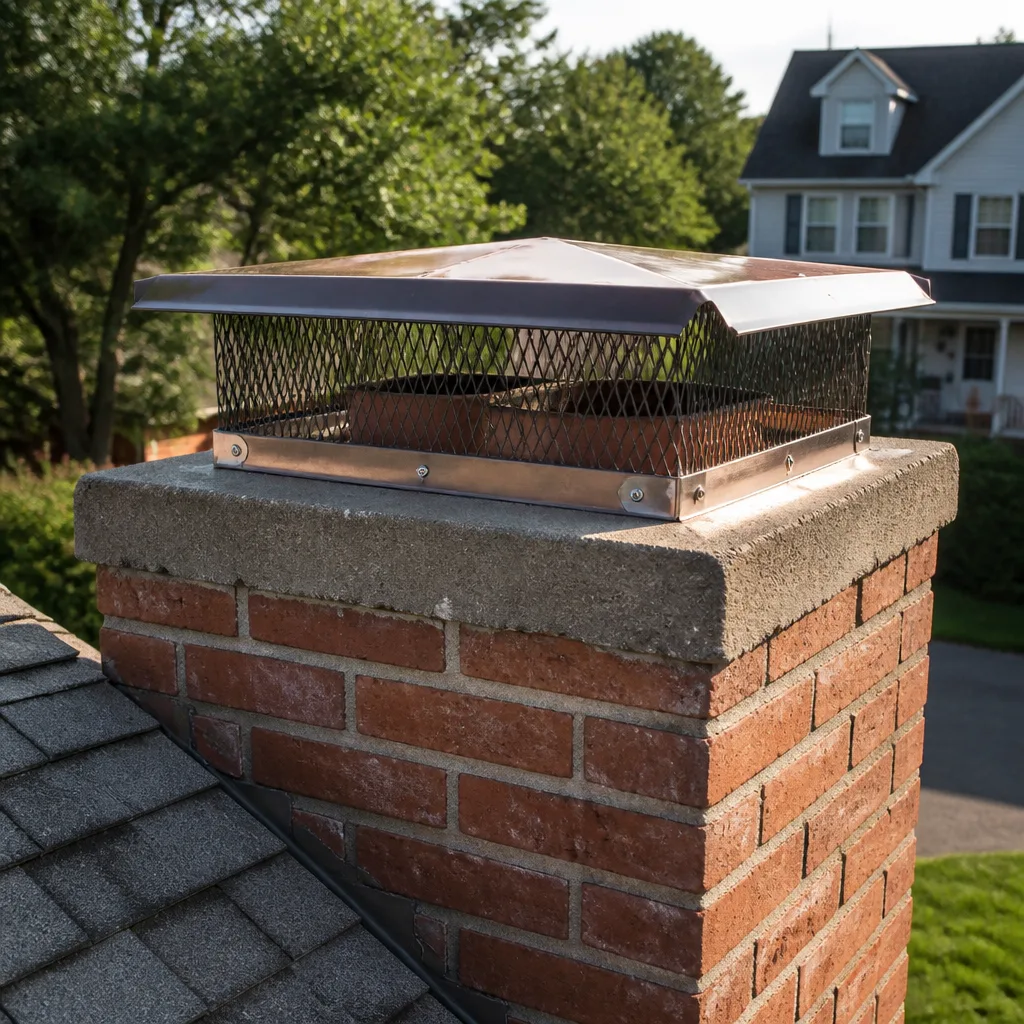
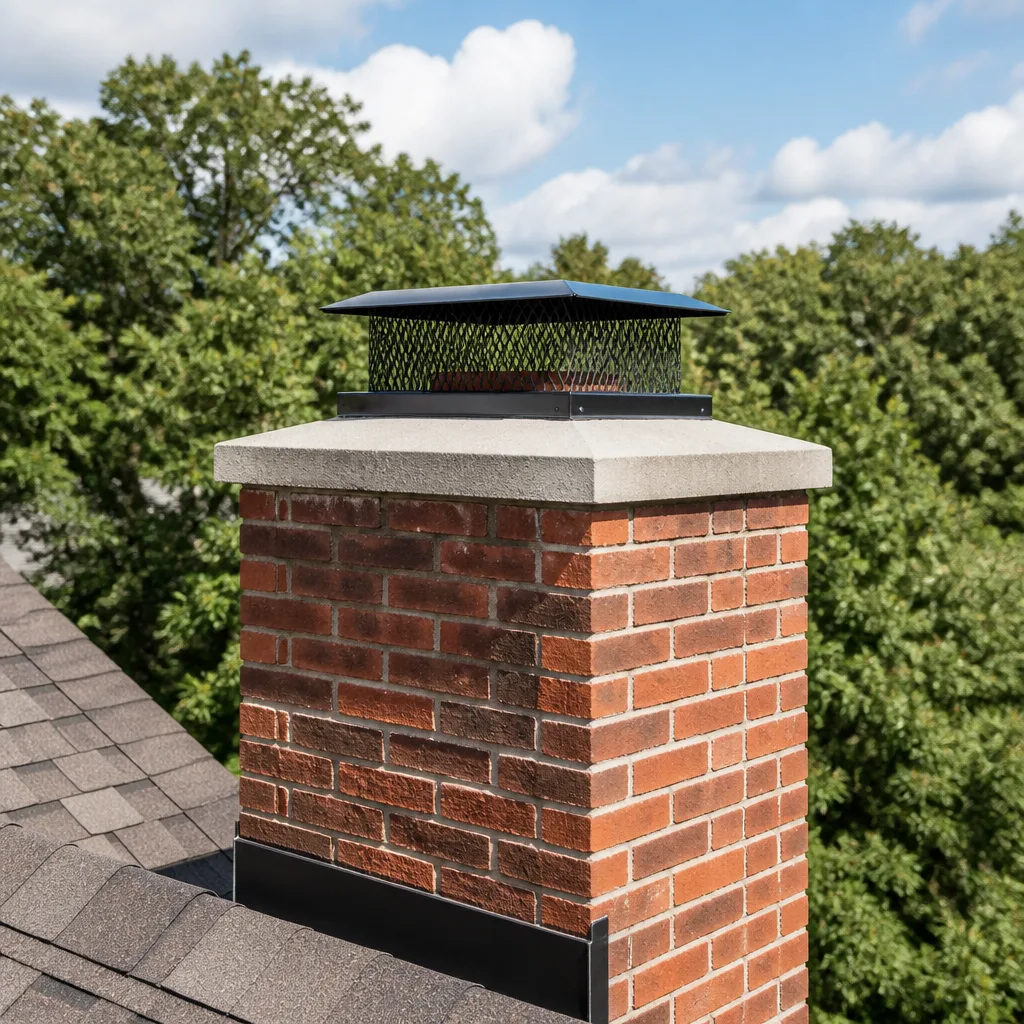
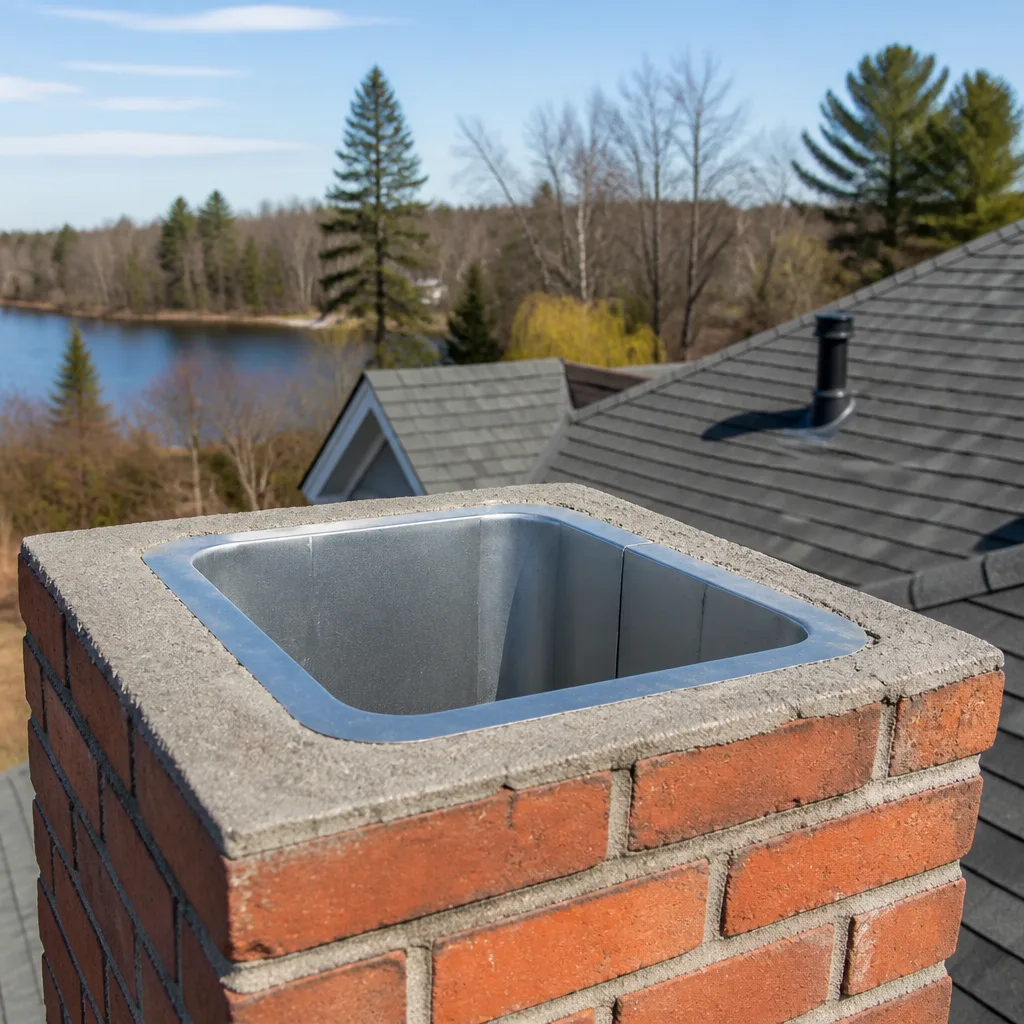
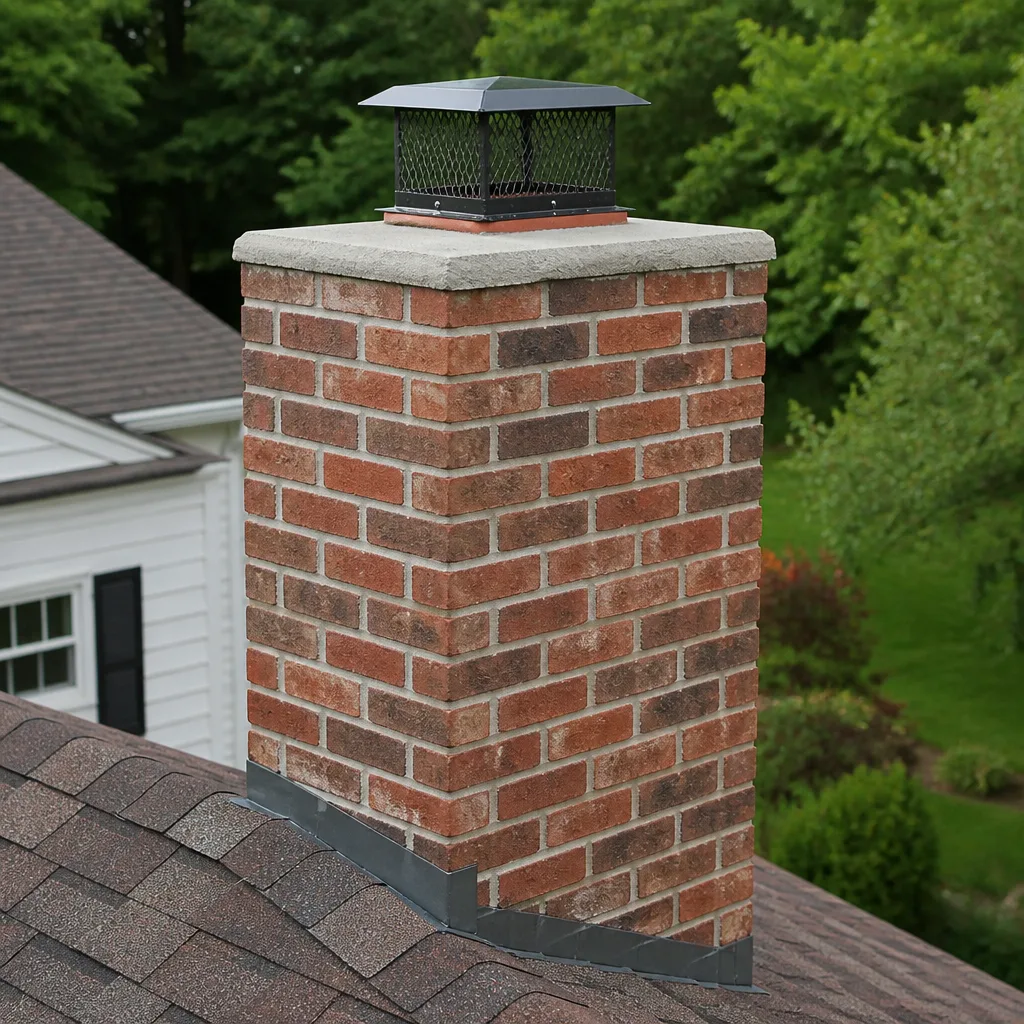
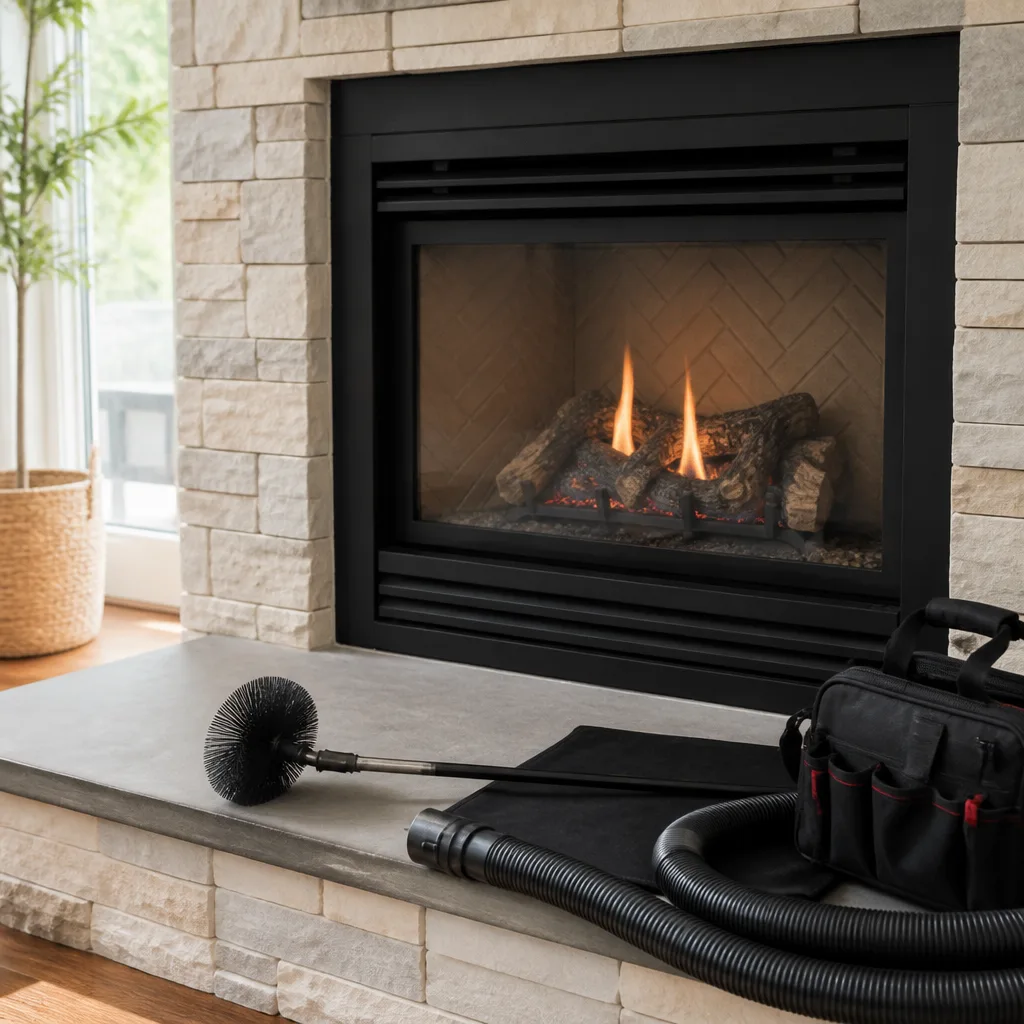
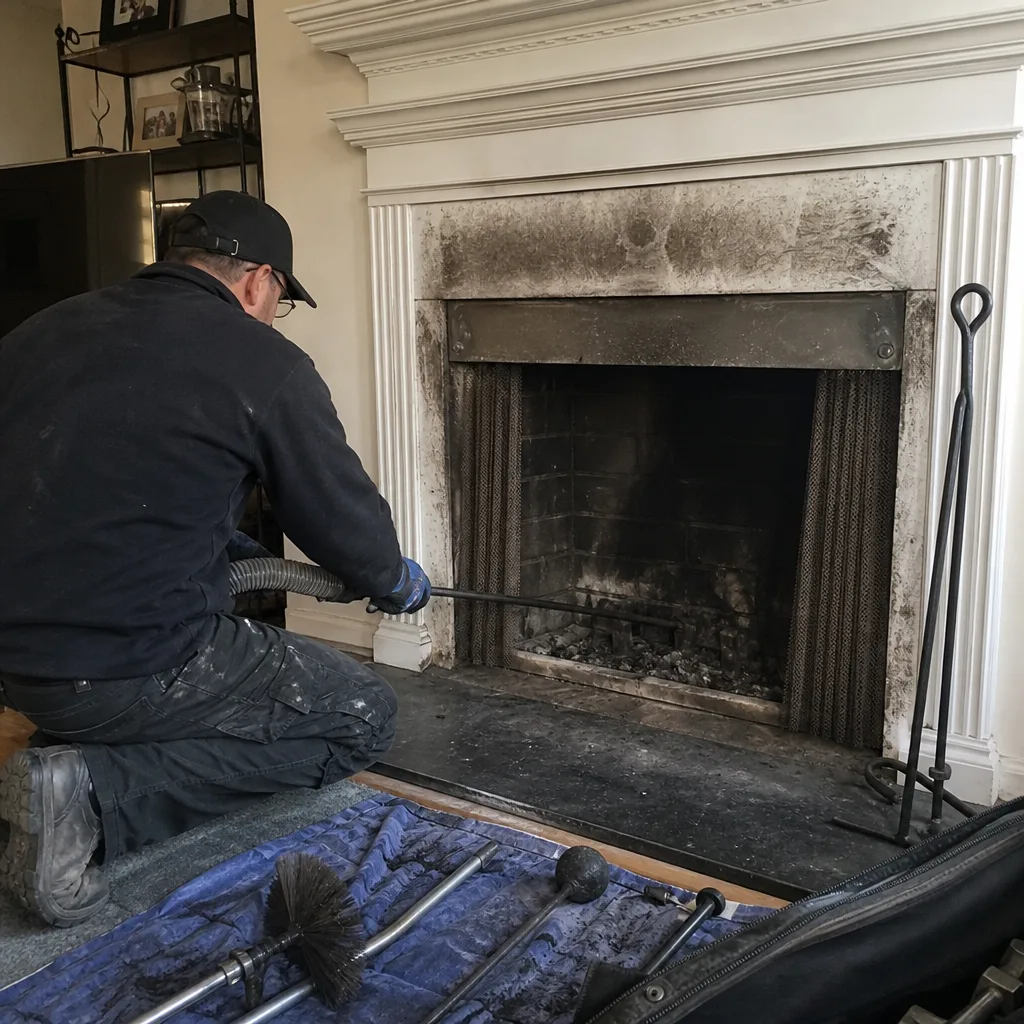 Before
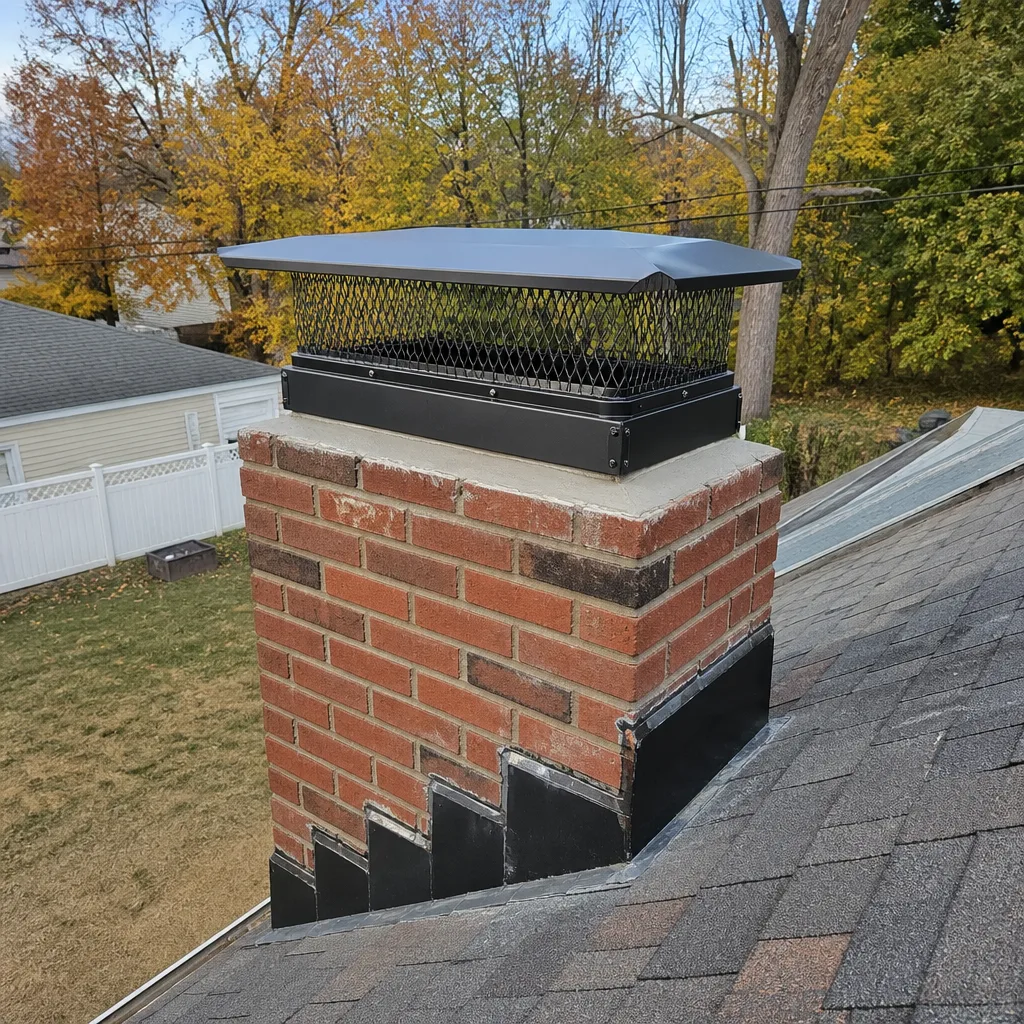 After
After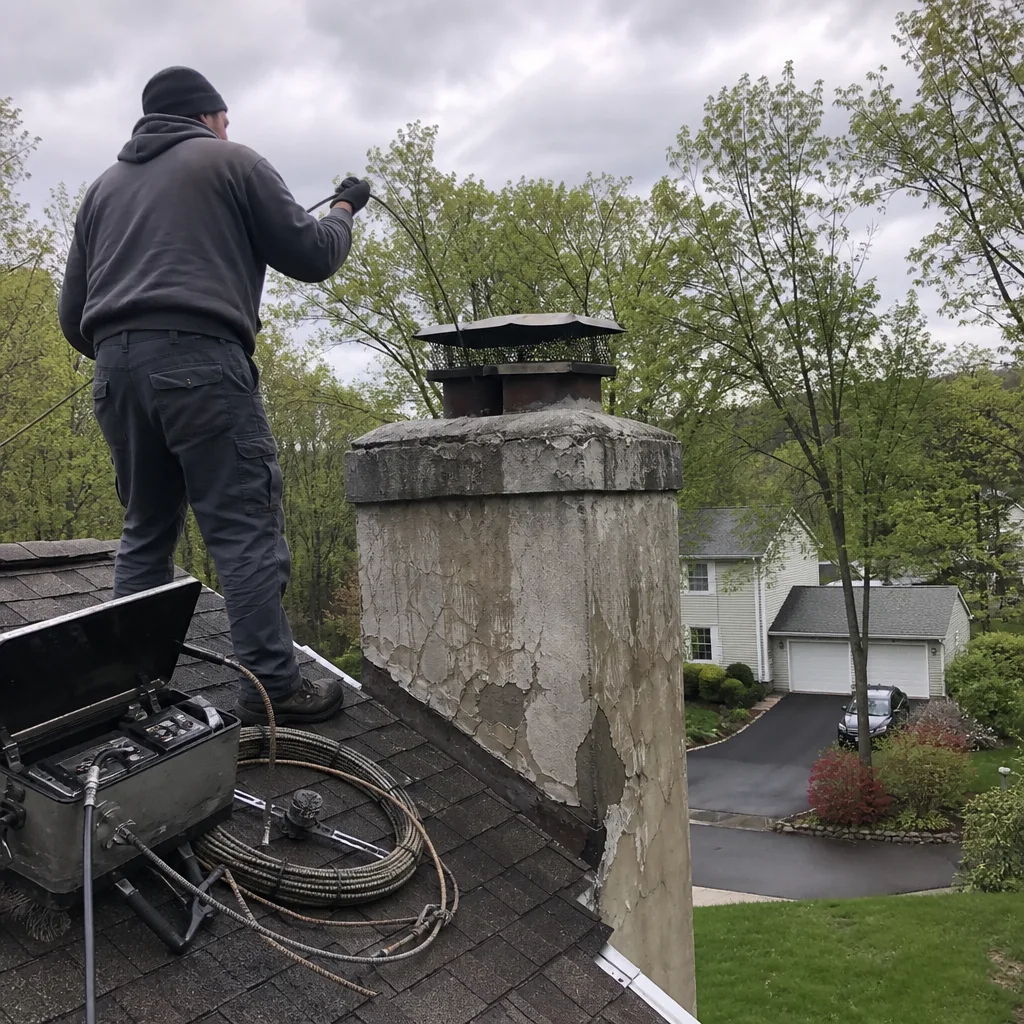 Before
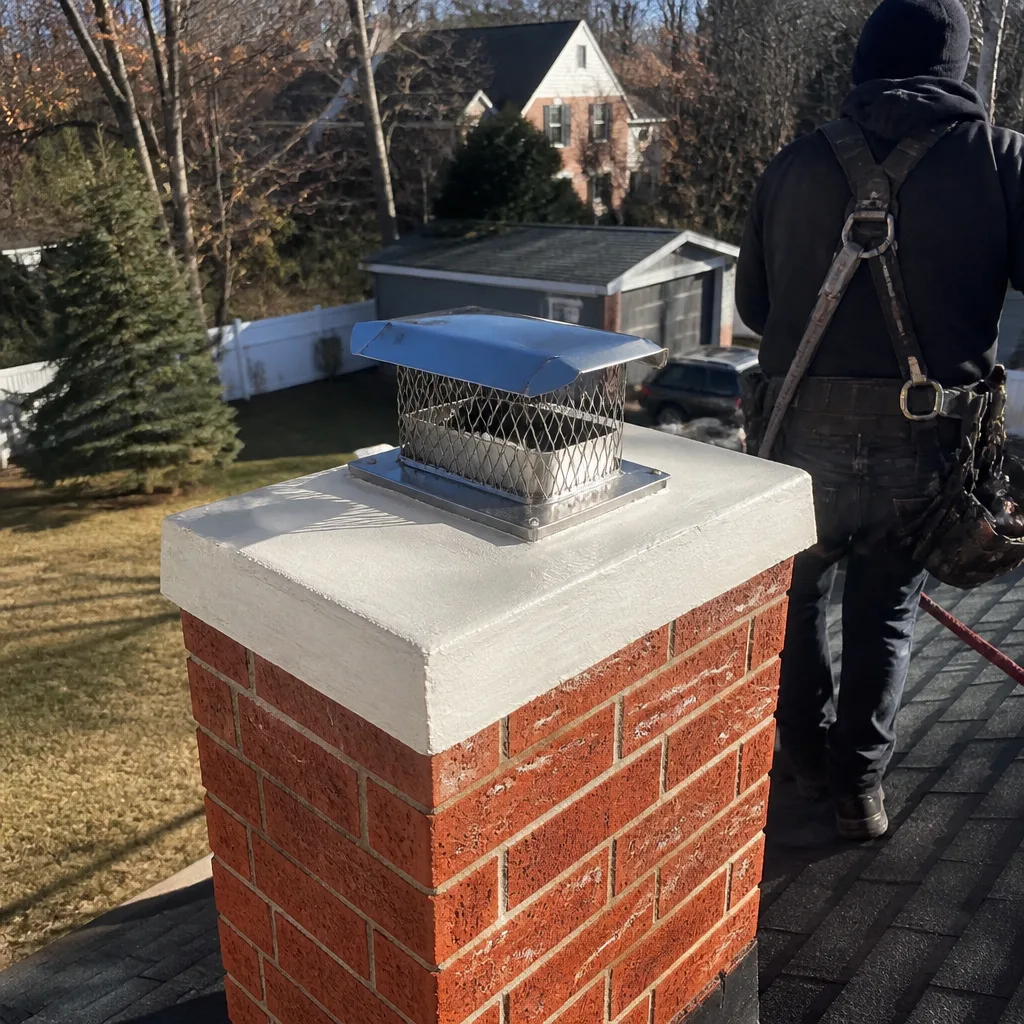 After
After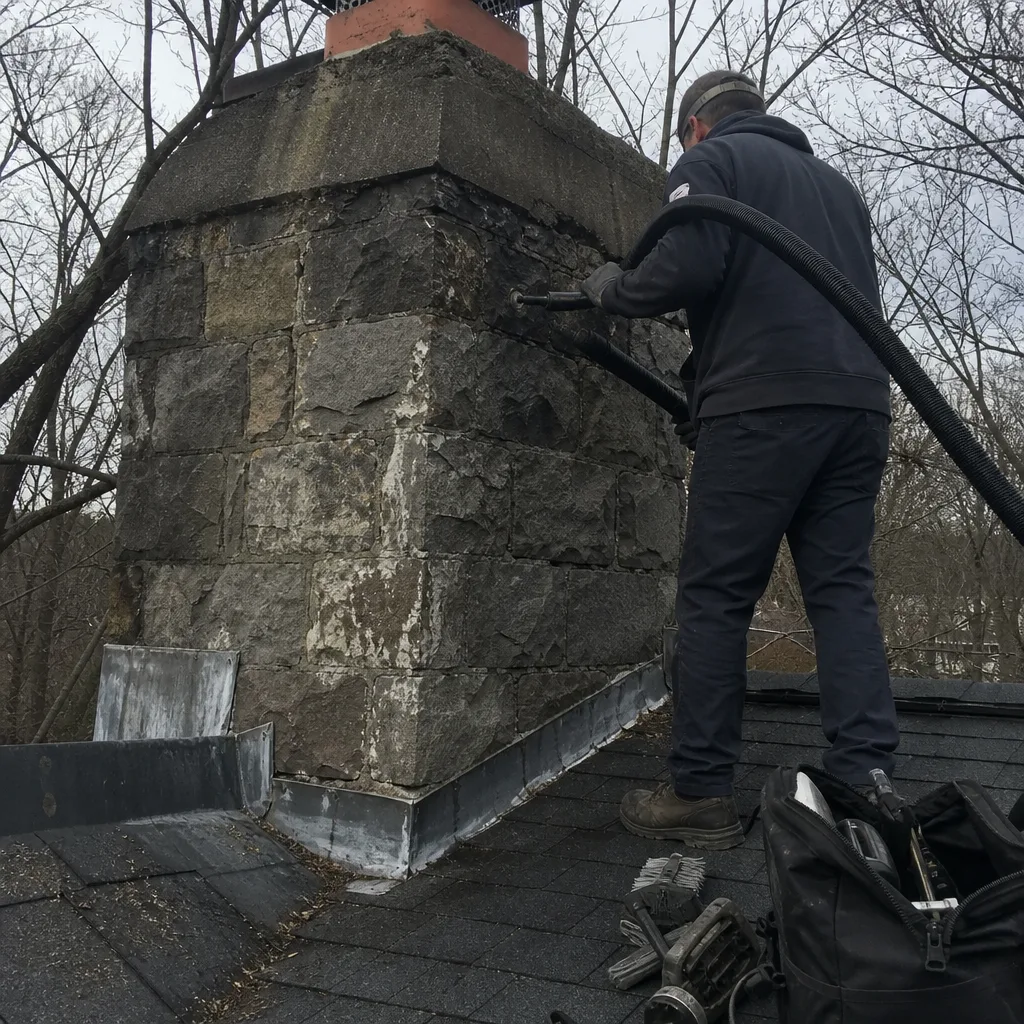 Before
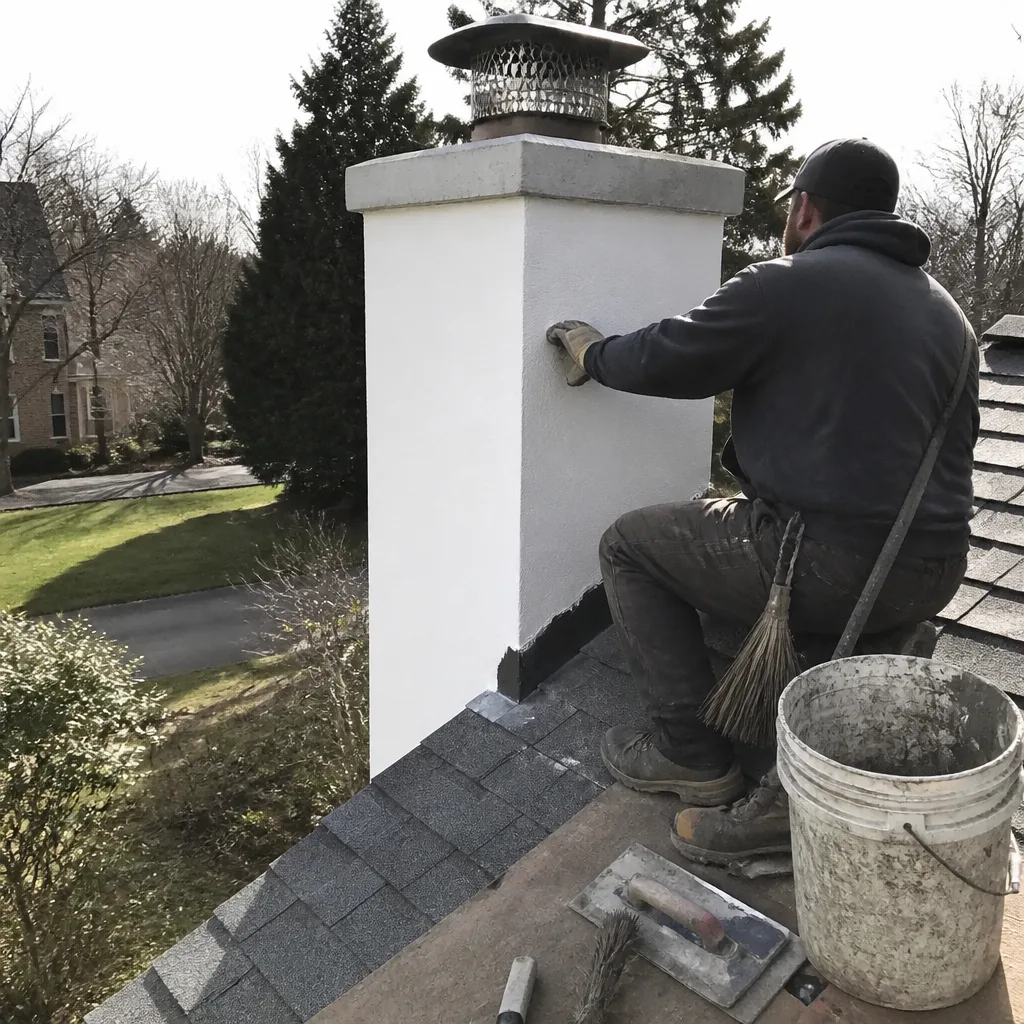 After
AfterDIY vs Professional Chimney Cleaning: The New City Homeowner’s Decision Guide
A DIY chimney brush kit from the hardware store on South Main Street will remove first-degree creosote adequately. The problem is that first-degree creosote does not cause chimney fires - second and third-degree does - and a homeowner with a brush cannot reliably distinguish between them in a 30-foot flue. In New City, where winter temperatures drive heating season from October through April and many homes in neighborhoods like Braemar and Birchwood were built during the 1970s chimney boom, we’ve seen the gap between “looks clean” and “is safe” cost homeowners their insurance claims, their peace of mind, and in two cases we documented, their homes.
This guide draws an honest line. We’ll tell you exactly what a competent DIY cleaning accomplishes, when that has genuine value, and when it leaves you exposed to risks you cannot see. No scare tactics. No oversell. Just the facts we’ve gathered from 42 years of looking inside New City chimneys.
Quick Answer
DIY chimney cleaning removes surface soot and light creosote from accessible flue sections, which has value for maintenance between professional services if your chimney is under ten years old, has a stainless steel liner, burns only seasoned hardwood, and was professionally inspected within the past 12 months. For all other New City homes - especially those with older clay tile liners, any history of glazed creosote, or symptoms like smoke backup or odd odors - professional cleaning with a Level-2 camera inspection is non-negotiable, both for safety and for insurance documentation.
Table of Contents
- What DIY Chimney Cleaning Actually Accomplishes
- The Equipment Gap: What Professionals Have That You Don’t
- New City Chimney Conditions That Change the Math
- The Insurance and Liability Dimension Most DIY Guides Ignore
- An Honest Decision Framework for Your Specific Situation
- Cost Comparison: Real Numbers for New City
- Common Mistakes to Avoid
- When to Call a Professional
- Frequently Asked Questions
What DIY Chimney Cleaning Actually Accomplishes
Let’s start with what a homeowner with a basic brush kit can actually do well.
A standard DIY chimney cleaning kit - typically a fiberglass rod set with a poly or wire brush sized to your flue diameter - will remove loose, powdery soot and first-degree creosote from the accessible portion of the flue. First-degree creosote is black, flaky, and brushes off readily. It forms when you burn dry, seasoned hardwood with adequate air supply. In New City, where many residents have access to local hardwood suppliers in Rockland County, this is achievable with proper fuel selection.
The genuine value of DIY cleaning exists in a narrow window:
- Maintenance between professional services - if your chimney was professionally inspected and swept within the past 12 months, and you burn 1-2 fires weekly during heating season, a mid-season DIY brushing can reduce buildup.
- Post-storm debris removal - after high wind events common to New City’s exposed hillside locations, a homeowner can safely remove leaves, twigs, or animal nesting material visible from the firebox or cleanout door.
- Fireplace preparation for occasional use - if you use your fireplace fewer than ten times per year and have no heating appliance connected to the flue, DIY soot removal may suffice as supplementary care.
Here’s what DIY cleaning does not accomplish, and this is where most homeowners miscalculate:
- It does not reach the full flue length in most New City homes built before 1990, where offset flue sections and smoke shelf configurations block standard brush passage.
- It does not remove second-degree creosote, which appears as shiny, tar-like flakes and requires mechanical action or chemical treatment.
- It does not touch third-degree creosote, the glazed, hardened layer that reduces flue diameter and ignites at temperatures as low as 451 degrees Fahrenheit.
- It provides no assessment of liner condition, crown integrity, or water infiltration - the three failure modes we document most often in New City inspections.
In our experience at Hearthstone Chimney Co. home, the homeowner who calls after a DIY cleaning usually says the same thing: “It looked clean from the bottom.” The flue is a vertical tunnel. What you can see from the firebox is rarely representative of conditions at the smoke chamber, the offset, or the crown level.
The Equipment Gap: What Professionals Have That You Don’t
The difference between a cleaning and a diagnosis is equipment. A New City homeowner with a brush kit performs maintenance. A certified chimney sweep with professional tools performs an evaluation that can prevent a house fire. The gap is specific and consequential.
Inspection Cameras
Our technicians use high-resolution video inspection systems designed for flue environments. These cameras navigate the full flue length, including offset sections and smoke chambers, and record footage the homeowner can see. When we find a cracked clay tile at the 18-foot level, or a section of DuraFlex liner that has separated at a joint, the image appears on screen in real time. There is no consumer-grade equivalent. The inspection cameras available to homeowners lack the articulation, lighting, and resolution to document conditions insurers and code officials require.
Draft Gauges and Combustion Analyzers
Proper chimney function depends on draft pressure measured in pascals. Too little draft, and smoke backs into the living space. Too much, and the appliance burns inefficiently, accelerating creosote formation. We measure draft at multiple firing stages using digital gauges. This data tells us whether the chimney height, liner diameter, and surrounding structure are properly matched to the appliance - a common issue in New City’s split-level and raised-ranch homes, where original construction often undersized chimneys for modern inserts.
Creosote Grading Tools
Professional sweeps use scrapers and probes to classify creosote by stage and adherence. This classification determines cleaning method: mechanical brushing for first-degree, rotary chains or chemical treatment for second-degree, and controlled removal with possible relining for third-degree. Misidentifying creosote stage leads to incomplete removal and false confidence. We’ve inspected New City chimneys where homeowners brushed annually for years, never realizing glazed creosote was accumulating above the reachable zone.
Professional-Grade Materials
When repair is indicated, we work with materials from Copperfield, HeatShield, Gelco, and other industry-trusted manufacturers - never builder-grade substitutes. A homeowner performing DIY maintenance has no access to the refractory mortars, cast-in-place liner systems, or stainless steel components that meet NFPA 211 standards. The hardware store does not stock what a failing flue requires.
The equipment gap converts a cleaning into a diagnostic event. Without it, you’re maintaining a system you cannot evaluate.
New City Chimney Conditions That Change the Math
New City’s housing stock and climate create specific conditions that affect whether DIY cleaning is reasonable or risky, as detailed in our seasonal chimney care guide for New City homeowners. We’ve worked in this market since 1984, and the patterns are consistent.
Age and Construction Era
Homes built during New City’s expansion periods - the 1960s through early 1980s - typically feature clay tile liners in masonry chimneys. These liners degrade predictably: thermal cycling causes tile cracking, mortar joints erode, and freeze-thaw action in our Hudson Valley climate accelerates spalling. A 1975 colonial in New Hempstead Park with original clay liners is not a candidate for DIY maintenance. The liner itself may be failing, and no brush kit reveals this.
Newer construction, particularly from the 2000s onward, more commonly includes stainless steel liners or factory-built metal chimneys. These systems are more forgiving of DIY brushing if professionally inspected within the warranty period. But even here, the connection points, termination caps, and clearances to combustibles require professional verification.
Fuel Type and Burning Patterns
New City’s proximity to wooded areas means many homeowners burn wood harvested locally. The critical variable is moisture content. Seasoned hardwood - below 20% moisture - produces first-degree creosote. Green or partially seasoned wood, common when homeowners cut and burn within the same season, produces second and third-degree creosote rapidly. We’ve cleaned chimneys in New City with glazed buildup after a single burning season of unseasoned oak.
Gas and oil appliances produce different residues. Gas flues accumulate minimal creosote but are susceptible to condensation corrosion, particularly in exterior chimneys exposed to New City’s winter wind chill. Oil flues produce sulfuric acid residues that degrade liners. Neither condition is visible or addressable with standard brush equipment.
Climate and Weather Exposure
New City’s location on the Ramapo fault line and its exposure to nor’easter weather patterns create specific masonry stresses. Water infiltration through crown cracks or deteriorated flashing is the primary cause of chimney failure we document. A DIY brush cleaning in March, after freeze-thaw cycling has opened new cracks, may leave the homeowner with a “clean” flue and a saturated, deteriorating structure. Our Chimney Repair in New City services address these conditions, but only after camera inspection identifies them.
Local Code and Permit Context
Rockland County follows the 2021 International Residential Code with local amendments. Any chimney modification - liner replacement, crown rebuild, or structural repair - requires permit and inspection. Professional sweeps maintain relationships with local building officials and understand permit triggers. DIY cleaning does not require permitting, but DIY repair without permits voids insurance coverage and complicates resale. In New City’s active real estate market, unpermitted chimney work is a common inspection flag that delays or derails transactions.
The Insurance and Liability Dimension Most DIY Guides Ignore
This is the section most competitors won’t write, because it complicates the simple “DIY saves money” narrative. It needs to be addressed directly.
How Insurers Evaluate Chimney Fire Claims
When a chimney fire occurs, the homeowner’s insurance adjuster investigates cause and maintenance history. The critical question is whether the chimney was “properly maintained” per policy terms. Most standard homeowner policies include language requiring “regular maintenance by qualified persons” for heating systems and chimneys.
A homeowner who performed their own chimney cleaning, without professional inspection documentation, faces specific challenges:
- Maintenance records - insurers request invoices, inspection reports, or certificates from certified sweeps. A personal log of DIY brushing dates does not satisfy this requirement.
- Cause determination - if the fire originated from creosote ignition, the adjuster will assess whether the buildup resulted from inadequate cleaning or undiagnosed conditions (liner failure, improper appliance sizing) that professional inspection would have caught.
- Subrogation exposure - in cases of significant damage, insurers may deny coverage based on failure to maintain, then pursue the homeowner for negligence if the fire spread to neighboring properties.
We’ve testified as expert witnesses in two Rockland County cases where DIY chimney maintenance was cited in coverage disputes. In both cases, the homeowner had performed regular brushing and believed the chimney was clean. The fires originated from conditions - a cracked liner and a blocked flue at the offset - that brushing alone could not have identified or prevented.
Professional Documentation as Risk Transfer
A Level-2 inspection from a certified sweep produces dated, photographic documentation of flue condition. If a fire occurs subsequently, this record establishes that maintenance met professional standards. The sweep’s errors-and-omissions insurance provides additional recourse if the inspection failed to identify a detectable hazard.
DIY cleaning transfers all liability to the homeowner. There is no third-party verification, no professional standard applied, and no insurance backing the work. For New City homeowners in the 55-75 demographic who have accumulated significant home equity and depend on that asset for retirement security, this liability exposure is disproportionate to the cost of professional service.
The 90-Day Done Right Promise as Additional Protection
Our Chimney Cleaning & Sweep in New City service includes the 90-Day Done Right Promise - in writing, no arguing. If we miss something detectable during inspection and cleaning, we return and correct it at no charge. This is not a marketing claim. It is a contractual obligation that exists because we document every flue with photos and a plain-English verdict. No DIY approach offers equivalent accountability.
An Honest Decision Framework for Your Specific Situation
Use this framework to evaluate your situation without pressure or scare tactics. Answer each question honestly.
| Factor | DIY May Be Reasonable | Professional Service Required |
|---|---|---|
| Last professional inspection | Within 12 months, with documentation | More than 12 months, or never, or no documentation |
| Chimney age and liner type | Under 10 years, stainless steel liner, no known issues | Over 20 years, clay tile or unknown liner, any history of problems |
| Fuel type and quality | Seasoned hardwood only, moisture tested below 20% | Any green wood, pellet stove, oil, or gas with exterior flue |
| Current symptoms | None - normal draft, no odors, no smoke backup | Any smoke backup, odd odors, visible staining, or performance change |
| Usage pattern | Occasional fireplace (under 20 fires/season), not primary heat | Primary or significant supplemental heat source |
| Insurance requirements | Policy does not specify professional maintenance | Policy requires “qualified person” or certified professional |
| Physical ability | Comfortable on roof, able to lift and maneuver brush rods | Any mobility limitation, balance concern, or roof access difficulty |
Scoring: If any factor falls in the “Professional Service Required” column, schedule professional inspection. The conditions are cumulative, not independent. A 5-year-old stainless liner with glazed creosote from green wood still requires professional service. A 30-year-old clay tile chimney with no symptoms still requires professional evaluation due to age.
In New City specifically, we add one local consideration: homes in the flood-prone areas near Hackensack River tributaries, or those with chimneys exposed on the windward side of hills, experience accelerated masonry deterioration. Even if your chimney is relatively new, professional evaluation every 2-3 years is prudent in these microclimates.
Cost Comparison: Real Numbers for New City
Cost is a valid consideration. Here are the actual numbers we see in the New City market, based on our service records and competitive awareness.
DIY Costs
- Basic brush and rod kit: $45-$85
- Extension rods for two-story chimney: $25-$40 additional
- Drop cloths, protective gear, vacuum: $30-$60 if not owned
- Total first-year DIY investment: $100-$185
- Annual recurring (replacement brushes, additional supplies): $25-$50
Professional Service Costs in New City
- Standard chimney sweep with Level-1 inspection: $200-$280
- Level-2 camera inspection (recommended for most New City homes over 15 years): $280-$380
- Combined sweep and Level-2 inspection: $320-$420
- Additional flues (fireplace plus heating appliance): $120-$180 per flue
The Hidden Cost Calculation
The professional service includes documentation, insurance verification, and detection of conditions that prevent future costs. We’ve identified $2,000-$4,000 liner failures during routine inspections that presented no symptoms. Early detection allows phased repair. Late detection, after a fire or collapse, requires emergency service at premium rates.
Hearthstone’s standing offers reduce professional cost for qualified homeowners: $50 off any repair over $250, free second opinion on any written estimate, $89 seasonal tune-up, and permanent 5% senior and veteran discount. The $89 tune-up, available seasonally, includes basic sweep and inspection - a price competitive with DIY when you value your time and safety.
Most jobs are completed in a single visit with no-hassle upfront pricing. The number on the estimate is the number on the invoice.
Common Mistakes to Avoid
- Brushing a damaged liner - Clay tile cracks can worsen with brush contact. In New City’s older homes, we’ve seen homeowners dislodge tile sections that then blocked the flue. If you don’t know your liner condition, don’t brush until a camera confirms integrity.
- Using the wrong brush material - Poly brushes on stainless steel liners cause static buildup and inadequate cleaning. Wire brushes on clay tile accelerate surface wear. Match brush to liner type, or risk damage that professional repair must correct.
- Cleaning from the top down without proper roof safety - New City’s split-level and raised-ranch roofs have steep pitches and complex valleys. Falls from second-story roofs are a leading cause of homeowner injury during DIY maintenance. If you cannot work safely from a ladder or roof platform, do not attempt top-down cleaning.
- Ignoring the smoke chamber and firebox - Soot accumulation in the smoke chamber, the area above the damper, is a common fire origin point. Standard brush kits don’t reach this area effectively. We’ve cleaned smoke chambers in New City homes with 2-3 inches of compacted creosote that the homeowner’s annual brushing never touched.
- Assuming “no symptoms” means “no problems” - Chimney fires often occur without dramatic symptoms. Slow-burning creosote fires can damage liners and adjacent structure while producing only minor smoke or odor. The absence of obvious problems is not evidence of safety.
- Failing to document DIY work - If you do perform DIY cleaning, photograph before and after conditions, record dates and methods, and retain receipts for materials. This documentation is weak compared to professional records but better than nothing if insurance questions arise.
When to Call a Professional
Call a certified chimney sweep immediately if you observe any of the following: smoke entering the room during normal operation, a strong tar or creosote odor from the fireplace, visible cracks in the firebox or exterior masonry, white staining (efflorescence) on exterior chimney surfaces, pieces of tile or debris in the firebox, or any change in heating appliance performance.
Call before burning season begins if your chimney has not had professional inspection in over 12 months, if you’ve purchased a home with unknown chimney history, if you’ve changed fuel types or installed a new appliance, or if your home is over 25 years old with original chimney components.
Hearthstone Chimney Co. offers free estimates in New City - call (845) 599-0930, and explore more guides & resources on our blog. A live person answers every call, 24 hours a day, 7 days a week. We’ll schedule a convenient appointment, perform a documented inspection with photos you can see, and provide a plain-English verdict with no-hassle upfront pricing. Most jobs are completed in a single visit by background-checked, uniformed technicians.
For fireplace-specific concerns, our Fireplace Services in New City page details repair, rebuild, and upgrade options using professional-grade materials.
Frequently Asked Questions
A standard chimney sweep with Level-1 inspection in New City typically costs $200-$280, while a Level-2 camera inspection ranges from $280-$380. Combined sweep and inspection packages run $320-$420. Hearthstone offers an $89 seasonal tune-up and permanent 5% senior and veteran discounts. Call (845) 599-0930 for a free estimate - the number we quote is the number on your invoice.
The National Fire Protection Association recommends annual inspection for all chimneys, with cleaning frequency determined by creosote accumulation. In New City’s climate, where heating season runs October through April and many homes burn wood as primary or supplemental heat, annual sweeping is standard for active fireplaces. Gas and oil flues require annual inspection but may need less frequent cleaning depending on condensation and corrosion patterns. Homes in exposed locations like those near Rockland Lake or on Clarkstown’s higher elevations may need more frequent evaluation due to weather acceleration of masonry deterioration.
A legitimate liner recommendation is always supported by camera evidence you can see for yourself. At Hearthstone, we show you the footage and explain the specific failure: cracked tiles, separated joints, corrosion thinning, or improper sizing for your appliance. We also tell you when a condition can be monitored rather than immediately repaired. If a sweep recommends liner replacement without documentation, seek a second opinion. Our free second opinion offer exists for exactly this situation.
Skipped maintenance allows creosote accumulation, which increases chimney fire risk and reduces heating efficiency. In New City’s older homes with clay tile liners, deferred maintenance also permits water infiltration and freeze-thaw damage that progresses from minor cracks to structural failure. The cost trajectory is predictable: annual sweeping ($200-$280) prevents conditions that require relining ($2,000-$4,000) or rebuild ($5,000-$15,000). Insurance may deny claims for fire damage if maintenance records are absent.
Insurance validity depends on policy language. Some policies specify “qualified person” or “certified professional” for chimney maintenance. Others accept homeowner maintenance with documentation. Review your policy’s maintenance requirements specifically. Even if DIY is technically permitted, professional documentation provides stronger protection in claim disputes. For New City homeowners with significant equity or multiple properties, the cost of professional service is minimal compared to coverage exposure.
Level-1 inspection is visual examination of readily accessible portions of the chimney exterior and interior, performed during routine sweeping. Level-2 inspection includes video scanning of the full flue interior, accessible portions of the attic and basement, and evaluation of clearances to combustibles. Level-2 is required for property transactions, after chimney fires or seismic events, and when changing fuel types or appliances. For New City homes over 15 years old, we recommend Level-2 inspection as baseline due to predictable liner degradation in this housing stock.
The Bottom Line
DIY chimney cleaning has a limited, legitimate role: maintaining a young, well-documented system between professional services, under specific conditions of fuel quality, usage pattern, and physical ability. It does not substitute for professional inspection, and it creates liability exposure that most homeowners underestimate.
The honest assessment is this: if you’re comfortable on a roof, burn only seasoned hardwood, have a stainless steel liner under ten years old, and were professionally inspected within twelve months, DIY brushing between services is reasonable maintenance. If any of those conditions fails - if your chimney is older, your fuel is variable, your liner is unknown, your usage is significant, or your last inspection is undocumented - professional service is not an upsell. It is risk management.
In New City, where winter demands reliable heat and summer storms test masonry integrity, we’ve built our practice on documentation, plain speech, and standing behind our work. The 90-Day Done Right Promise - Krafted right, Every time, Your home first, Standing behind it - is not a slogan. It is how we answer the phone, how we perform inspections, and how we sleep at night.
Photos you can see. A plain-English verdict. In writing, no arguing. Done right - and we stand behind it.
Written by Russell Haines, Owner at Hearthstone Chimney Co., serving New City since 2014.