
Last updated September 10, 2026
Level 1 sweep and inspection to the NFPA 211 annual standard - flue, crown, cap, and flashing checked and photographed
Chimney sweep logs do not sweep chimneys. They loosen some creosote - which then falls where a brush and vacuum still have to collect it.
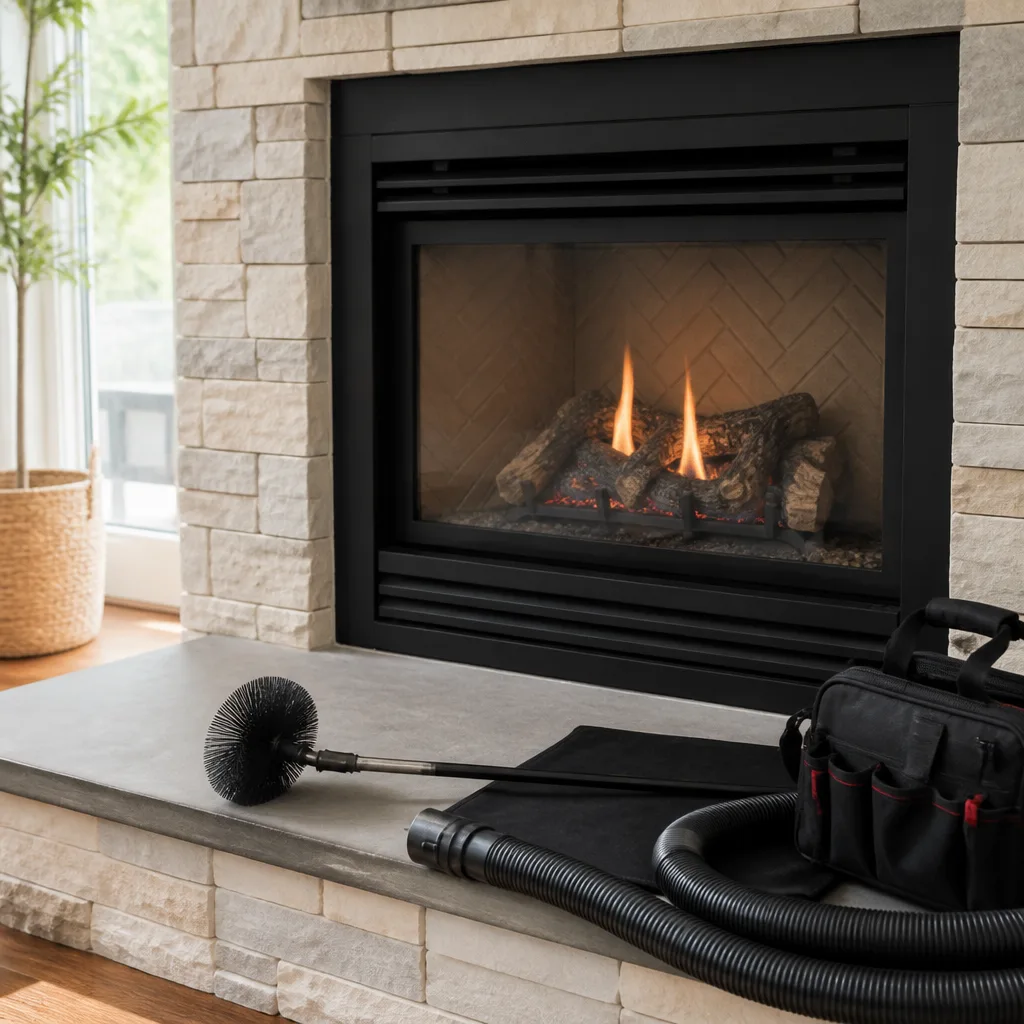
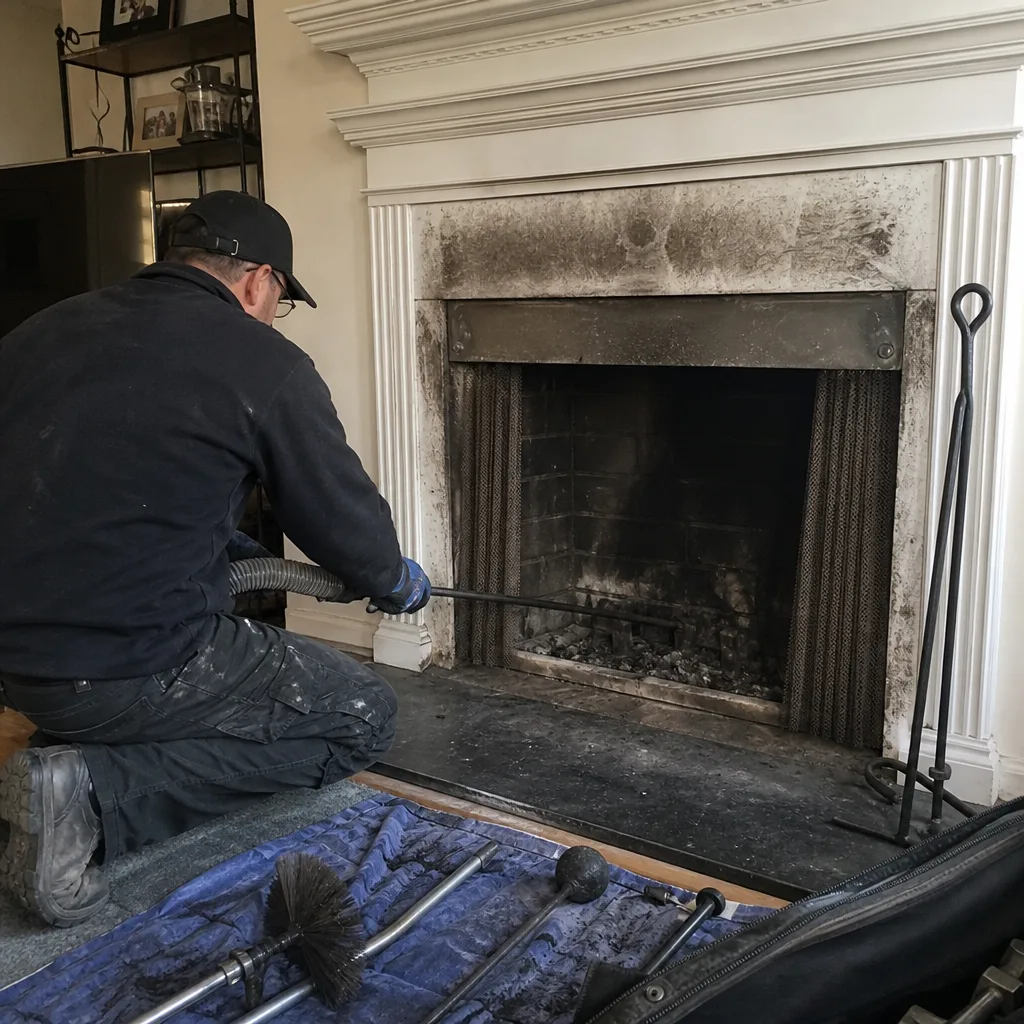 Before
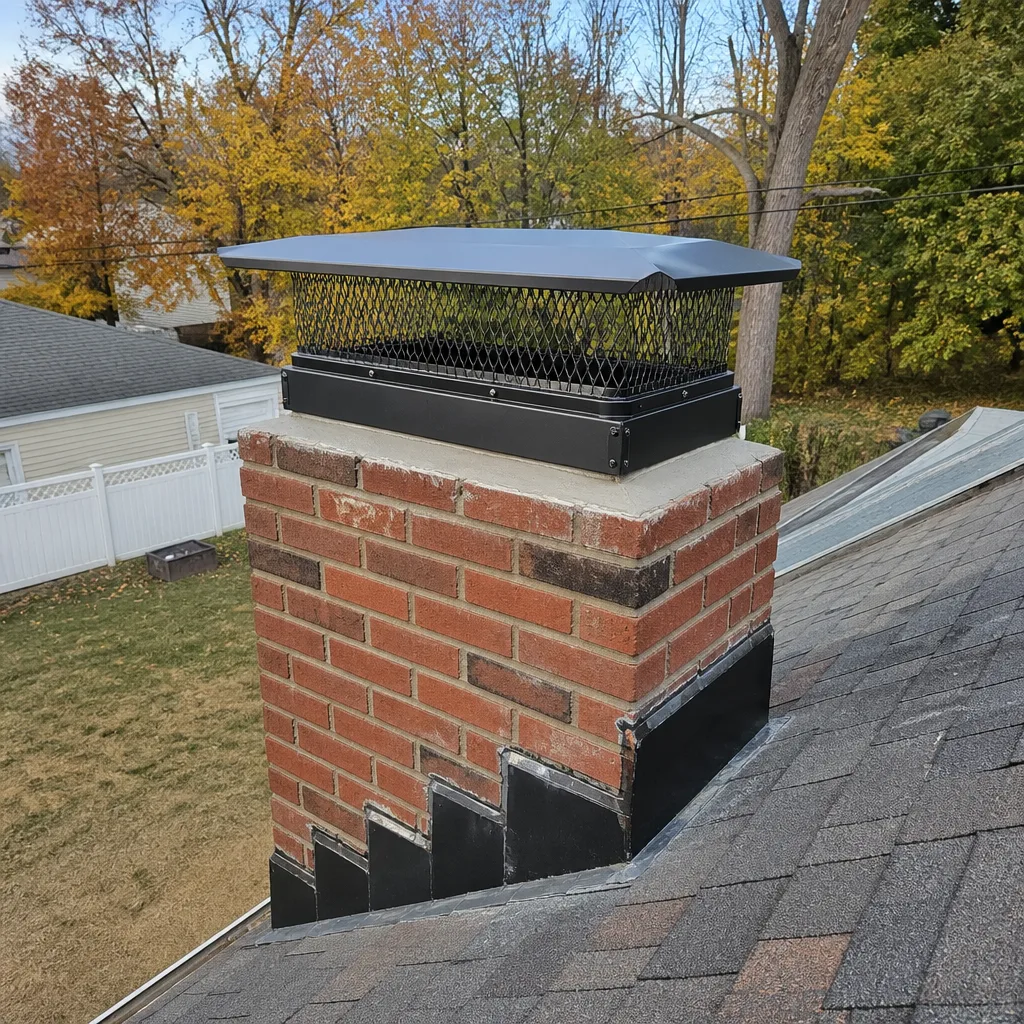 After
After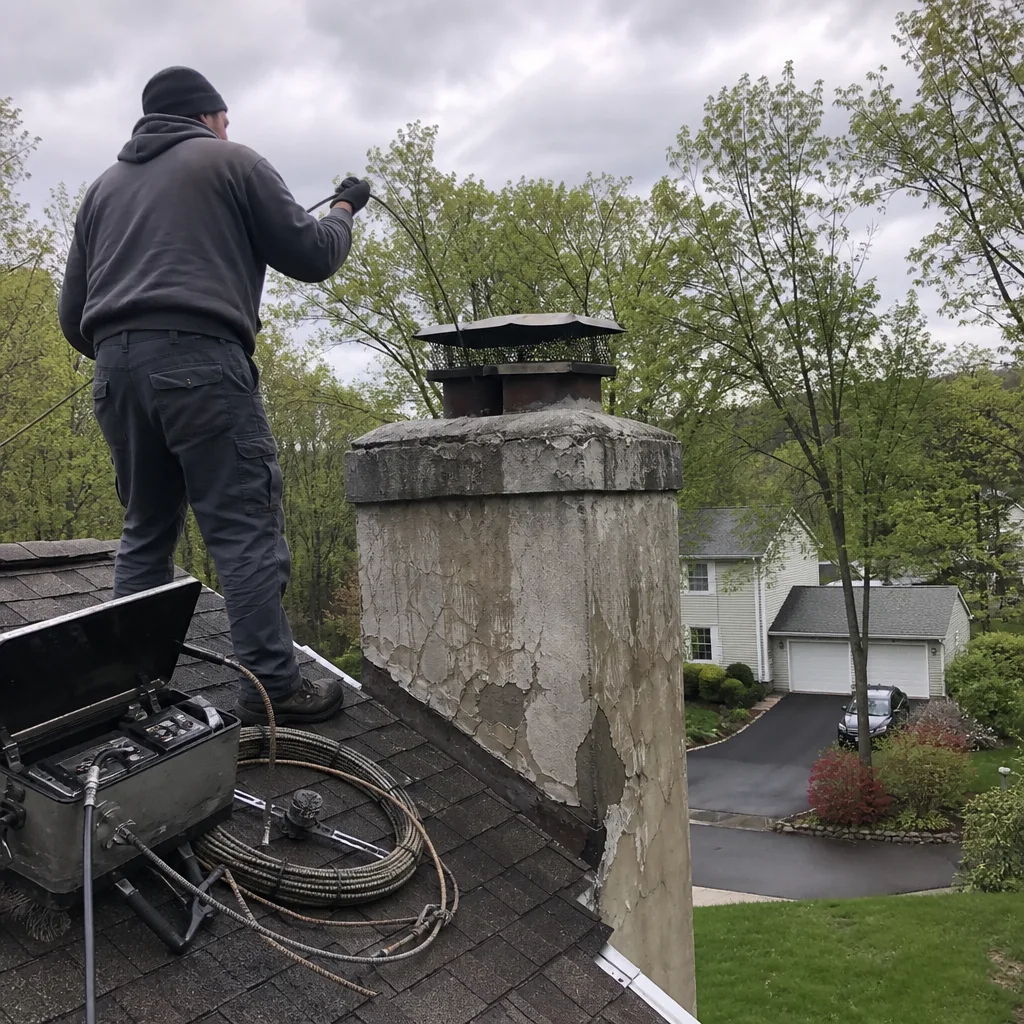 Before
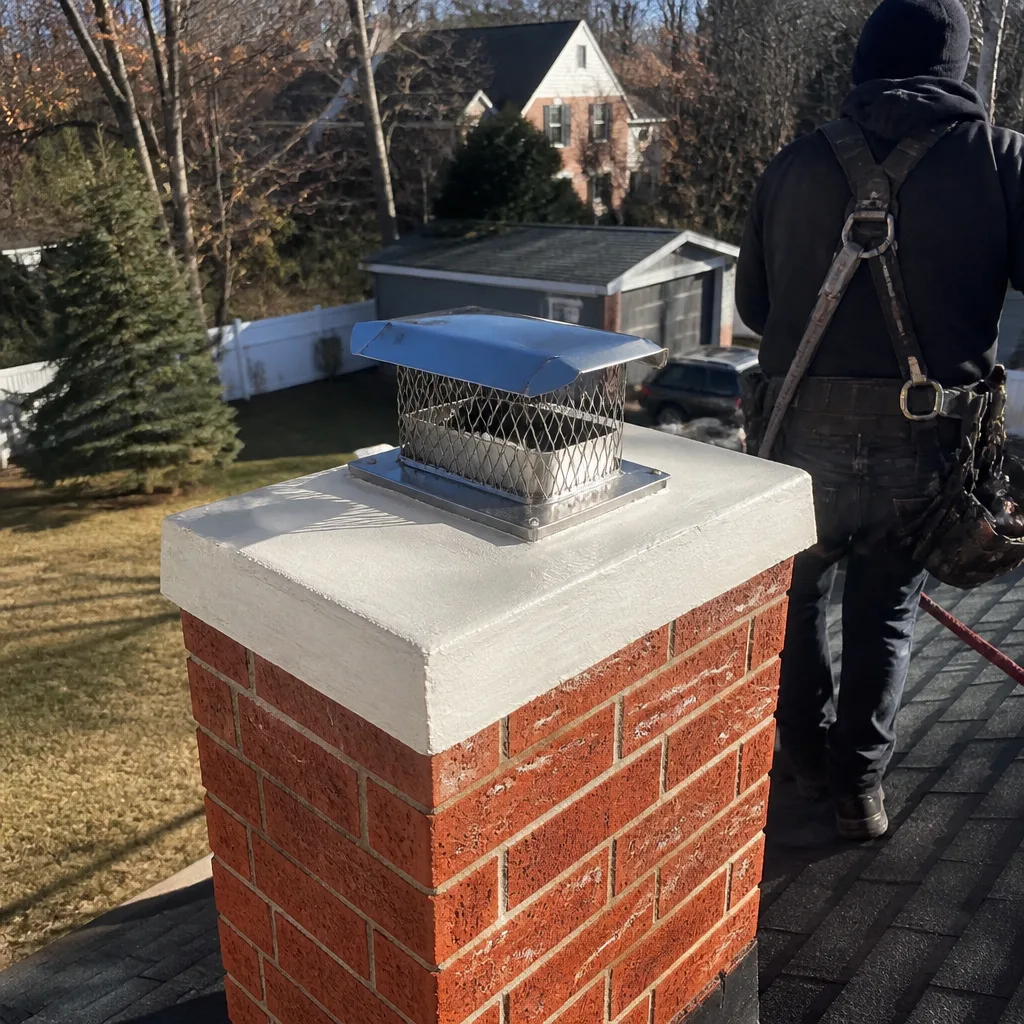 After
After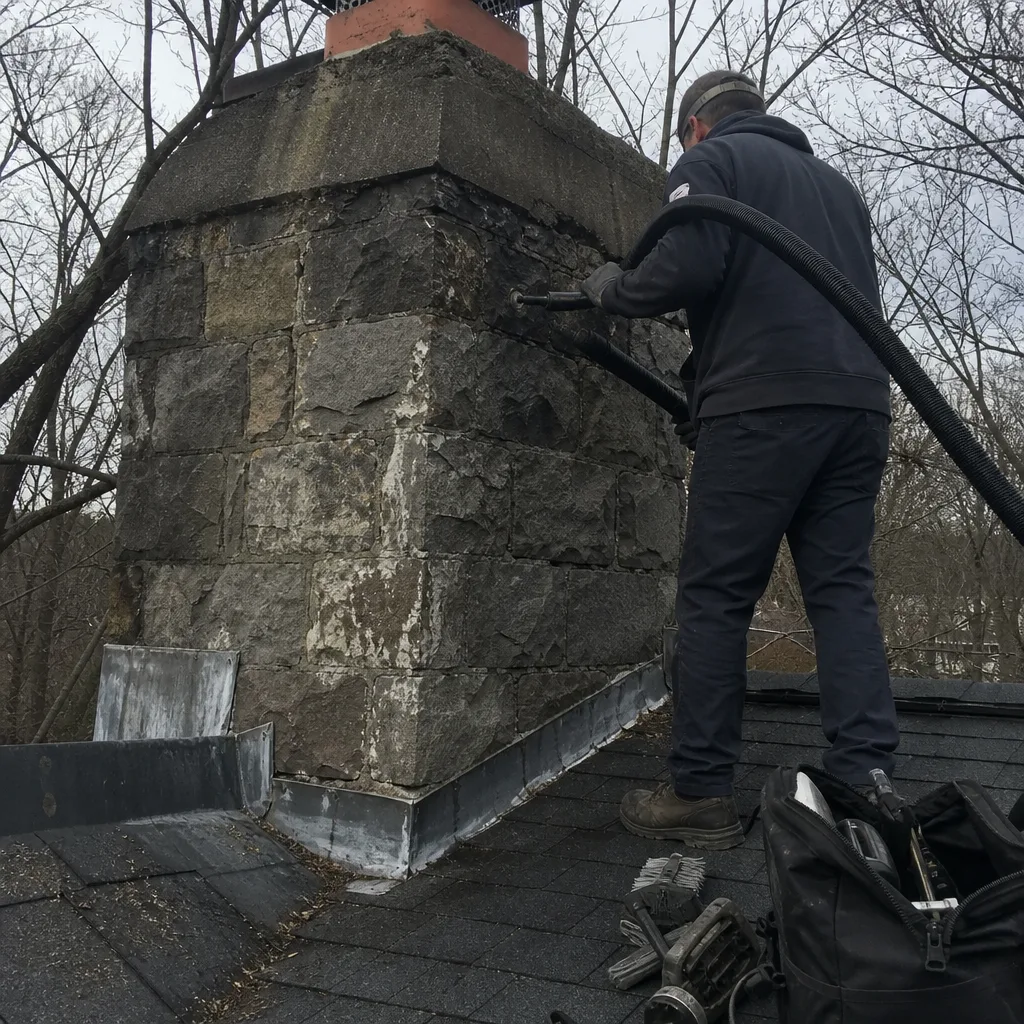 Before
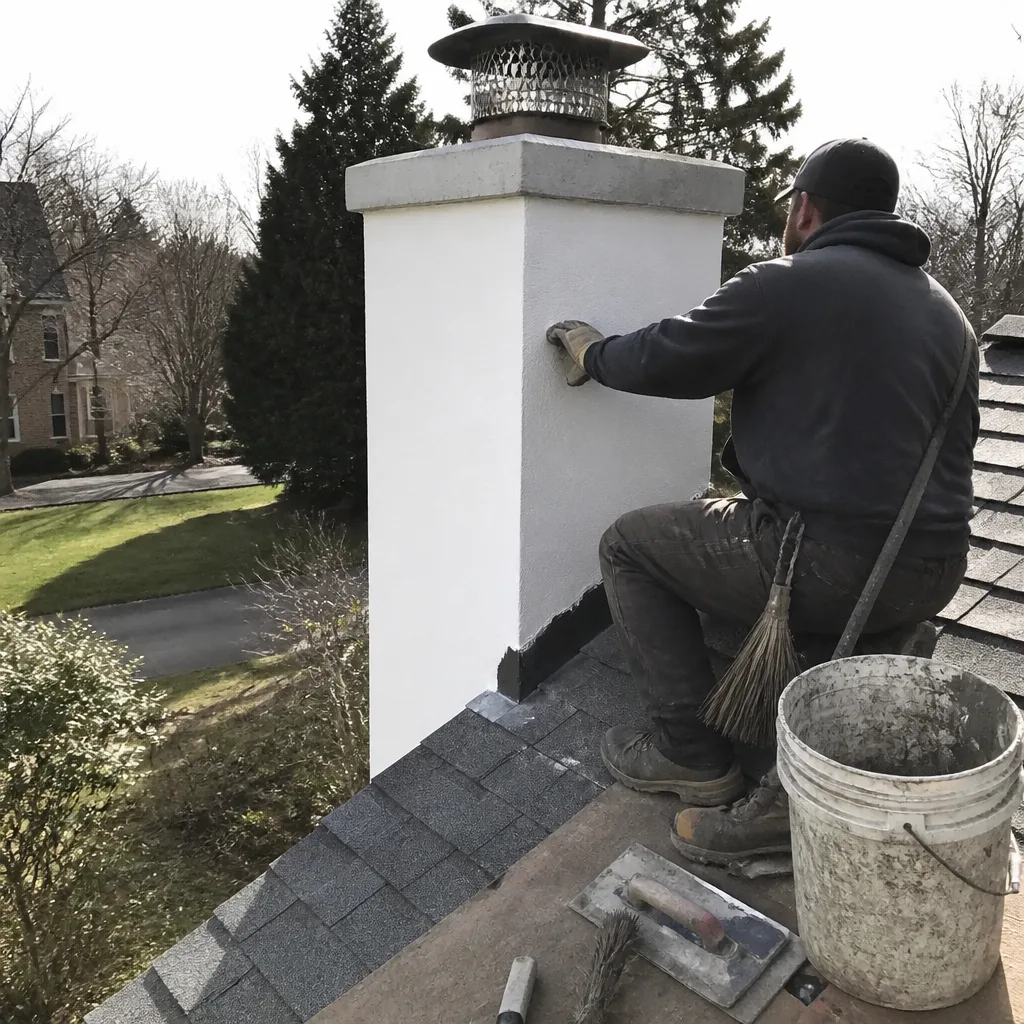 After
AfterChimney Cleaning & Sweep Maintenance Checklist for New City Homeowners
The most dangerous chimney condition a New City homeowner can face, third-degree glazed creosote, shows almost no visible sign from inside your firebox. By the time you notice trouble, you’re often past the point of a simple cleaning. What actually saves houses are the smaller, earlier signals: draft behavior on cool October mornings, mortar dust in the hearth after a freeze-thaw cycle, a faint sulfur smell when the furnace first kicks on. This guide gives you only the checks you can perform safely without a trade license, organized by what you need, what you need to see, and what you need to call our Chimney Cleaning & Sweep services for.
Quick Answer
A practical chimney maintenance checklist for New City homeowners includes three ground-level inspections per year: a post-leaf-fall exterior check from the ground or a sturdy ladder, a pre-first-fire interior check with a flashlight at the firebox and damper, and a post-ice-storm cap and crown check using binoculars. Most homeowners can safely spot the twelve warning signs detailed below. Anything involving the flue interior, roofline access, or combustion testing requires a Level-2 camera inspection by a CSIA-certified sweep.
Table of Contents
- The Exterior Ground Check: What Binoculars Reveal
- The Interior Firebox Check: Flashlight and Eyes Only
- Reading Draft Behavior as an Early Warning System
- New City Seasonal Triggers: When to Perform Each Check
- Three “Cosmetic” Problems That Are Actually Structural Warnings
- What to Photograph and Send Before Scheduling
- What Requires a Professional Camera Inspection
- Common Mistakes to Avoid
- When to Call a Professional
- Frequently Asked Questions
The Exterior Ground Check: What Binoculars Reveal
You do not need to walk your roof to learn a great deal. In New City, where mature oak and maple canopies drop heavy leaf loads and ice storms come in fast from the northwest, the exterior tells its own story. We complete this check ourselves on every service call, but you can spot the same warning signs from the ground with a decent pair of binoculars and ten minutes of attention.
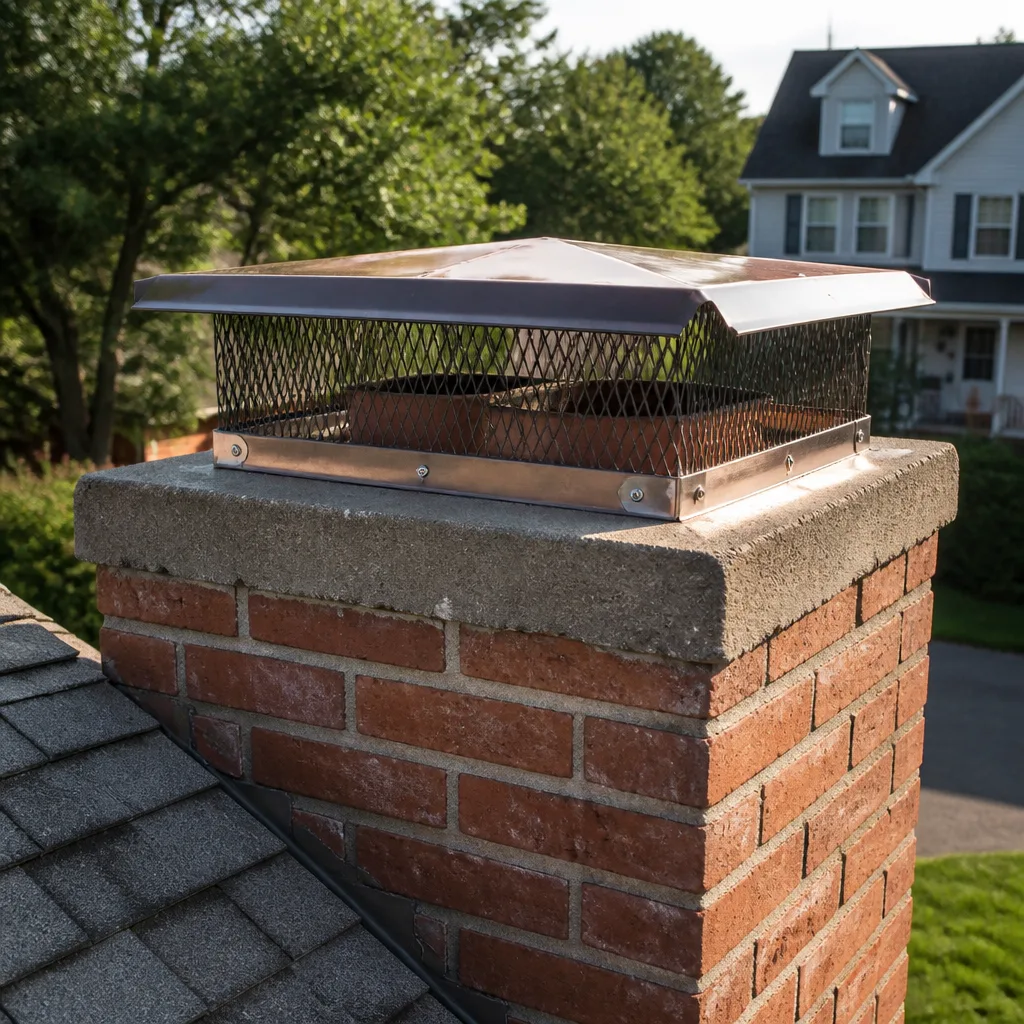
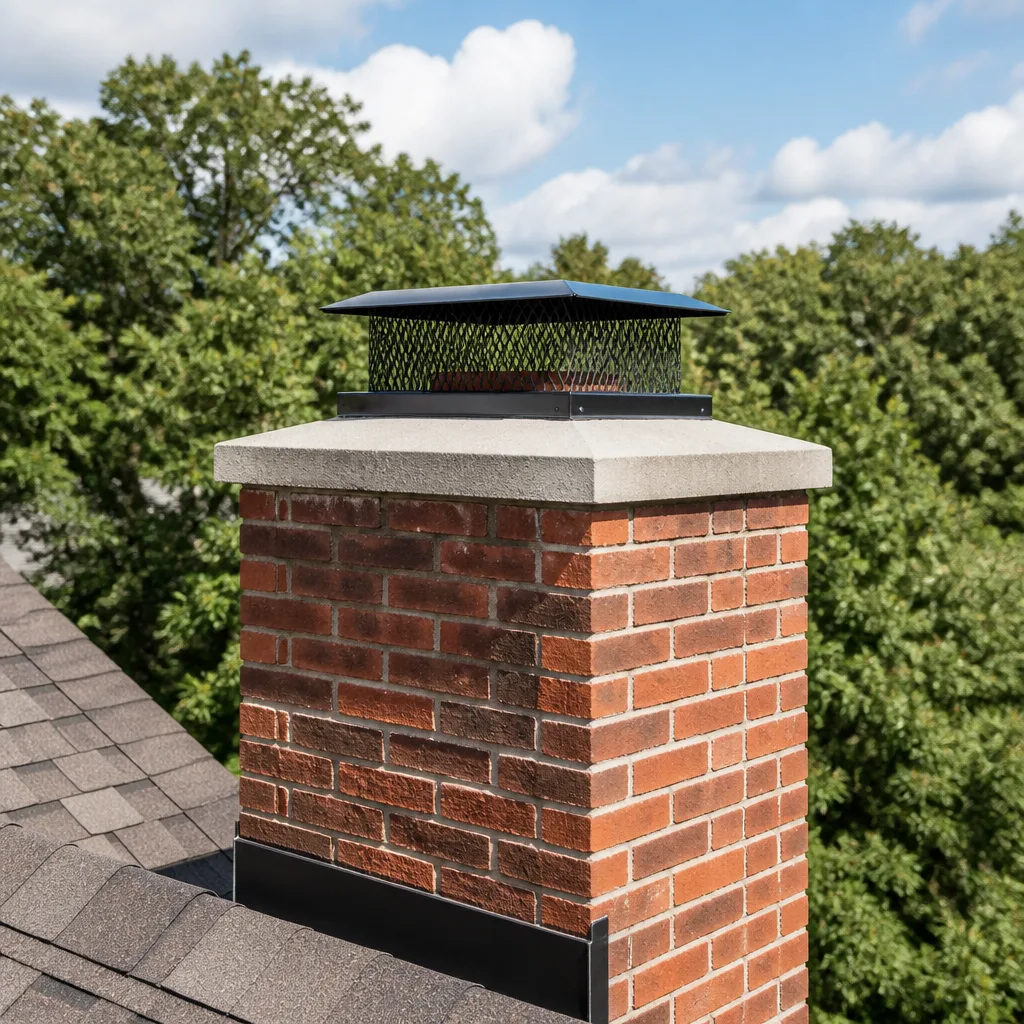
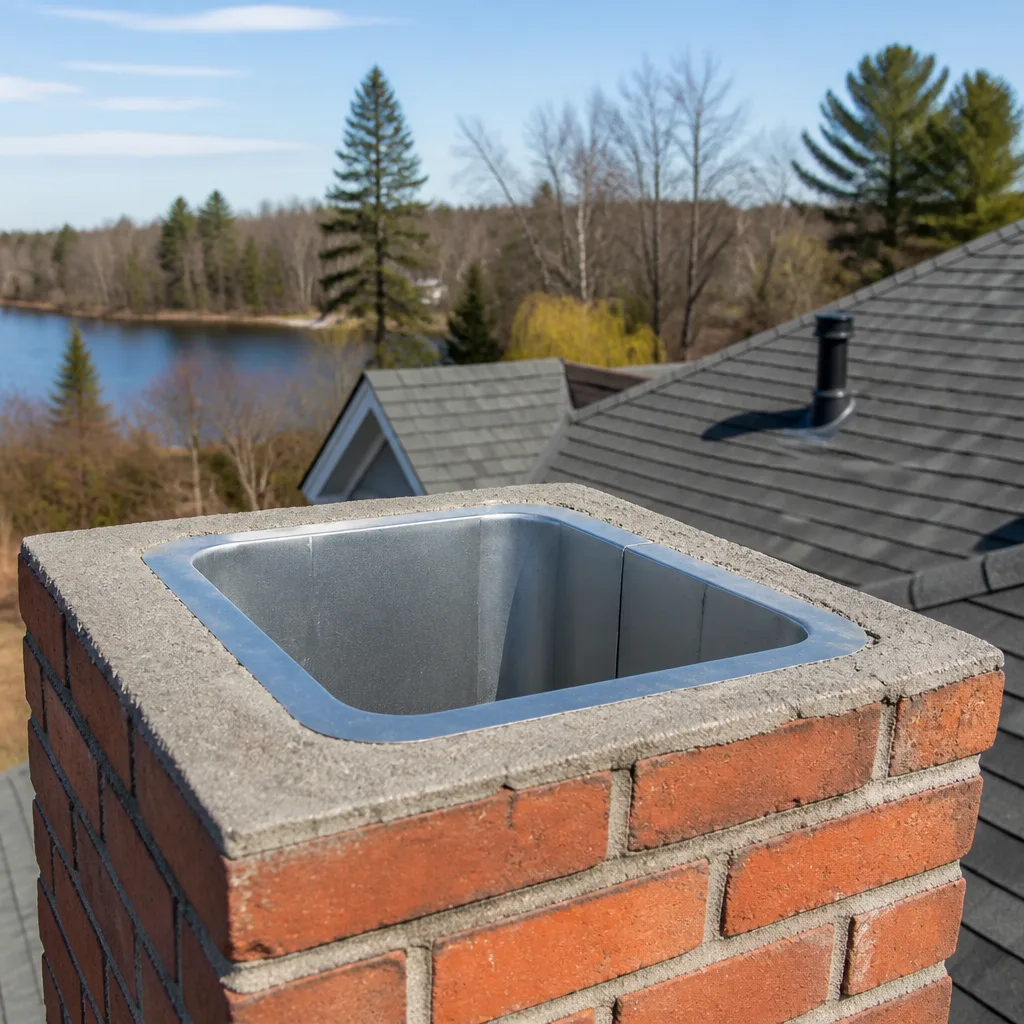
Start at the chimney crown, the concrete or mortar cap that seals the top of your masonry. Look for hairline cracks running parallel to the flue tiles, or any depression where water pools. In our experience across Clarkstown and the surrounding hills, crown cracks that appear “just cosmetic” in September become active leaks by January. Water that enters through a compromised crown freezes, expands, and begins separating the flue from the surrounding brick. By spring, you’re looking at rebuild territory rather than a simple crown coat.
Next, scan the cap and spark arrestor. Is it present? Is it square to the flue, or tilted from wind or ice load? A missing or damaged cap in New City is an open invitation for water, leaf debris, and the squirrels that are prolific in our wooded lots. We’ve pulled entire squirrel nests from flues in the Nanuet and Congers areas where the cap had been missing for just one season.
Examine the mortar joints between courses of brick. You’re looking for spalling, the crumbly, flaked surface that indicates freeze-thaw damage has begun attacking the mortar. Also note any white, chalky staining called efflorescence. This is mineral salt left behind as water moves through the masonry and evaporates. It means water is getting in and traveling through the wall, and it will eventually destroy the bond between brick and mortar.
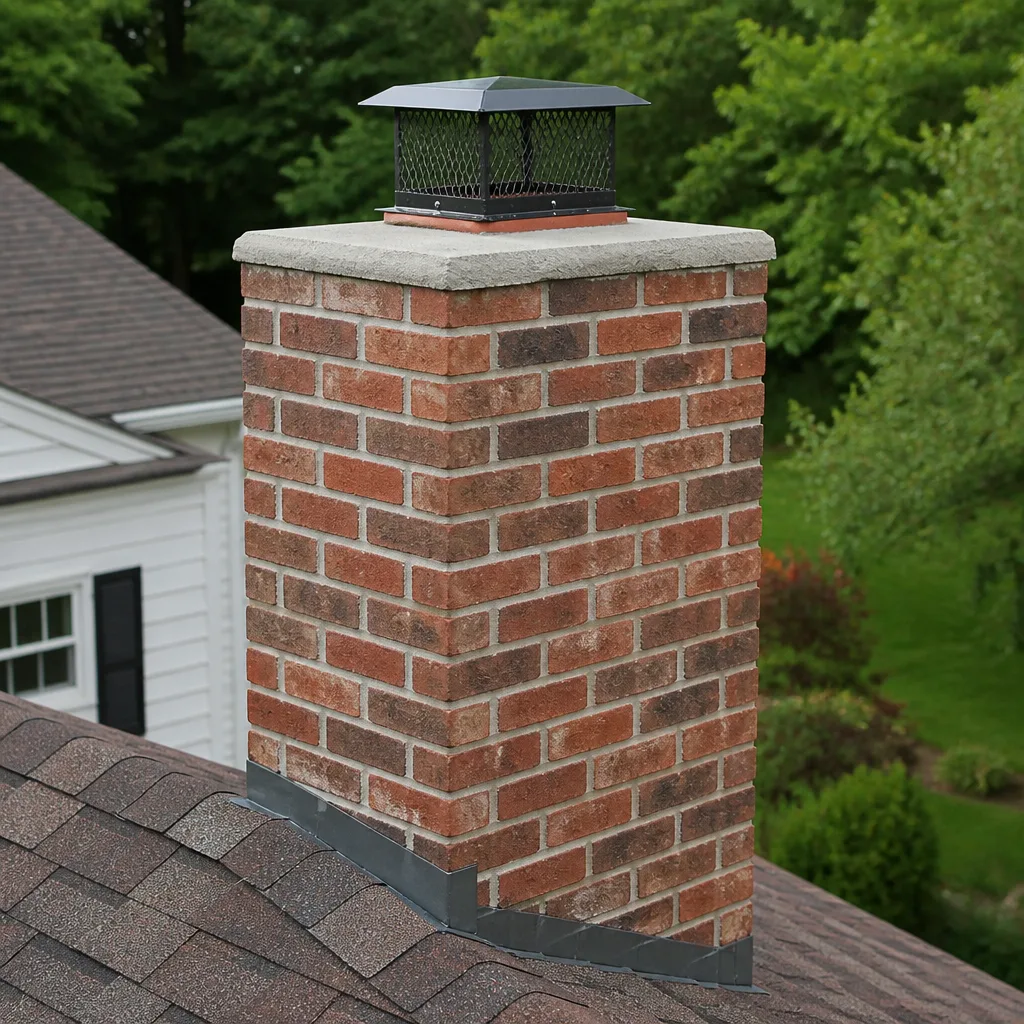
Finally, check the flashing where the chimney meets the roof plane. From the ground, you can often spot lifted corners, gaps, or rust streaks on the shingles below. The combination of our freeze-thaw cycles and the occasional nor’easter makes flashing separation one of the more common leak sources we address in Rockland County.
- Position yourself on the driveway or lawn with binoculars at mid-morning, when the crown is lit from the side.
- Scan top to bottom: crown, cap, flue tile edges, mortar joints, flashing.
- Photograph anything that looks different from your memory or from neighboring chimneys.
- Compare year to year. The change is often more telling than the absolute condition.
What you cannot assess from the ground: the condition of the flue liner interior, the damper seal, or the smoke chamber. Those require a Level-2 camera inspection, which we perform with equipment from Chimney Cleaning & Sweep in New City that documents every surface in high-resolution stills.
The Interior Firebox Check: Flashlight and Eyes Only
The firebox is where most homeowners feel confident, and where some of the most consequential misreadings happen. What you’re looking for is not whether the brick “looks old.” You’re looking for specific patterns that indicate active deterioration or dangerous creosote accumulation.
Begin with the damper. Open it fully and inspect the metal plate for warping, rust, or gaps where light shows through when it is supposedly closed. A damper that does not seat cleanly wastes heat all winter and can allow smoke rollback on cold starts. In New City’s older housing stock, particularly the center-hall Colonials and Cape Cods built from the 1950s through 1980s, original dampers are often thin steel that has corroded through at the edges.
With the damper open, shine your flashlight up the flue as far as you can see. You’re not trying to diagnose the full liner; you’re looking for three specific conditions. First, shiny, tar-like black deposits that look like melted plastic. This is third-degree creosote, and its presence means the chimney needs professional cleaning before the next fire. See our Chimney Cleaning Warning Signs: A New City Homeowner’s Reference Guide for additional context. Second, any visible cracks in the terracotta flue tiles. A hairline crack in a flue tile can open under heat stress and allow combustion gases into the chimney wall. Third, fallen debris: mortar chunks, pieces of tile, or animal nesting material. Any of these indicates active deterioration or a cap failure.
Examine the firebrick lining the firebox itself. Small cracks in individual bricks are normal; stepped cracks running through multiple bricks, or bricks that have shifted out of plane, are not. In our work across New City, we see accelerated firebrick failure in homes that burn unseasoned hardwood or use artificial logs regularly. The concentrated heat of a DuraFlame-type log, burned repeatedly in the same spot, can spall the inner face of firebrick in a single season.
Check the smoke shelf, the flat area behind the damper, for soot buildup or debris. You may need a small mirror or your phone camera on selfie mode to see it clearly. A smoke shelf that is heavily coated reduces draft efficiency and can harbor odor in the shoulder seasons when the chimney is warm but not actively drafting.
- Shiny black deposits in the flue: Stop burning. Schedule cleaning.
- Cracked or missing flue tiles: Stop burning. Schedule inspection.
- Stepped cracks in firebrick: Monitor and photograph. Schedule inspection before next season.
- Rust or warping on damper: Replace or repair. Affects efficiency and safety.
- Debris on smoke shelf: Clean or have cleaned. Indicates cap failure or animal entry.
What you should never do: attempt to scrape or clean the flue yourself with a household brush. The risk of dislodging a fragile tile or compacting creosote into a blockage exceeds any savings. Our technicians use professional-grade rods and brushes sized to your specific flue dimension, with a vacuum system that maintains negative pressure throughout.
Reading Draft Behavior as an Early Warning System
Draft behavior is the chimney’s voice, and most homeowners in New City learn to ignore it. A slow startup on the first cool evening of October. A faint smoke haze that clears after thirty seconds. An odd, sweet-sour smell in the family room on a rainy April afternoon. Each of these is a specific signal with a specific cause.
Slow startup on cold days. When you light kindling and the smoke lingers in the firebox before slowly rising, the flue is cold and dense. This is normal on the first fire of the season. If it persists into your third or fourth fire, or if it worsens as the winter progresses, the flue may be partially obstructed by creosote buildup or debris. In New City’s hillside homes, where chimneys often run up the exterior gable end rather than through the heated center of the house, cold flue syndrome is more common. The exterior chimney chills overnight, and a smaller fire may not generate enough heat to establish draft before smoke begins spilling into the room.
Smoke rollback during the burn. If smoke enters the room after the fire is well-established, the cause is usually negative pressure in the house. Modern weatherization, powerful range hoods, and high-efficiency furnaces can all depressurize a home enough to overcome chimney draft. In New City’s 1970s and 1980s split-levels, we’ve seen basement workshop exhaust fans and dryer vents create enough negative pressure to pull smoke down a chimney on the opposite end of the house. The fix is often mechanical, not chimney-related, but the symptom is dangerous and needs diagnosis.
Odor in shoulder seasons. That sweet-sour smell in April or September is creosote off-gassing as the chimney warms in humid air. It means you have a significant accumulation, and it often precedes visible problems by a full season. Homeowners who smell this and wait for “sweeping weather” in October are gambling with a chimney fire risk that increases with every warm, humid day.
Downdraft on windy days. New City’s topography, with the Hudson River valley to the east and the Ramapo Mountains to the west, creates localized wind patterns that can pressurize a chimney top. A proper cap with wind-resistant design, such as those we install from Famco and Olympia Chimney, often resolves this. But downdraft can also indicate a flue that is too short for the roofline or an adjacent structure that creates turbulence. Both require professional evaluation.
Keep a simple log: date, weather conditions, fire type, draft behavior. Patterns emerge over a season that no single observation reveals. Bring this log to your appointment. It helps us distinguish between a chimney problem and a house pressure problem, and it saves diagnostic time.
New City Seasonal Triggers: When to Perform Each Check
Chimney maintenance in our climate is not a once-a-year event. The freeze-thaw cycle, leaf fall, ice storms, and the particular pattern of our heating season each create distinct inspection windows. We structure our own service calendar around these triggers, and we advise homeowners to do the same with their own checks.
Post-leaf-fall exterior check: mid-November. After the oaks have dropped and before the first sustained freeze, walk the property with binoculars. You’re looking for cap displacement from falling branches, crown cracks that opened during the temperature swings of October, and any new efflorescence that appeared after autumn rains. In New City, where many lots retain mature canopy, leaf accumulation against the chimney base can also hold moisture against the foundation. Clear it.
Pre-first-fire interior check: late October or when you first feel the impulse to light a fire. This is the critical safety checkpoint. Damper function, visible flue condition, firebrick integrity. If you spot third-degree creosote or flue damage, you have time to schedule cleaning or repair before the weather turns bitter and demand peaks. Our schedule at Hearthstone Chimney Co. home fills fastest in the two weeks after the first cold snap. Checking early lets you choose your appointment.
Post-ice-storm cap and crown check: within 48 hours of any significant ice event. New City’s position in the ice storm track that runs up the Hudson Valley means we see more glaze ice than communities further inland. A quarter-inch of ice on a chimney cap adds significant weight, and the wind-driven impact of freezing rain can crack crowns that were sound in November. After the January 2024 ice event, we replaced or resealed more crowns in a two-week period than in the entire previous fall. The check takes ten minutes. The replacement, if deferred, can cost thousands.
Mid-burning season spot check: January. After six to eight weeks of regular use, open the damper and look up. Any change from your pre-season check is significant. Increased shiny deposits, new debris, or a damper that no longer opens smoothly all indicate conditions that have progressed faster than expected. This is also when we see the most chimney fire calls, as accumulated creosote from early-season fires reaches ignition temperature.
Post-season assessment: March or April. Before you forget the winter’s behavior, document it. Did you have any smoke rollback? Any odor? Any change in how quickly the fire established draft? This log becomes your baseline for next fall, and it is invaluable if you need to discuss performance with a sweep. For a deeper dive, see The Complete Guide to Chimney Cleaning in New City.
| Season | Check Type | What You’re Looking For | Tool Needed |
|---|---|---|---|
| Late October | Interior | Damper, flue deposits, firebrick, smoke shelf | Flashlight, mirror or phone camera |
| Mid-November | Exterior ground | Crown cracks, cap position, mortar, flashing, leaf buildup | Binoculars |
| Post-ice storm | Exterior focused | New crown or cap damage from ice load | Binoculars |
| January | Interior spot | Creosote accumulation rate, new debris, damper function | Flashlight |
| March-April | Documentation | Seasonal performance log for baseline comparison | Notebook or phone notes |
Three “Cosmetic” Problems That Are Actually Structural Warnings
Homeowners routinely dismiss these conditions because they do not affect the fire directly. That is precisely why they are dangerous. Each represents a failure mode that progresses silently until the repair is extensive.
Spalling mortar. The surface of the mortar joint crumbles to a sandy texture, often leaving a recessed channel between bricks. It looks like weathering. It is actually freeze-thaw damage: water enters the joint, freezes, expands, and fractures the mortar bond. Once the outer face is compromised, water penetrates deeper with each cycle. In New City’s climate, with freeze-thaw events possible from October through April, spalling mortar can progress from surface to structural in two winters. The repair, if caught early, is tuckpointing. If deferred, it requires partial rebuild.
Efflorescence staining. The white, chalky deposit that appears on brick or block surfaces is often scrubbed off as unsightly. It is actually a report on water movement through the masonry. Water dissolves mineral salts as it moves through the wall, then deposits them on the surface as it evaporates. Persistent efflorescence means persistent water entry, and the water is doing more than leaving salt behind. It is degrading the mortar, corroding any steel ties in the wall, and in cold weather, expanding to create internal fractures. We see this most often on chimneys that lack proper crown overhang or where flashing has separated. The stain is cosmetic. The cause is not.
Hairline crown cracks. A crack in the crown that is narrow enough to seem insignificant is often the most significant crack in the structure. The crown is the chimney’s umbrella. When it fails, water enters the space between the flue liner and the surrounding brick, a space that is not designed to be wet. In winter, that water freezes and expands with enough force to separate the flue from the wall or to push courses of brick outward. Crown sealant, applied early, costs a fraction of crown replacement. We use professional-grade crown coatings from HeatShield and Copperfield that remain flexible through our temperature extremes.
Photograph these conditions when you first notice them. Date the photograph. The rate of progression is your most important diagnostic, and it is information no sweep can gather in a single visit.
What to Photograph and Send Before Scheduling
The most efficient service call is one where the technician arrives with the right materials and the right expectations. In our 42 years of operation, the appointments that run smoothest are those where the homeowner has sent clear photographs in advance. We can often provide accurate pricing, confirm whether a Level-2 inspection is necessary, and schedule appropriate time for the work.
What to photograph:
- The crown, from the highest safe vantage you have. If you can reach a second-floor window that overlooks the chimney, use it. The angle reveals crown slope and pooling that ground-level shots miss.
- The cap and flue tile tops, from the same angle. We need to see whether the flue tiles are intact, whether the cap is properly sized, and whether there is debris visible.
- The firebox, with the damper open and flashlight illuminating the flue opening. Show us the condition you see.
- The firebrick, including any cracks or spalling. A close-up with a coin or ruler for scale helps.
- The smoke shelf, if you can capture it with a mirror or phone camera.
- Any efflorescence, spalling, or cracking on the exterior, with enough context to locate it on the chimney.
- The flashing from the ground, showing the chimney-roof intersection.
How to send: Email or text to the number you receive when you call. Include your address, the age of the home if known, the type of appliance (open fireplace, insert, wood stove, gas log), and any symptoms you’ve observed: draft behavior, odor, smoke events, or water stains on interior ceilings near the chimney.
With this information, we can often tell you whether you’re looking at a standard cleaning, a repair, or a full evaluation. Our Chimney Repair in New City estimates are free, and the pre-visit exchange means no surprises for either party.
What Requires a Professional Camera Inspection
There are conditions no homeowner can assess safely, and there are conditions that require documentation for insurance, real estate transfer, or warranty purposes. A Level-2 camera inspection, performed to NFPA 211 standards, is the standard of care in these situations.
You need a professional camera inspection if:
- You are buying or selling a home in New City, and the chimney condition is unknown or disputed.
- You have experienced a chimney fire, even a minor one, and need to assess liner integrity.
- You smell smoke or combustion gases in the house during normal operation.
- You have changed appliances: converted from wood to gas, installed an insert, or modified the flue.
- Your chimney is more than twenty years old and has never had a documented internal inspection.
- You observe any of the warning signs in this checklist and need to determine whether cleaning, repair, or rebuild is indicated.
Our Level-2 inspections use a high-resolution camera system that traverses the entire flue, smoke chamber, and firebox, capturing still images of every surface. You receive the photographs, a plain-English report, and a verbal explanation before we leave. There is no mystery, no “trust us” verdict. The camera shows what the eye cannot see, and the photograph is yours to keep.
This documentation matters for insurance claims after a chimney fire, for real estate disclosures in Rockland County’s competitive market, and for your own peace of mind. We’ve had homeowners in New City bring our reports to their home inspectors and attorneys during sale negotiations. The investment in documentation pays for itself many times over.
Our technicians are background-checked, uniformed, and complete most inspections in a single visit. The Fireplace Services in New City we provide include this documentation as standard, not as an upsell.
Common Mistakes to Avoid
- Assuming no smell means no problem. Third-degree creosote is often odorless until it off-gasses in humid weather. By then, the accumulation is severe. Schedule by calendar, not by nose.
- Cleaning the firebox but ignoring the flue. A clean firebox is satisfying and visible. A dirty flue is invisible and dangerous. The flue is where chimney fires start.
- Using a household vacuum on soot. Standard vacuums blow fine particulate through the filter and into your living space. Soot requires HEPA containment. We bring industrial negative-pressure systems to every job.
- Deferring cap replacement because “it’s just a cap.” A missing cap in New City’s wooded environment means water, debris, and animals. We’ve removed squirrels, raccoons, and once a full owl from uncapped chimneys. The cap is the cheapest protection you can buy.
- Burning unseasoned hardwood. Oak and maple from local lots need eighteen to twenty-four months of covered drying to reach 20% moisture content. Green wood burns cooler, produces more creosote, and accelerates liner degradation. If you’re cutting your own, plan two seasons ahead.
- Trusting a “sweep” who does not inspect. A proper chimney service includes both cleaning and evaluation. Anyone who cleans without looking, or who cannot show you camera evidence of the flue condition, is not performing the service you need.
- Waiting for the first cold snap to call. Our schedule compresses dramatically in late October and early November. The homeowner who checks in September gets the appointment slot they want, with time to address any findings before the burning season.
When to Call a Professional
Call when you observe any of the warning signs in this checklist and cannot confidently interpret them. Call before the burning season if your chimney has not been professionally evaluated in the past twelve months. Call after any chimney fire, no matter how small it seemed. Call if you are changing appliances or considering an insert. Call if you smell smoke, gas, or unusual odor and cannot locate the source.
Hearthstone Chimney Co. offers free estimates in New City. A live person answers every call, 24 hours a day, seven days a week. No voicemail, no callback queue. When you reach us, we’ll discuss what you’ve observed, review any photographs you’ve sent, and schedule a time that works. Our technicians arrive in uniform, with background checks completed, and most jobs are finished in a single visit. The price we quote is the price on the invoice.
Call (845) 599-0930 for a free estimate.
Frequently Asked Questions
A standard chimney cleaning and Level-1 inspection in the New City market typically ranges from $199 to $289 for a single-flue masonry fireplace, depending on accessibility and the amount of creosote accumulation. A Level-2 camera inspection, which includes full documentation with photographs, runs $349 to $499. Our $89 Seasonal Tune-Up, available during designated periods, includes a basic cleaning and safety check for qualifying systems. We provide exact quotes before scheduling, and our $50 Off Any Repair Over $250 offer applies to work identified during the inspection. Call (845) 599-0930 for a precise estimate based on your specific chimney.
The National Fire Protection Association recommends annual inspection for all chimneys, and cleaning as needed based on use and fuel type. In practice, a New City homeowner who burns seasoned hardwood two to three times weekly during the heating season should plan on annual cleaning. Those who burn daily, burn unseasoned wood, or use the fireplace as a primary heat source may need mid-season attention. Gas fireplaces require less frequent cleaning but still need annual inspection of the venting system and burner assembly. We track your service history and send reminder notices, but the calendar rule is simple: inspect every year, clean when the flue requires it. Browse our more guides & resources for year-round chimney care tips.
You need a new liner when the existing one is damaged, improperly sized for your appliance, or missing entirely. Cracked terracotta flue tiles, a liner with gaps or spalling, or a chimney serving a modern appliance with an unlined masonry flue all require correction. We do not recommend liner replacement without camera evidence you can see for yourself. In many cases, a damaged section can be repaired with a stainless steel insert from DuraFlex or a resurfacing system from HeatShield, at a fraction of full replacement cost. When replacement is necessary, we use professional-grade materials sized to your appliance and documented with before-and-after photography. If your sweep recommends a new liner without showing you the damage, get a second opinion. Ours is free.
The most common consequence is creosote accumulation leading to a chimney fire, which can reach 2,000 degrees and damage the liner, surrounding masonry, and adjacent structure. Less dramatic but more common is gradual deterioration: water entry through a cracked crown, freeze-thaw damage to mortar, corrosion of the damper. These progress silently until the repair is extensive. Carbon monoxide intrusion through a compromised flue is the most dangerous outcome, as it produces no visible warning. The cost of annual maintenance is predictable. The cost of deferred maintenance is not. In our experience, the homeowners who call us after ten years of neglect are facing bills that could have been prevented with routine attention.
You can perform the ground-level and firebox checks described in this guide safely. You should not attempt to clean the flue interior yourself. The risk of dislodging a damaged tile, creating a blockage, or compacting creosote into a more dangerous form exceeds any savings. Additionally, proper cleaning requires brushes sized to your flue dimension, rods that navigate offsets and bends, and a vacuum system that maintains negative pressure to protect your home from soot contamination. Our technicians are trained to recognize conditions that a homeowner cannot, and our work is covered by the 90-Day Done Right Promise. If it’s not right, we make it right, in writing, with no arguing.
The 90-Day Done Right Promise is our written guarantee that every job we perform meets the standard we would accept in our own homes. If any aspect of our work is not right, we return and make it right with no paperwork and no argument. The promise is governed by our K.E.Y.S. values: Krafted right, Every time, Your home first, Standing behind it. It applies to all services, from a standard sweep to a full rebuild, and it has been our standard for over 42 years. We put it in writing because a handshake is not enough when you’re trusting someone with the safety of your home.
We maintain a permanent 5% discount for seniors and veterans, applied to all services. This is not a seasonal promotion or a limited-time offer. It is a standing acknowledgment of the homeowners who built the communities we serve. Mention the discount when you call (845) 599-0930, and we will apply it to your estimate. We also offer a Free Second Opinion on any written estimate from another provider, and $50 Off Any Repair Over $250. No stacking required; we will apply whichever benefit serves you best.
The Bottom Line
A chimney maintenance checklist that actually protects your home focuses on the early signals: draft behavior that changes from season to season, mortar and crown conditions that progress between inspections, and the specific New City climate triggers that accelerate deterioration. Perform the ground-level and firebox checks we’ve outlined on the schedule provided. Photograph what you find. Send it to us before scheduling. And never defer professional evaluation when the checklist reveals conditions you cannot interpret with confidence. The cost of knowing is modest. The cost of guessing is not. We’ve been serving New City and surrounding communities for over 42 years, and we plan to be here when you need us next.
Written by Russell Haines, Owner at Hearthstone Chimney Co., serving New City since 2014.